Durability Is More Than a Tough Surface
A long-lasting media wall has to survive daily use, changing devices, heat from electronics, shifting design tastes, and the occasional bump from real life. The best materials are not always the hardest or most expensive. They are the ones that suit the room, hide wear gracefully, support safe installation, and remain serviceable as technology changes. A glossy dramatic panel may look memorable at first, but a quieter finish with better maintenance and fewer reflections may serve the home longer. Material choice is really a performance decision disguised as a design decision.
Wood and Wood Veneer Bring Warmth
Wood remains one of the strongest media wall materials because it softens the presence of technology. A display can feel cold on a plain wall, but wood grain gives the installation a furniture-like quality. Real wood, engineered wood, and quality veneer can all work, depending on budget and construction method.
The long-term concern is movement, finish wear, and consistency. Solid wood can expand and contract, while veneer over stable panels may be better for large, flat surfaces. A durable clear coat helps resist fingerprints and cleaning marks. Grain direction should be planned carefully, especially across doors and panels, because mismatched grain can make a wall look busy.
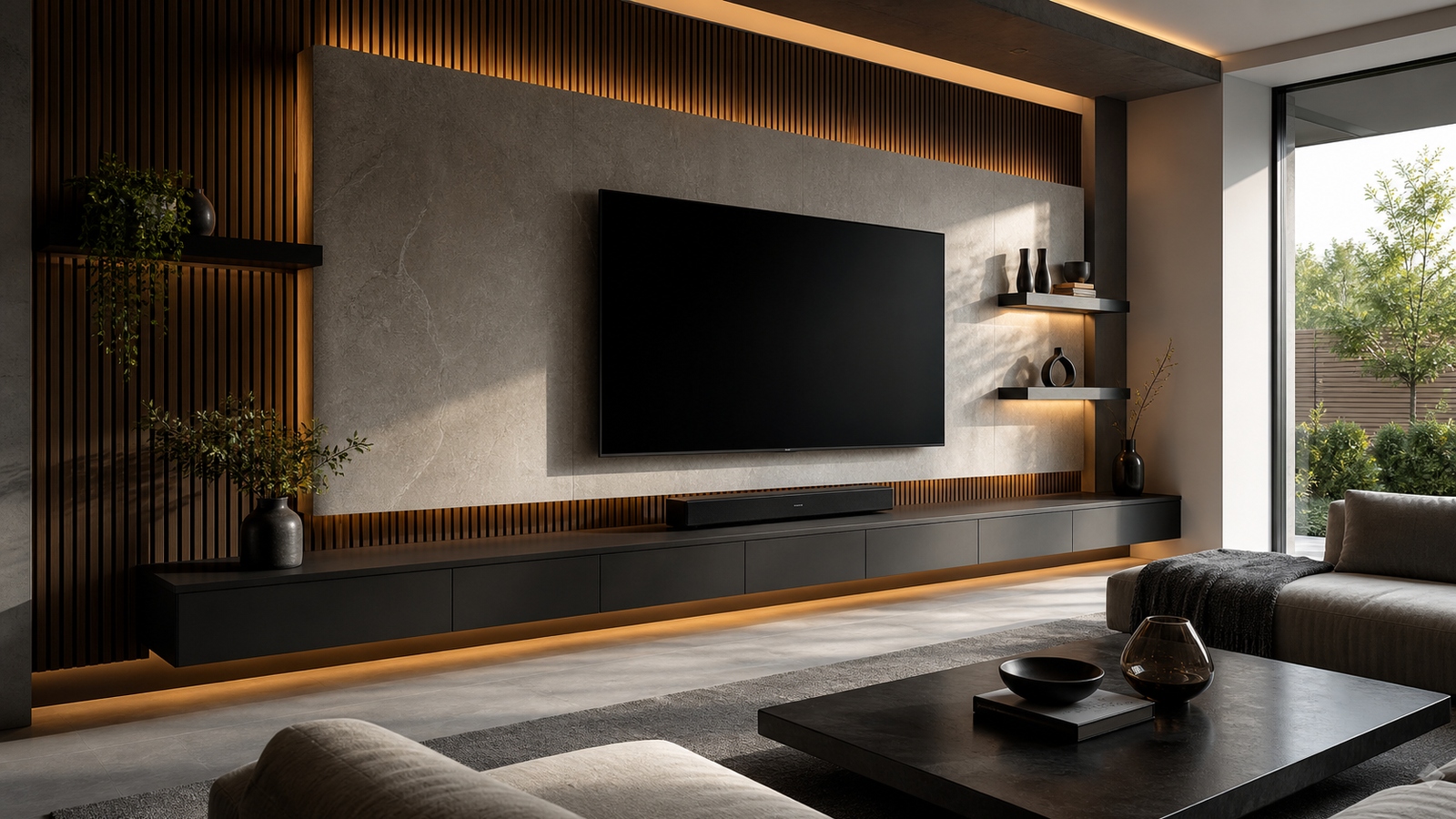
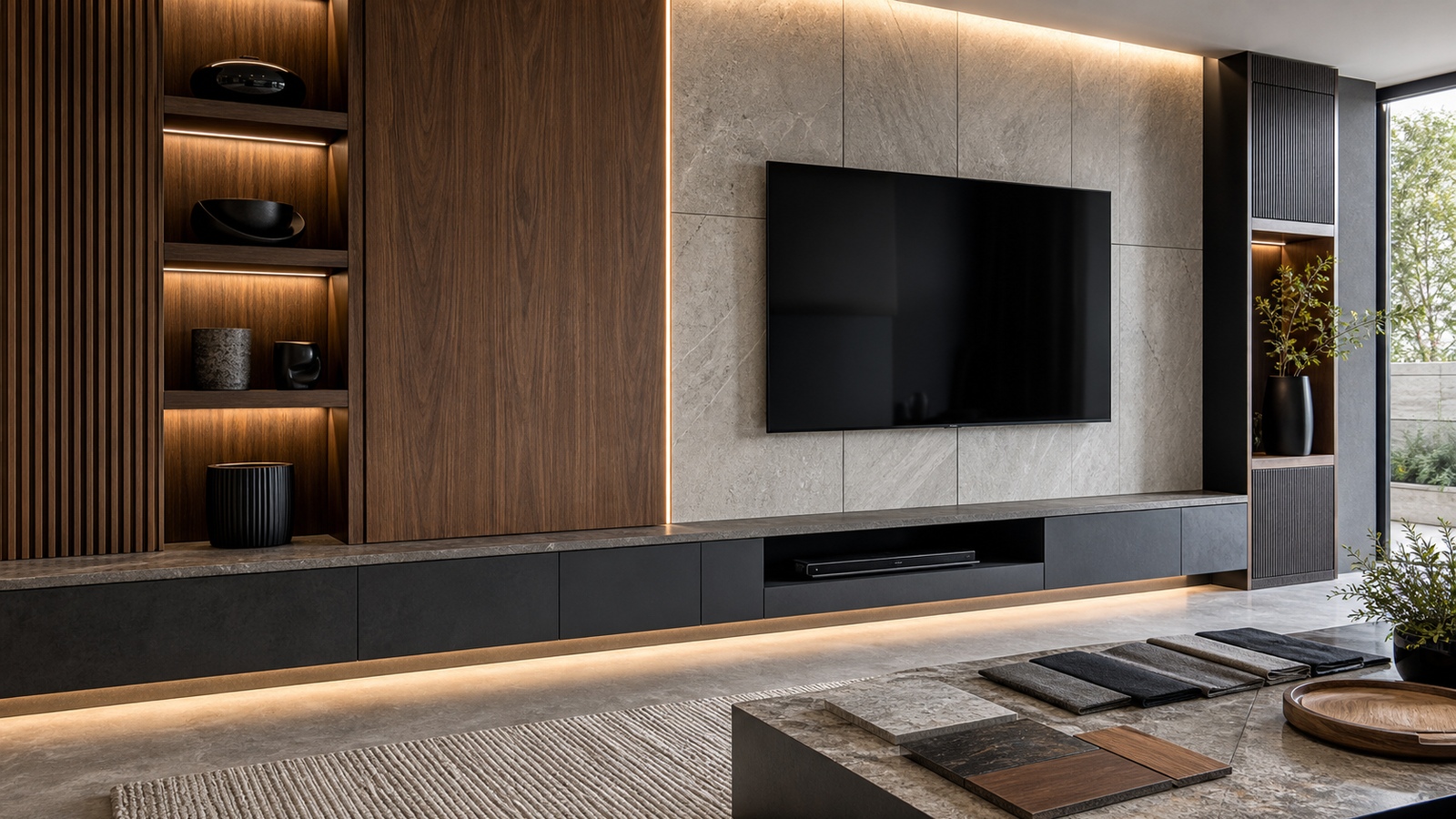
Wood also pairs well with other materials. It can warm stone-look panels, soften black display zones, or frame acoustic fabric. For many homes, a restrained wood element is the difference between a media wall that feels technical and one that feels integrated.
Laminate and Painted Panels Offer Practical Control
High-quality laminate is often underestimated. It can resist scratches, clean easily, and maintain a consistent finish across large surfaces. For families, rental properties, or high-use media rooms, laminate may be more practical than delicate natural materials. Modern laminates can mimic wood, stone, or matte color without the same maintenance demands.
Painted panels are another flexible option. They allow precise color matching and can be repaired more easily than some specialty surfaces. The finish should be chosen with viewing in mind. Matte and low-sheen paints reduce reflections, while glossy finishes may show fingerprints and screen glare.
Stone-Look Surfaces Need Balance
Stone, porcelain slabs, and stone-look panels can make a media wall feel permanent and architectural. They are especially effective when used as a central feature behind or around the display. The challenge is visual movement. Strong veining may compete with the screen, and reflective surfaces can become distracting at night.
Weight and installation matter as much as appearance. Heavy slabs require proper support and professional handling. Thin porcelain panels or lightweight stone-look materials can deliver a similar mood with less structural demand. Edges, seams, and transitions should be planned so the wall feels intentional rather than patched together.
For longevity, choose stone effects that are calm enough to live with. A material that looks dramatic for a reveal photo may feel restless during everyday viewing.
Acoustic Fabric Solves Two Problems
Acoustic fabric is valuable because it can hide speakers, reduce echo, and add texture. In media walls, fabric panels can sit beside the display, cover speaker cavities, or create a softer backdrop in rooms with many hard surfaces. The material should be acoustically transparent when placed over speakers and durable enough for cleaning.
- Use darker fabrics near the screen to reduce visual distraction.
- Choose tight weaves when dust and pet hair are concerns.
- Confirm fire ratings when fabric is part of a built-in installation.
- Keep removable panel access for speaker service.
Fabric brings comfort to a technical wall. It also helps a room sound better without making acoustic treatment obvious.
Metal and Hardware Should Stay Subtle
Metal trim, reveals, brackets, and hardware can sharpen a media wall, but they should be used carefully. Too much metal can make a residential room feel commercial, and polished finishes may reflect light from the screen. Matte black, brushed bronze, or satin aluminum can define edges without shouting.
Hardware durability is easy to overlook. Hinges, drawer slides, shelf pins, and mounts determine how the wall ages. A beautiful panel with weak hardware will sag, rattle, or fall out of alignment. Spend on the parts that move and carry weight.
The best material palette is usually layered but restrained. A durable media wall might combine wood veneer for warmth, matte paint for calm, acoustic fabric for sound, and metal only where edges need definition. When each material has a reason, the design lasts longer visually and physically.
Choose Materials That Can Be Repaired
A media wall is a long-term installation, so repairability matters. Painted panels can be touched up if the exact color and sheen are recorded. Wood veneer can sometimes be refinished lightly, but deep damage may require panel replacement. Laminate resists many marks, yet chips at edges can be harder to disguise. Stone-look slabs may be durable, but replacing one damaged piece can be difficult if the pattern or batch is no longer available.
The best material plan includes documentation. Keep paint formulas, vendor names, finish codes, extra hardware, and a few spare pieces when possible. This may feel excessive during installation, but it can save the wall years later when a panel is scratched or a shelf needs to be modified.
Repairability also affects where materials should go. More delicate finishes can sit higher or farther from heavy traffic. Tougher materials belong near drawers, floor-level storage, and areas touched every day.
Match Texture to the Room’s Lighting
Texture changes dramatically under screen light, daylight, and evening lamps. A surface that looks subtle in a sample box may become busy when stretched across a wall. Another material may look flat in daylight but rich under warm shelf lighting. Samples should be viewed in the actual room before final decisions are made.
Texture can be useful near screens because it adds depth without requiring extra objects. Slatted wood, woven fabric, soft matte paint, and lightly textured panels can all keep a wall from feeling sterile. The key is to avoid patterns that pull attention during viewing.
Lighting and material should be designed together. Underlighting can emphasize a stone edge beautifully, but it can also reveal dust or uneven seams. A good material is one that looks calm in the conditions the room uses most.
Do Not Let Durability Make the Room Harsh
Durable materials can sometimes make a media room feel hard. Stone, glass, metal, and laminate are practical, but too many reflective surfaces can hurt both sound and comfort. A long-lasting wall should still feel good to sit near for hours.
Balance is the answer. Pair hard panels with fabric, rugs, curtains, upholstered seating, or wood. Use matte finishes where reflections would be distracting. Consider how the room sounds when people speak before a movie starts. If voices echo sharply, the material palette may need softening.
Longevity is not only physical. A media wall lasts when people continue to enjoy the room. Materials that clean well, age gracefully, and support comfortable sound will outlast surfaces chosen only because they seem tough.
Use Samples Like a Stress Test
Material samples should be tested under the conditions the media wall will actually face. Hold them near the screen with the display on, then view them during daylight, evening lamps, and a dark movie scene. Look for glare, fingerprints, color shifts, busy patterns, and texture that becomes distracting. A material that looks perfect on a showroom table may behave differently beside a bright display.
Samples should also be touched and cleaned. If a dark matte panel shows every fingerprint, it may be frustrating near drawers or push-latch doors. If a textured surface catches dust, it may need more maintenance than expected. If a fabric pills or grabs lint, it may be better placed higher or replaced with a tighter weave.
Durability includes emotional durability. A bold material that demands attention every time someone enters the room may become tiring. A quieter material that supports the screen, furniture, and lighting may age better. This does not mean every media wall should be plain. It means the dramatic choices should be chosen for the right zones.
Ask how each material handles heat, service, impact, and replacement. Can a panel be removed without damaging the wall? Can a shelf be adjusted? Can a finish be touched up? Can the material tolerate the warmth from electronics or lighting? These practical questions protect the design from becoming fragile.
The best long-lasting media walls feel inevitable. The materials look good, behave well, clean reasonably, and support the technology behind them. When a surface satisfies both design and maintenance, it earns its place in the wall.
Build a Material Hierarchy
Long-lasting media walls usually have a hierarchy. One material leads, one supports, and one or two details provide contrast. Without hierarchy, the wall can become a sample board: wood, stone, metal, fabric, paint, and lighting all competing at once. A clear hierarchy makes the design calmer and easier to update.
Start by choosing the material that defines the mood. Wood may lead in a warm family room. Matte painted panels may lead in a minimalist space. Stone-look surfaces may lead in a dramatic lounge. Once the lead material is chosen, supporting materials should either soften it, frame it, or solve a functional need such as acoustics.
This hierarchy also helps with budget. Spend more on the surfaces people see and touch most, then use simpler materials in shadowed or hidden zones. A high-quality main panel can elevate more affordable side storage. Durable hardware can protect lower-cost cabinetry. Smart contrast makes the whole wall feel better than the individual prices suggest.
A material hierarchy gives the wall a point of view. That point of view is what helps it age gracefully instead of following every short-lived finish trend.
The Right Material Makes Maintenance Boring
A good media wall material should not demand constant attention. It should clean predictably, resist ordinary wear, and avoid creating glare or sound problems. If maintenance becomes complicated, the design will feel less successful no matter how impressive it looked at installation.
Think about the person who will dust shelves, wipe fingerprints, open drawers, replace devices, and touch up small marks. Materials that support those tasks are more durable in practice than materials that only look strong on paper.
Long-lasting design is calm design. Choose surfaces that can handle the room’s habits, then let the screen, lighting, and architecture do the rest. The right material palette should make cleaning, repairs, and upgrades feel routine rather than stressful. If the wall still looks composed after years of fingerprints, cable changes, and device swaps, the material choices were successful. That kind of durability is quiet, but it is exactly what lets the design keep earning its place. A wall that ages well saves money, reduces waste, and keeps the room feeling settled through many entertainment upgrades. The material should help the home relax around the technology instead of making the technology feel precious or fragile.
Good materials also give installers better options. They can hide seams, support access panels, hold hardware cleanly, and accept careful lighting without calling attention to every joint or edge.
TV Top 10 Product Reviews
Explore Philo Street’s TV Top 10 Product Reviews! Discover the top-rated TVs, access comprehensive reviews, and find the perfect screen for your space.