
A Scientific and Engineering Guide to HDR Standards in LED Television Technology
In the ever-evolving world of visual entertainment, terms like Dolby Vision and HDR10 have become commonplace, plastered across packaging and product pages for modern televisions. These acronyms promise cinematic contrast, dazzling brightness, and deeper color fidelity—but what do they really mean, and how do they relate to LED TVs?
The answer lies in the intersection of optics, materials science, quantum chemistry, signal processing, and human perception. To truly understand how Dolby Vision and HDR10 function—and whether LED TVs support them—we need to explore the underlying physics and engineering that makes High Dynamic Range (HDR) possible. This article offers an in-depth yet understandable technical perspective on how LED TVs handle these advanced video formats, focusing on their compatibility, limitations, and the science that powers the magic.
Understanding HDR: The Science of High Dynamic Range
HDR, or High Dynamic Range, refers to a set of technologies designed to display a broader spectrum of brightness, contrast, and color than traditional Standard Dynamic Range (SDR) systems. From a physics standpoint, this involves managing light intensity (luminance) and color purity (chrominance) in ways that align with both display hardware capabilities and the human visual system.
The human eye perceives contrast logarithmically. This means we’re more sensitive to subtle differences in darker scenes than in bright ones. HDR encoding and decoding exploit this biological trait by allocating more digital bits to represent shadows and highlights in a way that feels more natural and lifelike.
HDR formats like HDR10 and Dolby Vision define metadata and color space instructions that guide compatible displays in rendering each scene accurately, using standards such as PQ (Perceptual Quantizer) transfer functions, wide color gamuts (BT.2020), and high bit-depth pixel formats—typically 10-bit or higher.
LED TVs and Display Architecture: The Backbone of HDR Compatibility
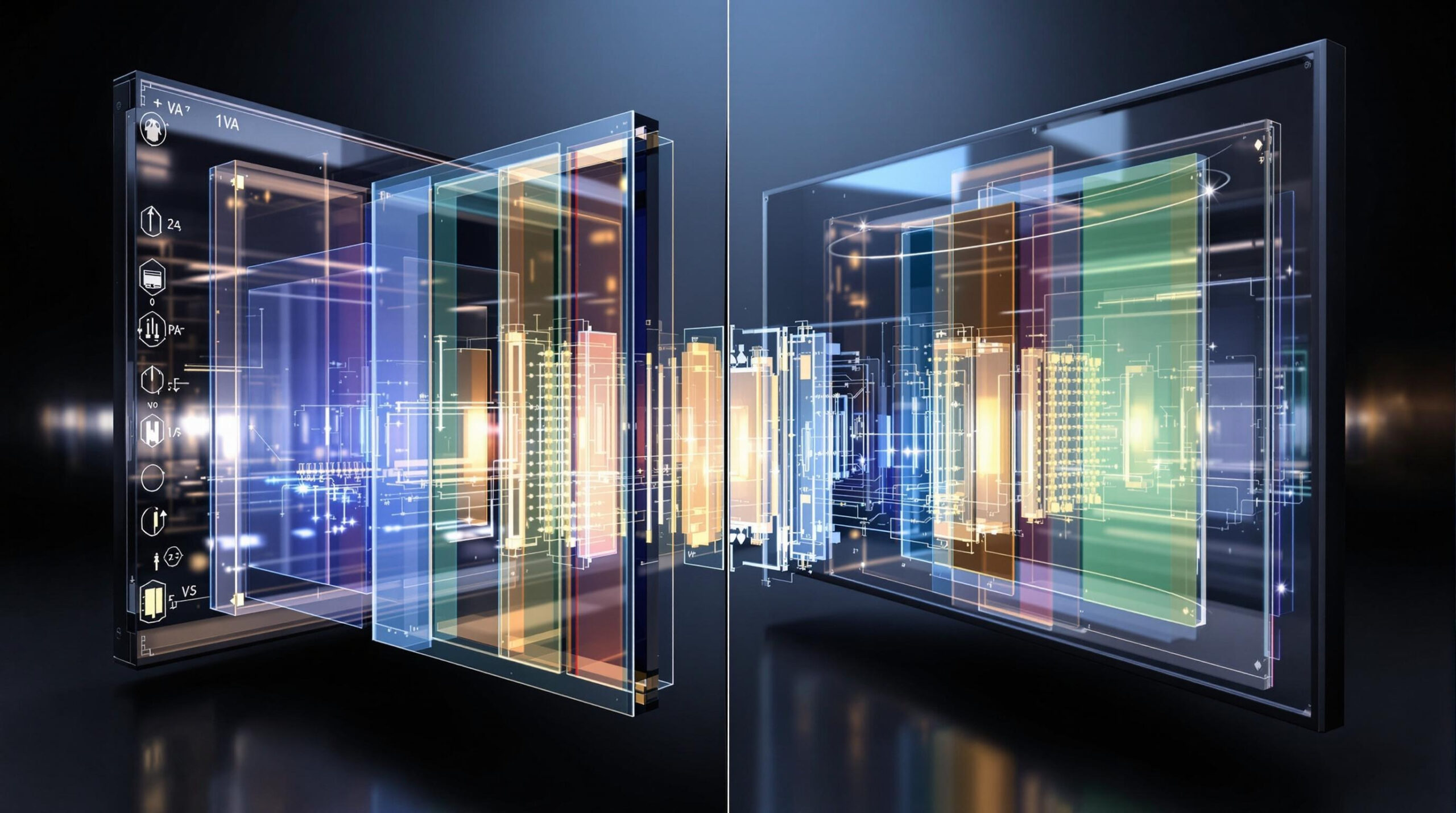
LED TVs are not a display technology themselves, but rather a form of LCD display illuminated by LED (light-emitting diode) backlighting. The light generated by these LEDs passes through a liquid crystal matrix that modulates brightness and color by twisting the molecular alignment of the liquid crystals in response to electric fields. Each pixel in the display consists of red, green, and blue subpixels, filtered from white or blue backlight using color filters or Quantum Dots.
Supporting HDR in an LED TV hinges on the following engineering and material factors:
- Backlight Luminance: To display HDR content properly, a TV must generate sufficient peak brightness—at least 400 to 600 nits for basic HDR10, and ideally 1000+ nits for Dolby Vision.
- Local Dimming Zones: Advanced LED TVs implement full-array local dimming (FALD) or Mini-LED to control backlight intensity in smaller zones, enhancing contrast ratios and dark scene detail.
- Bit Depth and Color Precision: LED TVs must support 10-bit color processing, which translates to 1.07 billion shades—essential for rendering HDR content without color banding.
- Color Gamut Coverage: TVs must approach or exceed the DCI-P3 color space, and ideally touch on the BT.2020 gamut for high-fidelity HDR reproduction.
All these parameters are rooted in materials engineering, semiconductor physics, and optical science, making the LED TV platform inherently capable of supporting HDR formats—if designed to those specifications.
What Is HDR10? The Open-Source HDR Standard
HDR10 is the most widely adopted HDR format and is supported by virtually all modern LED TVs that offer any HDR functionality. It is an open standard developed by the Consumer Technology Association (CTA), and it uses static metadata, meaning the brightness and color instructions apply to the entire piece of content, not scene-by-scene or frame-by-frame.
From an encoding perspective, HDR10 uses:
- PQ EOTF (Electro-Optical Transfer Function) to map scene brightness to display luminance levels
- 10-bit color depth, allowing for smoother gradients and fewer artifacts
- BT.2020 color primaries, expanding the color range beyond traditional Rec. 709 SDR
- A target brightness of 1,000 nits, which defines the “peak” luminance reference during mastering
LED TVs that claim HDR support usually meet these baseline requirements. However, without adequate peak brightness, bit-depth precision, or local dimming, the effect may appear muted. HDR10 relies heavily on display hardware fidelity, not just software decoding.
What Is Dolby Vision? The Premium HDR Format
Dolby Vision is a proprietary HDR format developed by Dolby Laboratories. It builds on the foundation of HDR10 but introduces dynamic metadata, meaning that luminance and color information can change from scene to scene or even frame to frame. This allows Dolby Vision to better adapt to content variability and to account for the specific capabilities of each display.
Technologically, Dolby Vision supports:
- Up to 12-bit color depth, offering over 68 billion colors
- 10,000-nit peak brightness (theoretical), though most TVs and mastered content use 4,000 nits
- Dynamic metadata encoded using SMPTE ST 2094-10 standards
- Enhanced tone mapping and content mastering control
From an engineering standpoint, Dolby Vision compatibility requires not only display hardware with high luminance and wide color gamut, but also an internal image signal processor (ISP) capable of real-time metadata parsing and dynamic tone mapping. Furthermore, the TV must be Dolby Vision-certified, which involves licensing fees and compliance testing.
High-end LED TVs often include a dedicated Dolby Vision engine, embedded in the TV’s SoC (System-on-Chip), to decode and map metadata dynamically. This real-time adaptation is a computationally intensive process, requiring a high-throughput signal pipeline, efficient memory buffering, and heat-tolerant circuitry to maintain frame accuracy.
How LED Backlights Enable—or Limit—HDR Performance
Supporting HDR is not just a matter of decoding metadata; it also depends on backlight system architecture. LED backlights are either edge-lit, direct-lit, full-array, or Mini-LED. Each has implications for HDR rendering.
Edge-lit LED TVs, which place LEDs along the sides of the panel, struggle to deliver accurate local dimming, as their backlight control is limited in spatial resolution. This results in halo effects and insufficient contrast—especially in scenes requiring both deep blacks and bright highlights.
Full-array local dimming (FALD) uses a grid of LED zones behind the LCD panel. These zones can be dimmed independently, allowing the display to show brighter highlights without raising black levels. Mini-LED takes this further by shrinking the size of LEDs and increasing the number of dimming zones into the thousands, offering far greater precision.
From a physics standpoint, this relates to photon density distribution, luminance falloff, and optical diffusion, which engineers must carefully manage to prevent blooming and preserve scene accuracy.
Advanced LED TVs also employ Quantum Dot Enhancement Films (QDEF) to convert blue LED light into more saturated red and green, improving color volume. These nanocrystal semiconductors exhibit quantum confinement effects, where electrons emit light at precise wavelengths depending on crystal size. The result is wider color gamut support critical for Dolby Vision and HDR10 color space rendering.
Signal Processing and HDMI: The Role of Interface Standards
Supporting Dolby Vision and HDR10 also depends on the TV’s ability to receive and decode HDR metadata over HDMI. HDMI versions 2.0a and above are required for HDR10, while Dolby Vision needs HDMI 2.0b or HDMI 2.1, depending on the content and transmission format.
Signal transmission over HDMI relies on Transition-Minimized Differential Signaling (TMDS), which ensures high-speed, low-noise delivery of data packets. To support HDR, these data packets must include infoframes that carry EOTF data, colorimetry codes, and metadata.
Engineering a compatible HDMI port involves designing impedance-matched traces, shielded connectors, and high-speed signal equalizers to preserve signal fidelity. Errors in any of these areas can result in metadata loss or display fallback to SDR.
The TV’s firmware must also include HDMI parsing logic and an HDCP 2.2 or 2.3 license for protected content. For Dolby Vision, compatibility with content streaming services—like Netflix, Disney+, or UHD Blu-ray—is further governed by DRM (digital rights management) layers and vendor certification.
The Chemistry and Thermodynamics of HDR Playback
It’s easy to overlook, but HDR playback is a thermally demanding process. High brightness output, fast refresh rates, and real-time metadata processing all contribute to thermal load on the TV’s internal components.
The LEDs themselves, driven at higher currents to reach HDR peaks, generate more heat. This must be dissipated using heat sinks, thermally conductive chassis materials, and dynamic brightness limiting algorithms to prevent component fatigue or color shift.
From a chemistry perspective, the materials inside LEDs (typically InGaN—indium gallium nitride) degrade faster under heat and high drive currents. This causes lumen depreciation, where brightness output decreases over time. High-end LED TVs include thermal management ICs and active dimming control to prolong panel life while maintaining HDR luminance targets. The SoC and image processor also heat up during HDR playback. Efficient thermal designs—like graphite heat spreaders and passive aluminum cooling frames—help keep processors below thermal throttling thresholds, ensuring consistent performance during extended use.
Certification and Content Delivery: Ensuring End-to-End HDR
HDR support is only meaningful if the TV can render HDR content as intended. This is why Dolby Vision certification exists—to ensure compliance from content encoding to display decoding. TVs that support only HDR10 may still attempt to play Dolby Vision content but will do so in SDR or static HDR form, losing the dynamic metadata advantage.
HDR content must be delivered in formats like HEVC (H.265) or AV1, both of which support 10-bit color depth and HDR metadata streams. Your LED TV must have compatible decoding hardware and software capable of parsing the metadata and triggering the correct tone-mapping logic. Tone mapping itself is a nonlinear transformation function—it maps the mastered brightness values of the content to the actual brightness capabilities of your TV. Dolby Vision’s dynamic tone mapping adjusts this continuously, while HDR10’s static mapping uses a fixed transformation curve.
Conclusion: The LED TV and HDR Ecosystem, Explained Through Science
So, do LED TVs support Dolby Vision and HDR10? The answer is yes—but only if they are engineered with the right display capabilities, signal processing hardware, and software decoding support. Supporting HDR formats requires a careful alignment of physical properties (like backlight brightness), chemical performance (such as LED material longevity), and computational architecture (metadata processing, tone mapping, and color decoding).
HDR10, as an open standard, is supported widely across mid-range and high-end LED TVs, but its experience varies significantly with hardware quality. Dolby Vision, as a more advanced and demanding format, is reserved for premium models with enhanced brightness, better local dimming, and dynamic metadata engines.
By understanding the science of light, material behavior, color reproduction, and digital signal engineering, consumers and professionals alike can make informed choices and appreciate the hidden complexity that goes into rendering those stunning high-dynamic-range visuals.
In the realm of modern LED TV technology, Dolby Vision and HDR10 are not just checkboxes. They’re the product of precision optics, semiconductor mastery, and perceptual science, all working in harmony to bring your screen to life like never before.
LED/LCD TV Reviews
Explore Philo Street’s Top 10 Best LED/LCD TV Reviews! Dive into our comprehensive analysis of the leading LED/LCD TV products, complete with a detailed side-by-side comparison chart to help you choose the perfect protection for your devices.