Outdoor Screens Need More Than a Roof
A screen placed outside faces conditions that indoor equipment was never built to handle. Moisture, heat, cold, dust, insects, wind, glare, and changing daylight all affect performance and safety. A covered patio helps, but it does not automatically make an indoor TV or projection surface weatherproof. A good outdoor installation starts with equipment ratings, then adds safe power, strong mounting, cable protection, audio planning, and a maintenance routine. The goal is not just to survive one summer. It is to create an outdoor viewing area that stays reliable through real weather.
Understand Weather Ratings Before Buying
Outdoor displays and enclosures use ratings to describe protection from dust and moisture. Those ratings matter because a backyard screen may face wind-driven rain, condensation, splashes, and airborne debris. A display intended for a fully covered shaded area is not the same as one designed for direct exposure.
Temperature range is just as important. Some screens are built to operate in heat, cold, or direct sun better than indoor models. Brightness also matters outdoors. A screen that looks vivid in a living room may look washed out on a patio, even under shade. Read the conditions carefully instead of assuming the word outdoor covers every situation.
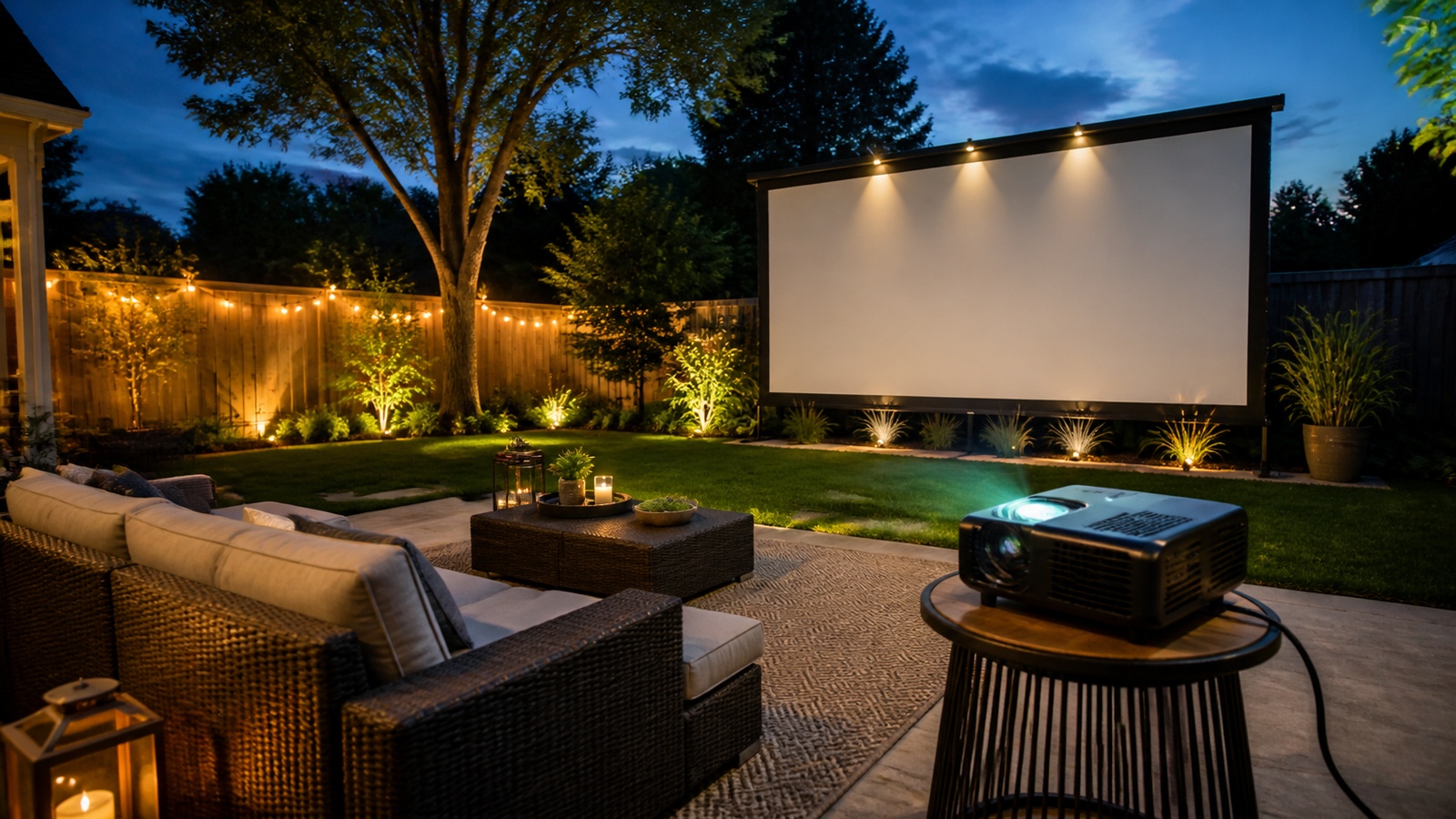
If using a projector screen rather than a TV, the screen material needs its own consideration. Outdoor fabrics should resist mildew, dry quickly, and stay tensioned. A sagging or stained projection surface can ruin the experience even when the projector is capable.
Power and Cabling Must Be Treated as Safety Work
Outdoor entertainment setups should never rely on casual extension cords or indoor power strips. Weather-rated outlets, proper covers, GFCI protection, and code-compliant routing are essential. The same is true for low-voltage cabling. HDMI, Ethernet, speaker wire, and control lines need protection from moisture, UV exposure, and physical damage.
Cable paths should be planned before the screen is mounted. Conduit, sealed wall penetrations, drip loops, and labeled junctions make the system safer and easier to maintain. Outdoor wiring mistakes can become expensive, dangerous, or simply annoying every time the setup fails after a storm.
Mounting Has to Account for Wind and Surfaces
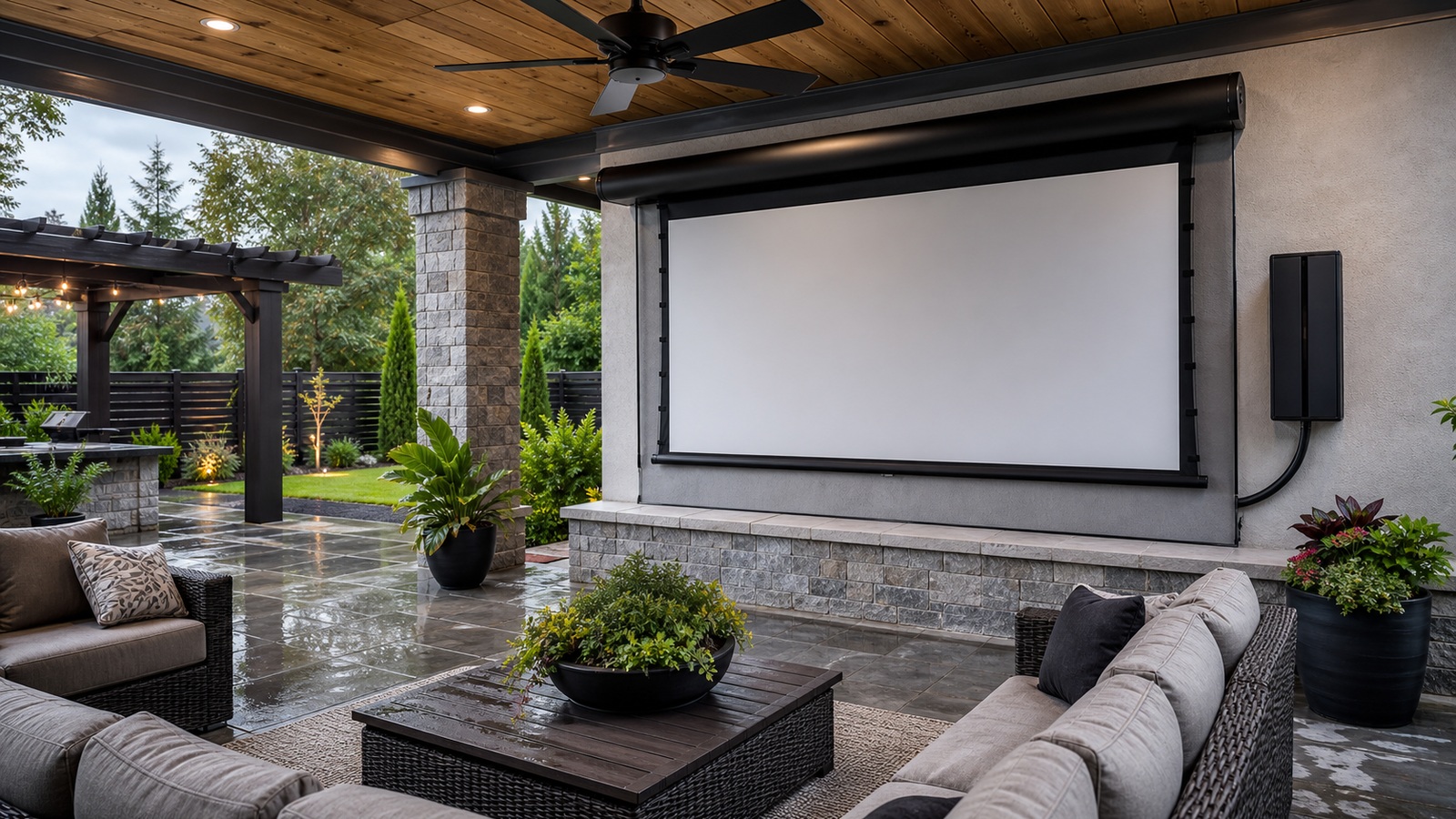
Outdoor mounting is different from indoor mounting because wind adds force. A screen under a patio roof can still experience gusts, vibration, and movement from the structure around it. Mounts should be rated for the screen weight and outdoor use, and they should attach to appropriate framing, masonry, or engineered support.
Surface choice affects longevity. Brick, stone, stucco, wood posts, and composite structures each require different fasteners and sealing methods. A clean installation should keep water out of the wall while holding the screen securely. Shortcuts may not show on day one, but they often appear as stains, loose hardware, or corrosion later.
Viewing height also matters outdoors. People may watch from dining chairs, lounge seating, a hot tub area, or a fire pit. The screen should be positioned for the real seating plan, not just centered on the wall.
Control Glare, Sound, and Comfort Together
Outdoor viewing is shaped by the environment. Sun angle, reflective paving, nearby windows, and landscape lighting can all affect the picture. Shade structures, curtains, adjustable mounts, and careful screen orientation can make a bigger difference than simply buying a brighter display.
- Face screens away from direct afternoon sun when possible.
- Use matte surfaces nearby to reduce reflected glare.
- Choose outdoor speakers that project clearly without blasting neighbors.
- Place seating where people are not staring into bright sky behind the screen.
Comfort keeps outdoor theaters useful. Durable furniture, insect control, safe walkways, and weather-ready storage for remotes and covers all support the viewing experience.
Maintenance Is Part of the Installation
Weatherproof does not mean maintenance-free. Screens may need covers, seasonal cleaning, firmware updates, inspection after storms, and occasional checks for corrosion or cable wear. Projector screens may need to be dried, rolled, or stored depending on material and climate.
A maintenance plan should be easy enough that it actually happens. Keep covers nearby, store remotes in a dry box, and label shutoff points. If a screen is difficult to protect, people will eventually stop protecting it.
The best outdoor screen installations feel natural because the hard work is hidden. Power is safe, mounts are solid, glare is managed, and weather protection is built into the design. That preparation lets the patio feel relaxed, which is exactly what outdoor viewing should be.
Match the Screen to the Exposure Zone
Not every outdoor location is equally harsh. A screened porch, deep covered patio, open pergola, poolside wall, and uncovered deck all create different exposure zones. The screen choice should match the worst realistic conditions, not the best day. Wind direction, afternoon sun, sprinkler drift, cooking smoke, and humidity all matter.
A partially protected area may still need a true outdoor display because condensation and temperature swings can reach the equipment. An enclosure can help in some cases, but it must be designed for heat, service, and visibility. Putting an indoor screen into a box without airflow can create a different kind of failure.
Thinking in exposure zones prevents overspending and under-protecting. A fully exposed installation needs serious ratings. A shaded covered wall may allow more options, but it still deserves outdoor-safe power, corrosion-resistant hardware, and a maintenance plan.
Plan for Remote Control and Connectivity
Outdoor screens often fail in small ways before they fail dramatically. The remote does not work through an enclosure. Wi-Fi drops because the router is far away. A streaming device overheats in a sealed compartment. A Bluetooth speaker introduces delay. These issues are not glamorous, but they decide whether people enjoy the space.
Hardwired Ethernet is ideal when possible, especially for streaming high-resolution content. If Wi-Fi is used, test it at the screen location with the doors closed and people present. Outdoor walls, masonry, and distance can weaken signal. Remote control may require line of sight, IR repeaters, Bluetooth compatibility, or a weather-protected control plan.
Connectivity should be tested before the final cleanup. It is much easier to adjust device placement or add a cable route before everything is sealed and painted.
Protect the Viewing Area, Not Just the Screen
A weatherproof screen is only one part of an outdoor installation. Viewers also need safe footing, comfortable seating, reasonable temperature, and lighting that does not shine into their eyes. If people are uncomfortable, the screen will not get used often no matter how durable it is.
Consider fans, heaters, insect control, storage for cushions, and low-level pathway lighting. Keep cords out of traffic zones and away from wet areas. Make sure the screen can be covered or shut down quickly if weather changes. A good outdoor entertainment area feels prepared, not improvised.
The strongest installations combine technical protection with hospitality. The screen survives the weather, and the space invites people to stay.
Seasonal Thinking Prevents Expensive Surprises
Outdoor installations should be planned for the full year, not only the first warm weekend. A screen that works beautifully in June may face leaf debris in fall, freezing nights in winter, pollen in spring, or intense sun during late summer. Seasonal thinking helps determine whether equipment should remain outside, be covered, or be removed during harsher months.
Maintenance should follow the same rhythm. At the start of the season, inspect mounts, seals, cable jackets, outlet covers, and screen surfaces. After storms, check for water intrusion, loosened hardware, and debris around vents. Before winter or long periods of nonuse, clean and protect the equipment according to its rating and manufacturer guidance.
Seasonal storage also applies to accessories. Remotes, streaming devices, portable speakers, and covers need dry places to live. If those items are scattered around the patio, they will age quickly or disappear. A dedicated outdoor media bin or cabinet can keep the system ready.
This planning does not make the installation less relaxed. It makes relaxation possible. People can enjoy the screen because the protection routine is already simple and known.
Weatherproof installations succeed when they respect the environment. The screen may be the star, but the long-term performance comes from ratings, safe infrastructure, and habits that keep outdoor conditions from winning slowly.
Decide What Should Be Permanent and What Should Be Portable
Outdoor viewing systems often work best as a blend of permanent infrastructure and portable accessories. Permanent power, mounting, network access, and weather protection create reliability. Portable speakers, streaming devices, covers, and remotes can be stored safely when not in use. The right mix depends on climate, frequency of use, and how exposed the area is.
A fully permanent installation is convenient, but it costs more and requires stronger protection. A fully portable setup is flexible, but it can become tedious and messy if used often. Many patios benefit from permanent wiring and mounting paired with removable accessories. This keeps the expensive hard-to-change parts safe and the vulnerable items easy to protect.
Think about who will use the space. If the screen is part of weekly sports nights, convenience matters. If it is for occasional gatherings, portability may be enough. If renters or future owners might change the layout, avoid overbuilding a highly specific arrangement.
The best outdoor installations are honest about use. They protect what stays outside, simplify what moves, and make the viewing area feel ready without pretending the outdoors is as controlled as a living room.
Outdoor Reliability Is Designed in Layers
A weatherproof screen installation works because several protections overlap. The display or screen is rated for the location, power is safe, cables are sealed, mounts resist movement, and the viewing area is easy to maintain. If one layer fails, the others reduce the chance of damage.
This layered approach is more dependable than trusting a single cover or enclosure. Outdoor conditions are too variable for one solution to do everything. Rain, heat, dust, wind, and sunlight each need their own answer.
When protection is layered into the design, the outdoor screen feels less like a fragile experiment and more like a real part of the home. It also gives the owner clearer routines: cover it when storms are coming, inspect cable paths after rough weather, clean vents before heavy use, and store vulnerable accessories in a dry place. Those small habits are what keep outdoor entertainment reliable after the novelty fades. The screen may be built for weather, but the whole installation still benefits from care, inspection, and respect for changing conditions. Outdoor rooms change by season, so the installation should be ready for heat, cold, pollen, rain, insects, and long stretches of nonuse. A realistic plan makes weatherproofing feel practical rather than mysterious, and it keeps small issues from becoming expensive failures. The more exposed the location, the more valuable these quiet safeguards become for both safety and enjoyment across the whole year.
It is also worth deciding who handles seasonal care. If covers, cleaning, and inspections are assigned to no one, they are easy to forget until a problem appears. A simple calendar reminder can protect the screen, the mounts, and the cable paths before weather has a chance to expose weak spots outside quickly.
TV Top 10 Product Reviews
Explore Philo Street’s TV Top 10 Product Reviews! Discover the top-rated TVs, access comprehensive reviews, and find the perfect screen for your space.