The moment you walk into a room and see an OLED TV from the side, something quietly astonishing happens—you realize the image looks just as vivid and accurate as it does from the center. There’s no washed-out contrast, no fading colors, no distortions. Whether you’re sitting in the middle of the couch or relaxing in a beanbag by the wall, OLED delivers the same breathtaking picture. This isn’t just a marketing gimmick—there’s deep science behind it. From quantum-level physics to cutting-edge engineering, OLED’s dominance in viewing angles is the result of precision innovation in display technology. This article breaks down why OLED TVs outperform their competition in off-axis performance—and how the very chemistry and optics of OLED materials give them an edge that LCDs and QLEDs simply can’t match.
The Science of Viewing Angles
In display engineering, a “viewing angle” refers to how far off-center a viewer can be while still seeing an accurate picture—meaning colors, contrast, and brightness are preserved. In practical terms, this is what makes OLED TVs so suitable for family living rooms and home theaters. Traditional LCD TVs, particularly those using vertical-alignment (VA) or in-plane switching (IPS) technology, suffer from image degradation when viewed from the side. This degradation results from the way these displays use backlights and polarized filters to modulate light, which makes their image quality highly direction-dependent.
OLED, or Organic Light-Emitting Diode technology, takes a radically different approach. Instead of using a backlight and filtering system, each pixel in an OLED panel emits its own light directly. This key structural difference eliminates many of the optical compromises associated with off-axis viewing.
Emissive vs. Transmissive Displays: The Fundamental Difference
To understand OLED’s superiority, we must distinguish between emissive and transmissive display technologies. LCD and QLED TVs are transmissive displays, meaning that light generated by a backlight passes through multiple layers—including polarizers, liquid crystals, and color filters—before reaching your eyes. This multi-layer design introduces directional bias. As you move away from the center axis, the alignment of these layers distorts the light path, resulting in reduced brightness, altered colors, and decreased contrast.
OLED, by contrast, is an emissive display technology. Each pixel is made from organic molecules that emit light when excited by an electric current. Since this emission happens directly from the surface of the screen, there’s no need for intermediary layers that would otherwise distort light depending on angle. Light exits each OLED pixel in a near-uniform 180-degree field, maintaining visual integrity even from steep angles.
The Role of Organic Molecules in Light Emission
At the heart of each OLED pixel are organic electroluminescent materials—carbon-based molecules engineered to emit specific colors when energized. These molecules are carefully layered between an anode and a cathode, and when voltage is applied, electrons and holes recombine within the emissive layer. This recombination excites the organic molecules, which then release photons in a process known as electroluminescence.
What’s crucial for viewing angles is the isotropic nature of this light emission. The emitted photons radiate uniformly in all directions—a behavior called Lambertian emission. This near-perfect angular dispersion means there’s no directional favoritism; the pixel doesn’t care whether you’re sitting directly in front of it or 70 degrees off to the side. It emits light the same way, preserving color and contrast without distortion.
Eliminating Polarizers and Their Angular Limitations
One of the primary culprits of poor viewing angles in LCDs is the polarizing filter stack. LCD pixels themselves do not emit light—they manipulate it. The light from the backlight must first pass through a polarizer, then through a twisted liquid crystal layer that rotates the light to control intensity. Another polarizer then filters the light again before it reaches the viewer.
This double polarization not only reduces efficiency but also causes significant angular sensitivity. As viewing angles increase, the alignment between the light’s polarization and the filter weakens, leading to a drop in luminance and skewed color reproduction.
OLED completely sidesteps this problem. Because OLEDs are self-luminous, they do not need polarizers or liquid crystal modulators. This allows the display to emit unfiltered, uniform light regardless of the viewer’s position, eliminating angular artifacts and maximizing clarity from every seat.
Color Fidelity at the Edge
Maintaining accurate color at wide viewing angles is one of OLED’s most visible advantages. On LCD and QLED TVs, the color spectrum shifts as viewing angle increases due to the angular dependence of both the color filter and the backlight’s diffusion characteristics. This phenomenon, known as chromatic aberration, leads to reds appearing orange, whites turning blue, and blacks looking grey.
In OLED panels, color accuracy is tightly preserved because each pixel’s sub-elements—typically red, green, blue, and sometimes white in WRGB designs—are individually controlled and emit light with precisely tuned wavelengths. These organic emitters are engineered at the molecular level to radiate with extremely narrow spectral peaks, which helps maintain color integrity even when viewed off-axis.
Furthermore, since each subpixel emits light directly, there’s no angular distortion caused by the interaction between multiple layers. The result is a picture that holds its tone, hue, and saturation even when viewed from far left or right.
Contrast Consistency at Any Angle
Contrast ratio—the difference between the darkest and brightest parts of an image—is one of the most important metrics in perceived picture quality. LCD-based panels depend on a backlight that is either always on or divided into dimming zones. When viewed off-axis, the light from these zones bleeds into adjacent pixels, especially during dark scenes, leading to a phenomenon known as blooming.
OLED avoids this entirely. Since black pixels are turned off completely, they emit no light and produce true zero-nit black. More importantly, they stay off from any angle. Whether you’re directly in front or 60 degrees to the side, the black stays black. This enables OLED TVs to maintain infinite contrast ratios from all viewing positions—a feat LCDs can’t match regardless of local dimming sophistication.
Optical Engineering of OLED Stacks
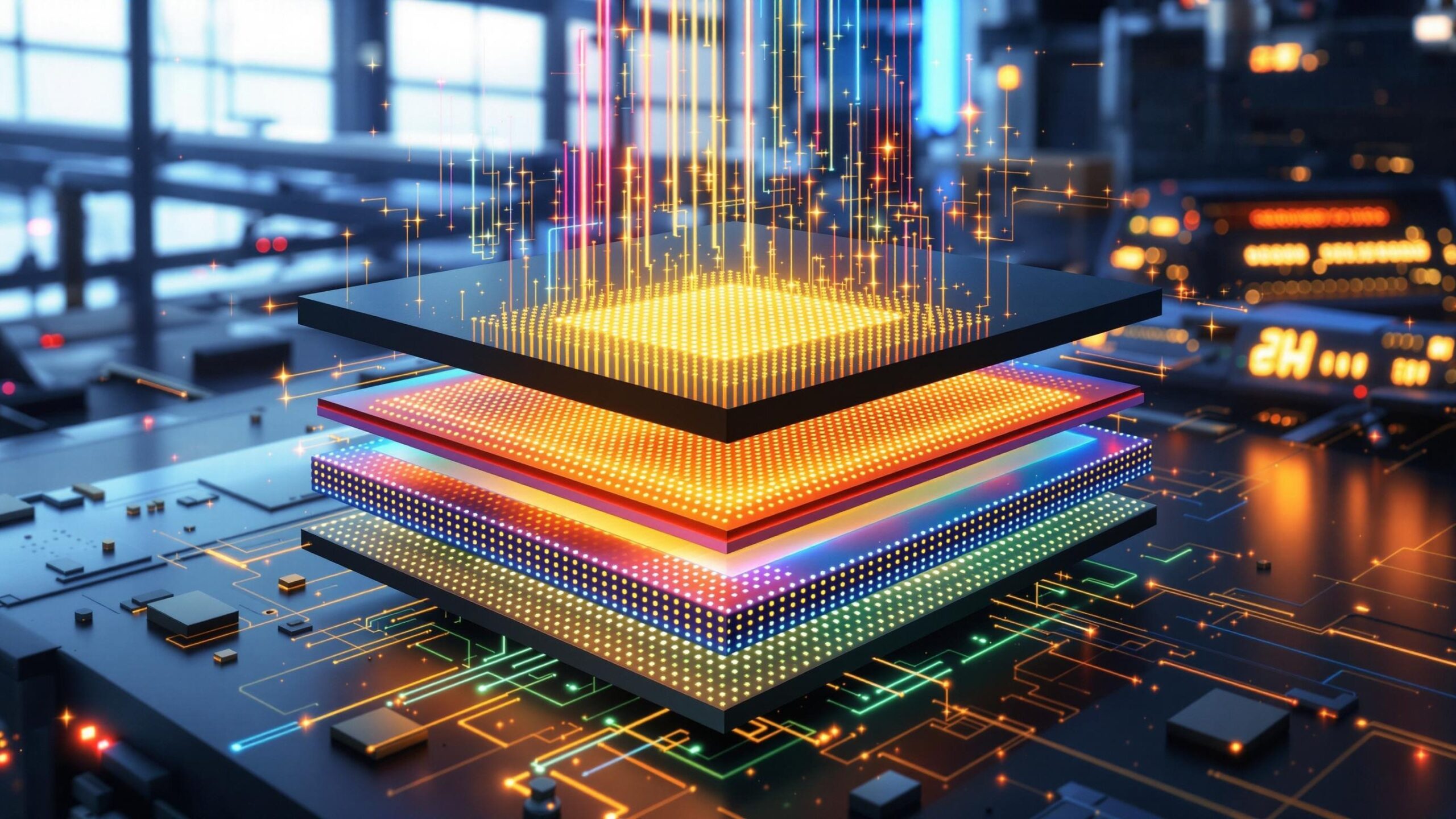
OLED panel manufacturers invest heavily in optimizing the microstructure of the organic light-emitting stack to ensure uniformity across angles. This involves fine-tuning the refractive indices of organic and inorganic layers so that emitted light exits the panel efficiently and uniformly. Antireflective coatings and microlens arrays are sometimes integrated into premium models to further reduce angular distortions.
In some high-end OLEDs, especially those using LG’s “Evo” or “WBE” panels, newer materials like deuterated blue emitters and optimized top-emission structures help preserve peak brightness and color integrity over wider viewing zones. These refinements also reduce internal reflections that could otherwise cause haze or glare at steep angles.
Comparative Viewing Tests
Side-by-side comparisons between OLED and other display types consistently validate the theoretical advantages of OLED viewing angles. In controlled test environments, observers measuring luminance and chromaticity from various angles routinely find that OLEDs lose less than 20% brightness at 60 degrees and exhibit color shift values well below perceptual thresholds (often ΔE < 3). In contrast, VA LCDs typically lose over 50% brightness and show significant color distortion at the same angle.
Even IPS LCDs, which were historically preferred for wide-angle performance, can’t keep up. Their contrast falls off sharply compared to OLED’s absolute black, and they still suffer from some color shift. QLEDs, which are essentially LCDs with a quantum-dot layer, inherit these same limitations.
Real-World Benefits for Home Viewing
From a consumer’s perspective, OLED’s superior off-axis performance translates to practical benefits that elevate everyday use. In living rooms where multiple people watch TV from different angles, OLED ensures everyone sees the same rich, dynamic image. For sports viewing parties, movie nights, or multiplayer gaming, the uniformity of experience is unmatched.
This also extends to interior design flexibility. With OLED, viewers don’t need to center the couch perfectly or limit seating arrangements to get the best picture. Wall-mounted installations or corner viewing setups are viable without sacrificing quality—making OLED ideal for unconventional spaces or open-plan homes.
Engineering Challenges and Solutions
Despite their advantages, OLEDs are not without challenges. Wide-angle emission can sometimes lead to internal reflections or minor loss of perceived sharpness under high ambient light. Manufacturers counter this with advanced anti-reflective coatings and surface treatments that reduce glare and ambient light washout.
Additionally, newer panel designs are implementing micro lens arrays to optimize light directionality without compromising angle performance. These structures increase on-axis luminance while maintaining the uniform emission profile critical to OLED’s wide-angle success.
OLED vs. Mini-LED and QD-OLED
Mini-LED TVs attempt to mimic OLED’s precision with thousands of tiny backlight zones, but they still operate within a transmissive LCD framework. While they deliver impressive brightness, their viewing angles are constrained by the same polarizer and filter issues.
QD-OLED, on the other hand, is a hybrid evolution combining OLED’s self-emissive blue layer with quantum-dot color converters. Because the light generation still happens at the pixel level, QD-OLEDs retain the wide-angle strengths of traditional OLEDs while pushing brightness and color volume further. Early results show that QD-OLED matches or slightly exceeds standard OLED in angle stability, particularly with improved red and green saturation at the periphery.
The Future of Viewing Angle Engineering
As OLED continues to mature, research focuses on even broader angle preservation with less color shift, improved anti-reflective materials, and higher brightness ceilings that don’t compromise uniformity. Novel organic compounds, top-emission designs, and tandem-stack architectures promise even more reliable performance for large screen sizes, curved displays, and mixed-use environments.
With the development of bendable and rollable OLED displays, maintaining angle integrity on dynamic surfaces becomes the next frontier. Thanks to OLED’s inherently uniform emission characteristics, it’s already poised to excel in this emerging space.
Conclusion: A Victory by Design, Not Accident
OLED’s crushing advantage in viewing angles isn’t a fortunate side effect—it’s the result of meticulous material science, optoelectronic engineering, and architectural innovation. From the atomic layout of organic molecules to the elimination of optical filters, every decision in OLED design contributes to its peerless off-axis performance.
In the battle for home entertainment supremacy, viewing angles are often overlooked in favor of resolution or brightness. But for those who care about visual integrity from every seat, OLED stands alone. It doesn’t just win the angle war—it redefines it.
For anyone seeking a TV that looks phenomenal no matter where you sit, the verdict is clear: OLED doesn’t just compete. It dominates.
OLED TV Reviews
Explore Philo Street’s Top 10 Best OLED TV Reviews! Dive into our comprehensive analysis of the leading OLED TV products, complete with a detailed side-by-side comparison chart to help you choose the perfect protection for your devices.