
A New Era of Immersive Living
The modern home is no longer defined solely by square footage, open floor plans, or premium finishes. Today, it is increasingly defined by experience. In this experience-driven evolution of interior design, LED media walls have emerged as one of the most transformative architectural features in contemporary living spaces. Once reserved for stadiums, broadcast studios, and commercial advertising, LED display technology has rapidly migrated into residential environments, redefining how homeowners engage with entertainment, art, and digital life. The rise of LED media walls in modern home design signals more than a technological upgrade—it represents a cultural shift toward immersive, customizable, and visually dynamic interiors. As home theaters, smart homes, and integrated living spaces become mainstream, LED media walls are evolving into focal points that combine design aesthetics with cutting-edge engineering. Unlike traditional televisions mounted to drywall, LED media walls create seamless, wall-to-wall visual canvases that blur the boundaries between architecture and digital content. They deliver scale, brightness, clarity, and flexibility that conventional displays simply cannot match.
What Is an LED Media Wall?
An LED media wall is a large-format digital display system composed of modular LED panels that connect seamlessly to form a unified screen surface. Unlike LCD or OLED televisions that rely on backlighting or organic light-emitting layers behind a glass panel, LED media walls use individual light-emitting diodes arranged in a grid. Each diode acts as a pixel, producing high brightness levels, exceptional contrast ratios, and superior durability.
One of the defining characteristics of modern LED media walls is pixel pitch—the distance between individual LEDs. Smaller pixel pitch allows for higher resolution and closer viewing distances, making indoor residential installations visually comparable to premium 4K and 8K televisions. As pixel pitch technology has advanced and manufacturing costs have declined, LED walls have transitioned from luxury novelties to attainable design elements for upscale homes and custom builds.
Because LED panels are modular, homeowners can tailor the display to nearly any dimension or aspect ratio. From a cinematic 150-inch display in a dedicated media room to an expansive feature wall stretching across a double-height living space, the design possibilities are virtually limitless.
From Commercial Spectacle to Residential Statement
The adoption of LED media walls in modern home design mirrors a broader pattern in technology diffusion. Innovations often debut in commercial or institutional environments before trickling into residential markets. Times Square billboards, concert stage backdrops, and corporate lobbies were early adopters of large-scale LED systems. These applications demonstrated the durability, brightness, and visual impact of the technology.
Over the past decade, however, advancements in miniaturization, heat management, and calibration have enabled LED displays to meet residential performance standards. Quieter power supplies, improved color accuracy, and thinner cabinet designs have made the technology suitable for living rooms and private home theaters.
Luxury real estate developers and custom home builders began integrating LED walls into high-end properties as experiential features. As more homeowners witnessed these installations—either in model homes, design expos, or social media showcases—demand expanded. The LED media wall evolved from an elite novelty to a statement of modern sophistication.
Architectural Integration and Design Flexibility
One of the most compelling reasons behind the rise of LED media walls in modern interiors is their architectural flexibility. Traditional televisions are, by nature, standalone objects. Even when recessed, they remain identifiable as screens. LED media walls, by contrast, can be integrated directly into the structure of a room.
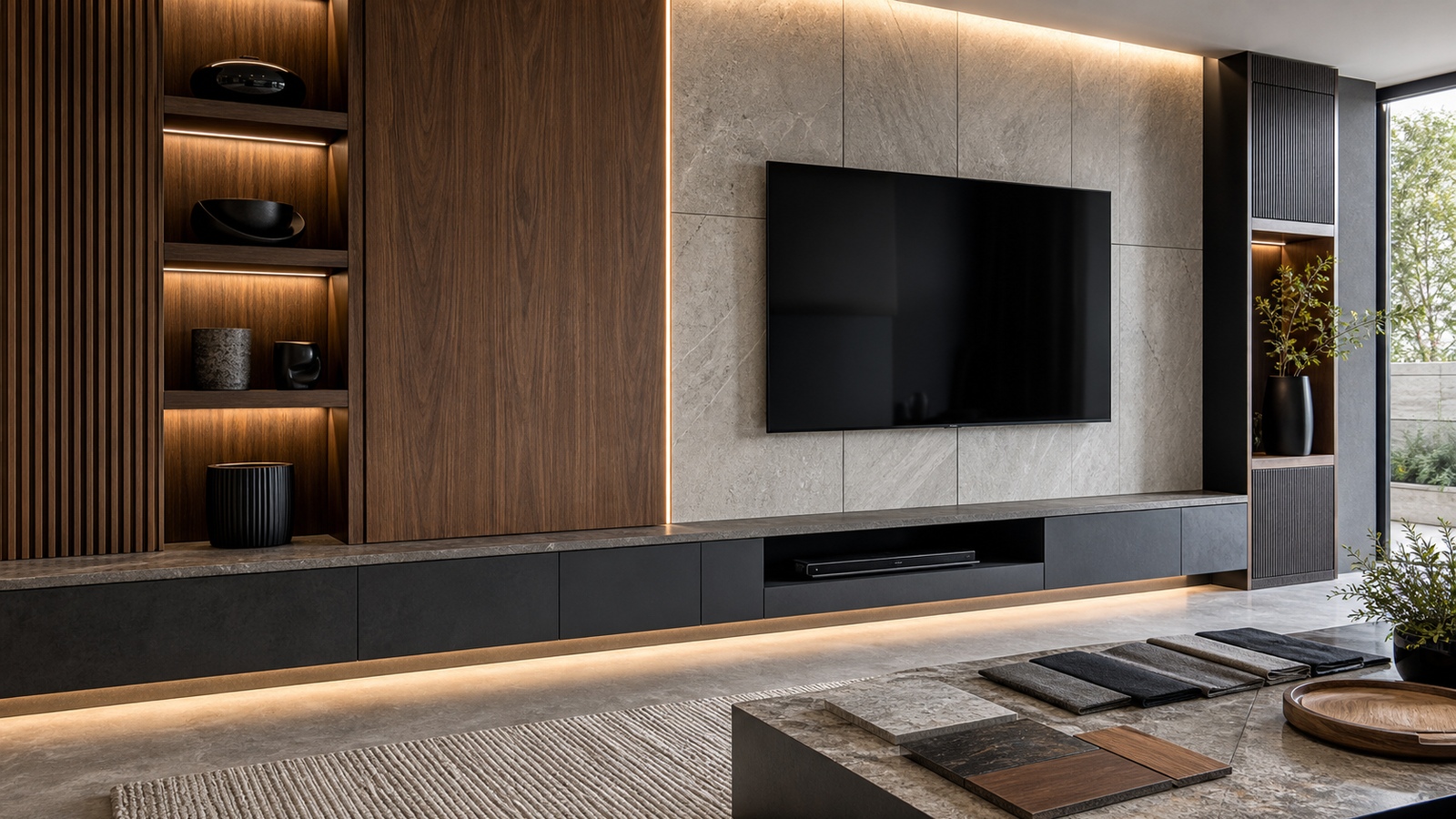
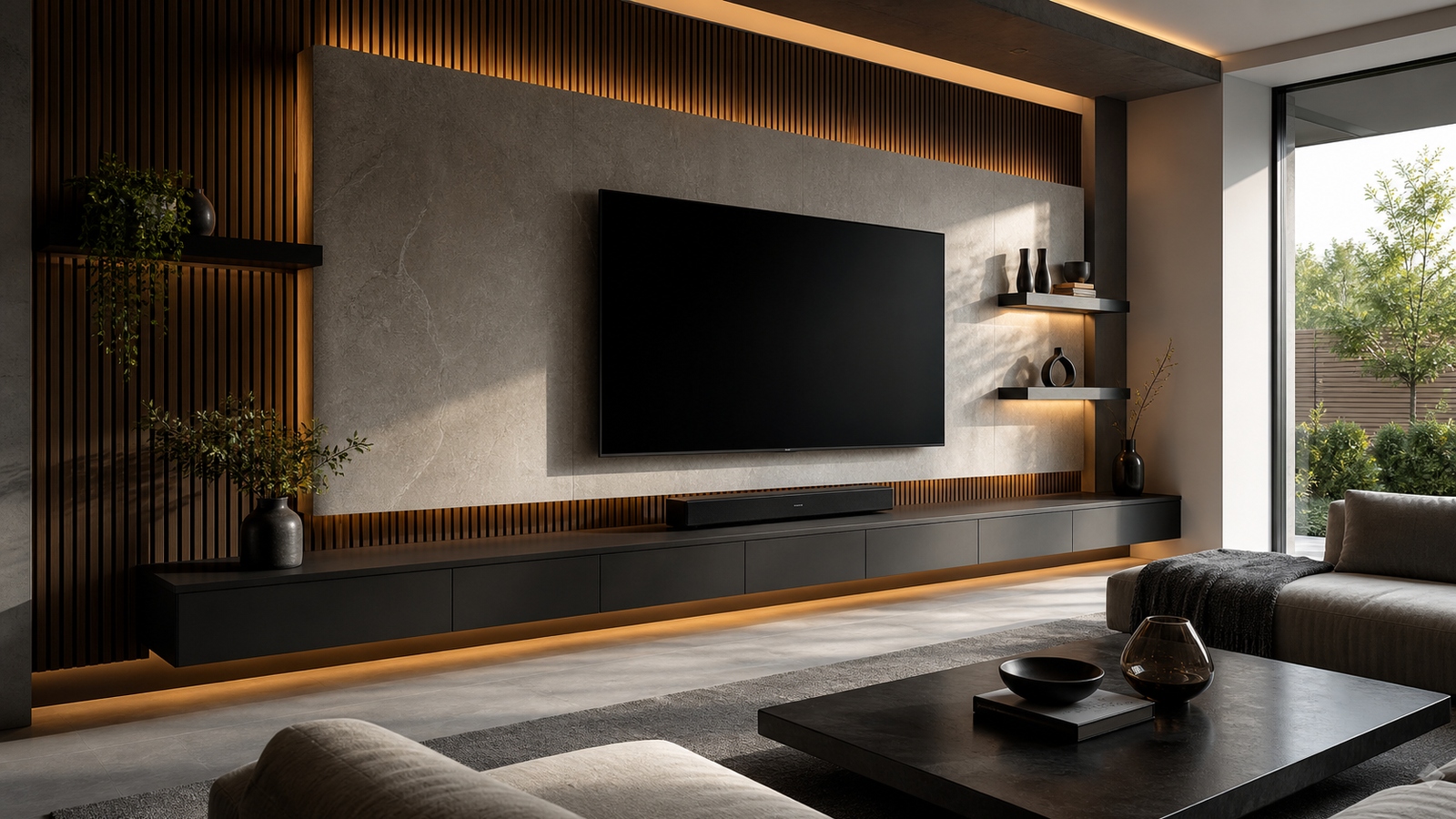
Designers now frame LED walls with custom millwork, acoustic paneling, stone surrounds, or minimalist floating walls. Some installations are flush-mounted to create a seamless, frameless aesthetic. Others are embedded within textured finishes, blending digital display with tactile materiality. The result is a design element that feels intentional rather than appended.
In open-concept living spaces, LED walls can serve as both entertainment hubs and artistic canvases. When not in use for streaming or gaming, they can display digital artwork, ambient landscapes, architectural visualizations, or subtle animated backdrops that complement the room’s color palette. This dual functionality transforms the display from a dormant black rectangle into a dynamic design feature.
Superior Visual Performance
Performance is central to the growing popularity of LED media walls. Modern homeowners expect premium visual fidelity, especially as 4K and 8K content becomes standard. LED walls deliver exceptional brightness levels, often exceeding 1,000 nits, ensuring clarity even in rooms with substantial natural light.
High dynamic range (HDR) capabilities allow for deeper blacks and vibrant color reproduction. Because each LED is self-emissive, contrast ratios are superior to many conventional displays. There is no backlight bleed or uneven brightness across large surfaces.
Additionally, LED media walls offer wide viewing angles, ensuring consistent color and brightness across expansive seating arrangements. In dedicated home theaters, this translates to immersive cinematic experiences. In multipurpose living rooms, it ensures every seat provides a premium viewing experience.
Motion handling is another advantage. LED displays refresh rapidly, making them ideal for gaming, sports broadcasts, and fast-paced action content. The result is crisp motion clarity without blur or lag—an important consideration for performance-driven households.
The Smart Home Ecosystem Connection
The integration of LED media walls into smart home ecosystems further accelerates their adoption. Modern homes increasingly rely on centralized automation systems controlling lighting, climate, audio, and security. LED media walls can be synchronized with these systems, enhancing the overall experiential design.
For example, lighting scenes can automatically dim when cinematic content begins. Motorized shades can lower in sync with the display powering on. Surround sound systems can activate simultaneously, creating a fully immersive home theater environment at the touch of a button.
Some installations incorporate ambient backlighting that responds dynamically to on-screen content, enhancing perceived contrast and immersion. Voice assistants and mobile apps allow homeowners to switch between entertainment modes, art display modes, and informational dashboards seamlessly.
This level of integration positions LED media walls not just as screens but as central nodes within a connected living environment.
Redefining the Living Room
The living room has historically been oriented around a fireplace or a television. LED media walls are reshaping this traditional hierarchy. In many contemporary homes, the LED wall replaces both, becoming the defining architectural feature of the space.
Designers are increasingly incorporating linear fireplaces beneath LED installations, merging warmth and digital spectacle. In other cases, entire walls are dedicated to floor-to-ceiling LED installations framed by subtle architectural lighting.
The impact is transformative. Rather than a modest focal point, the room becomes a cinematic environment. Family gatherings, sporting events, movie nights, and gaming sessions feel elevated. Even everyday streaming becomes immersive.
The visual presence of an LED media wall can also influence furniture layout, acoustical planning, and traffic flow. Sofas are positioned for optimal viewing angles. Acoustic treatments are discreetly embedded into surrounding surfaces. The space becomes intentionally curated around performance and aesthetics.
LED Media Walls in Dedicated Home Theaters
While living rooms benefit from LED installations, dedicated home theaters represent perhaps the most natural habitat for media walls. Traditional projection systems require dark environments, calibrated screens, and careful maintenance. LED walls eliminate many of these constraints.
Because LED displays generate their own light, they do not rely on projectors or lamps that degrade over time. They offer consistent brightness and uniformity. The absence of a projection throw distance allows for greater flexibility in room depth and seating arrangements.
For cinephiles seeking reference-level image quality, LED walls deliver exceptional clarity, color accuracy, and uniform luminance. Black levels approach true darkness, particularly in controlled environments. The experience rivals commercial cinemas, especially when paired with high-end audio systems.
Moreover, maintenance requirements are comparatively minimal. Individual modules can be serviced or replaced without dismantling an entire system. This modular serviceability adds long-term value and reliability.
Energy Efficiency and Longevity
Modern LED technology is remarkably energy efficient relative to its brightness output. While large media walls consume more power than standard televisions, advances in diode efficiency, power management systems, and intelligent brightness scaling reduce operational costs.
LED displays are also known for longevity. High-quality systems can operate for tens of thousands of hours before noticeable degradation. This lifespan makes them practical investments for homeowners planning long-term residence or seeking durable architectural features.
Thermal management systems have improved significantly, ensuring quiet operation. Unlike early commercial installations that required substantial ventilation, residential LED walls are engineered for minimal noise and heat output.
The Role of Customization
Customization is at the heart of modern luxury, and LED media walls deliver unprecedented personalization. Homeowners can select size, resolution, aspect ratio, bezel finish, mounting depth, and integrated sound solutions.
Some systems curve gently to enhance immersion. Others incorporate transparent LED panels that allow for creative design effects. Interactive capabilities enable touch functionality, transforming the wall into a collaborative workspace or creative canvas.
Content customization is equally important. With access to digital art platforms and high-resolution media libraries, homeowners can curate visual experiences aligned with their aesthetic preferences. The media wall becomes a rotating gallery, displaying curated collections during gatherings or subtle ambient visuals during quiet evenings.
This adaptability aligns with broader trends in experiential interior design, where spaces evolve according to mood, function, and occasion.
Cost Considerations and Market Growth
Historically, cost was the primary barrier to residential adoption of LED media walls. Early systems were prohibitively expensive. However, economies of scale, improved manufacturing processes, and competitive global markets have steadily reduced pricing.
While premium installations remain significant investments, mid-range residential LED walls are becoming more attainable for upscale renovations and custom builds. As demand grows, competition among manufacturers continues to drive innovation and affordability.
Market analysts predict sustained growth in residential LED display installations over the coming decade. The convergence of smart home integration, high-resolution content, and design-forward consumers positions LED media walls as a cornerstone of future home entertainment infrastructure.
LED Media Walls as Digital Art Installations
Beyond entertainment, LED media walls are redefining how art is displayed in modern homes. Traditional framed artwork offers static visual expression. LED walls, by contrast, can display high-resolution digital art that shifts over time.
Artists and designers are creating content specifically tailored for large-scale LED installations. Animated abstracts, slow-moving landscapes, and generative art pieces transform living spaces into evolving galleries. This dynamic expression appeals to homeowners seeking environments that feel alive and responsive.
In minimalist interiors, a subtle animated horizon line or atmospheric cloudscape can add depth without clutter. In bold contemporary homes, vibrant digital murals can command attention. The media wall becomes both medium and message.
Challenges and Considerations
Despite their many advantages, LED media walls require thoughtful planning. Installation involves structural reinforcement, precise calibration, and professional integration. Cable management, ventilation, and acoustic coordination must be addressed during design phases.
Viewing distance relative to pixel pitch is critical. Selecting an inappropriate resolution for the room size can compromise image clarity. Working with experienced integrators ensures optimal performance.
Additionally, content management systems must be user-friendly. The complexity of advanced display systems necessitates intuitive interfaces for homeowners to fully leverage functionality without technical frustration.
The Future of LED Media Walls in Home Design
The trajectory of LED media walls suggests continued innovation. Advancements in micro-LED technology promise even smaller pixel pitches, thinner panels, and improved energy efficiency. Flexible LED sheets may enable curved or sculptural installations that integrate seamlessly into unconventional architectural forms.
As augmented reality and interactive technologies evolve, LED media walls may become platforms for immersive mixed-reality experiences. They could serve as dynamic portals connecting homes to remote environments, virtual gatherings, or interactive educational content.
In sustainable architecture, energy-efficient LED systems will likely integrate with smart grids and renewable power sources, enhancing eco-conscious design.
Conclusion: A Defining Feature of Contemporary Living
The rise of LED media walls in modern home design represents a convergence of technology, architecture, and lifestyle aspiration. No longer confined to commercial venues, large-format LED displays are reshaping residential interiors with immersive visuals, architectural integration, and unparalleled customization.
They redefine focal points, elevate entertainment experiences, and transform walls into dynamic canvases. As technology advances and accessibility increases, LED media walls are poised to become a defining feature of contemporary luxury homes and forward-thinking renovations.
In an era where homes are expected to deliver not only comfort but also experience, LED media walls stand at the intersection of innovation and design—illuminating the future of modern living.
TV Top 10 Product Reviews
Explore Philo Street’s TV Top 10 Product Reviews! Discover the top-rated TVs, accessories, streaming devices, and home theater gear with our clear, exciting comparisons. We’ve done the research so you can find the perfect screen and setup for your entertainment experience!