Restaurant Screens Are Moving From Novelty to Infrastructure
Interactive displays used to feel like a restaurant upgrade reserved for big chains, airport terminals, or highly themed dining rooms. That has changed quickly. Restaurants now use screens to simplify ordering, guide guests, support staff, adjust menus, promote specials, manage wait times, and shape atmosphere without rebuilding the space. The best installations do not shout for attention. They make the room easier to understand, the service easier to deliver, and the dining experience more confident from the moment a guest walks in.
The Restaurant Menu Is No Longer Static
Restaurants live with constant change. Ingredient costs move, seasonal dishes rotate, staffing levels vary, happy-hour windows shift, and popular items sell out without warning. A printed menu can still be beautiful, but it cannot respond to those conditions quickly. Interactive and digital display systems give operators a way to keep the visible restaurant aligned with the kitchen, the register, and the actual service moment.
This matters most when the restaurant serves different audiences across the day. The same space may be a coffee stop at 8 a.m., a lunch counter at noon, a dinner room at 7 p.m., and a late-night gathering place after that. Displays let each version of the restaurant appear at the right time without asking staff to swap signs, cover prices, or explain why a menu board no longer applies.
The strongest restaurants still treat menu language with care. A screen does not fix a confusing offer. It simply gives the restaurant a faster, more flexible surface for showing the offer clearly.
Interactive Displays Reduce Friction at Decision Points
Most restaurant stress appears at decision points. Guests pause at the host stand, scan a menu too late in the line, ask whether an item is spicy, wonder where to pick up an order, or crowd the counter because they cannot tell what is happening. Well-placed displays answer some of those questions before they become staff interruptions.
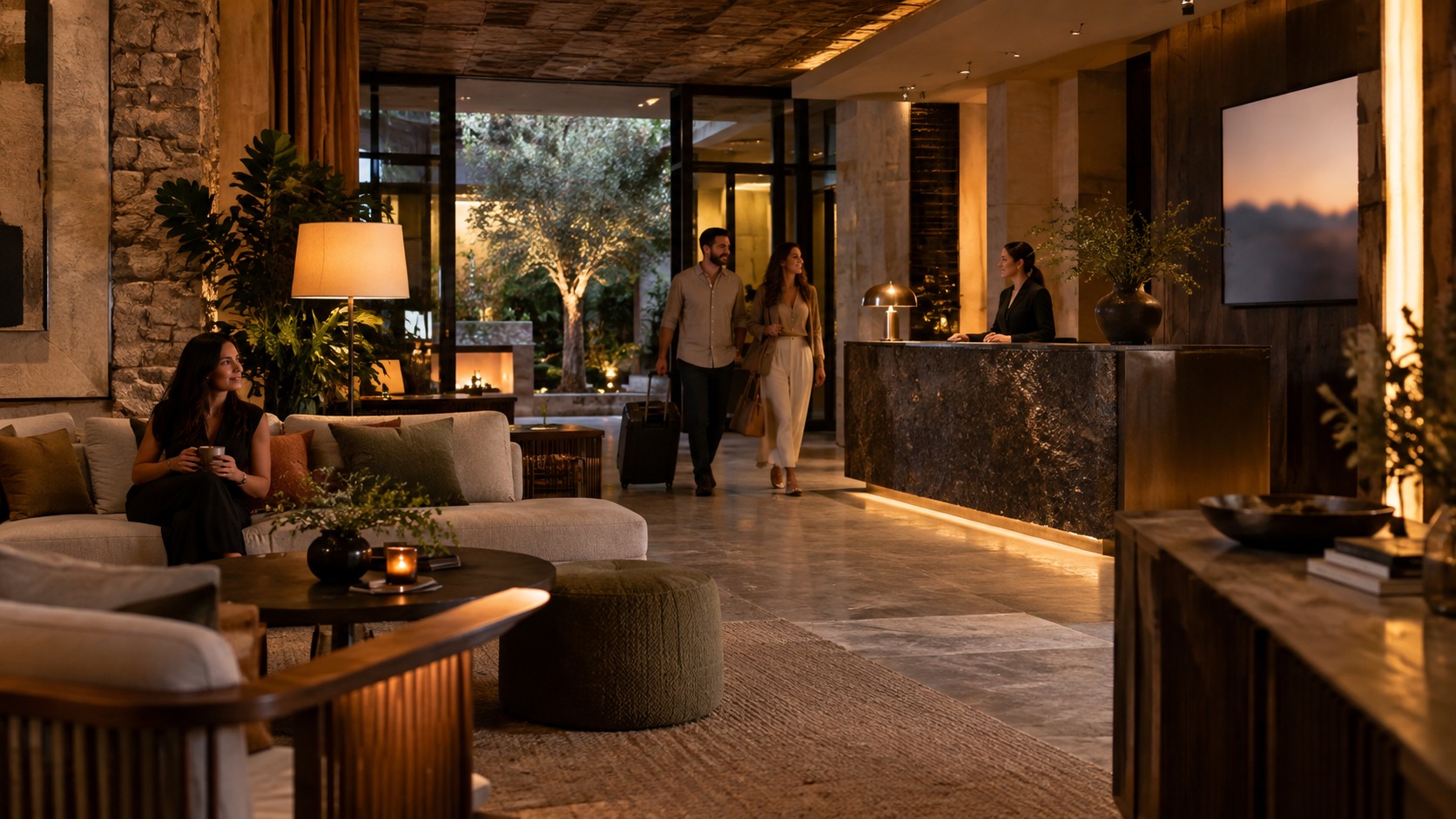
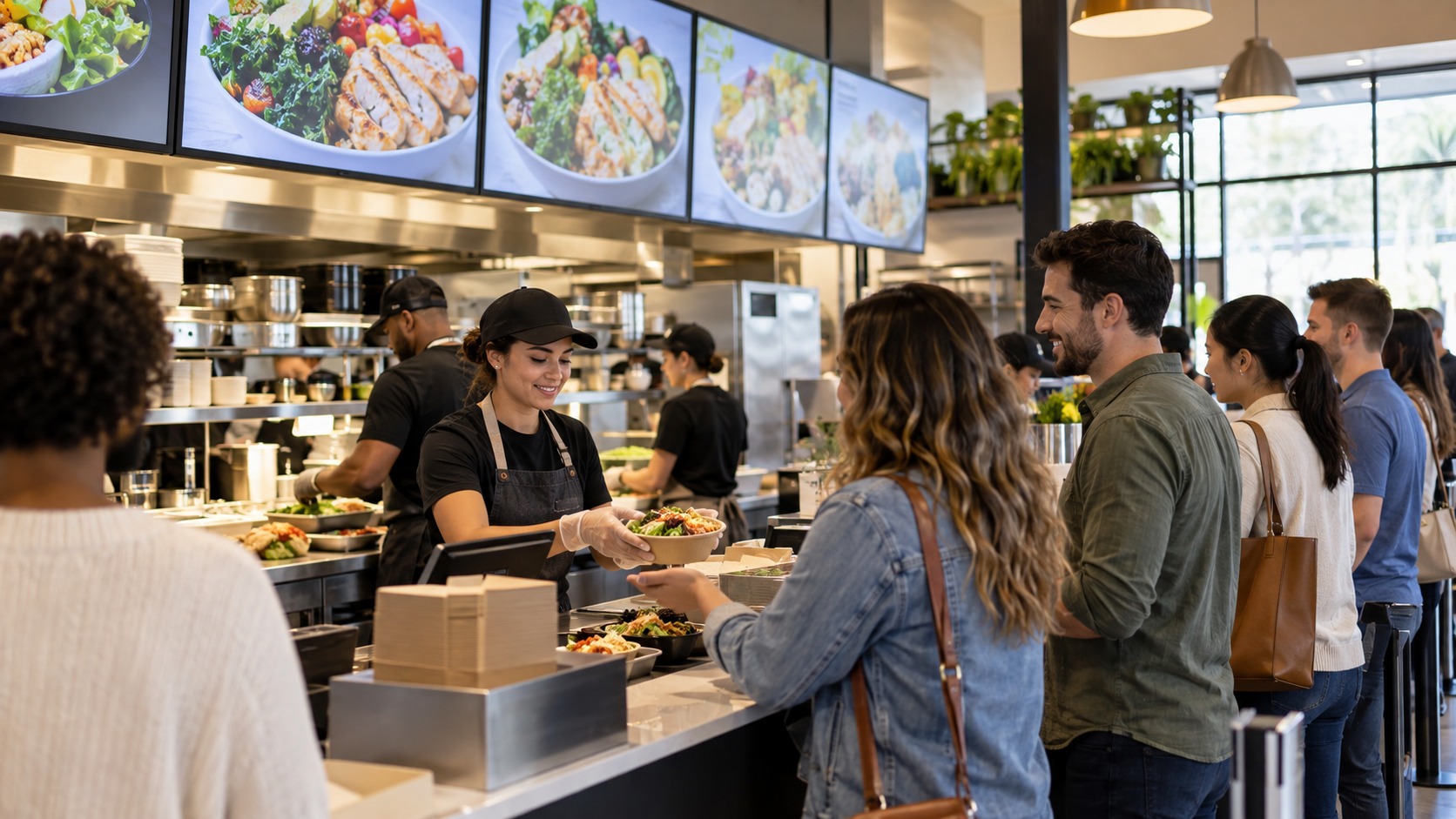
A display near the entrance can clarify seating, ordering, pickup, and wait expectations. A counter display can help guests choose faster because they have seen the menu before the cashier greets them. A pickup screen can keep completed orders from turning into a confusing cluster of bags and names. None of this removes hospitality. It gives hospitality more room to be warm instead of constantly corrective.
The Best Systems Support Staff Instead of Replacing Them
Restaurant technology often fails when it is introduced as a replacement for human judgment. Interactive displays work better when they remove low-value repetition and give staff better timing cues. A host should not have to answer the same wait-time question every thirty seconds if a visible display can set expectations. A cashier should not have to recite every sold-out item if the menu has already adjusted.
Kitchen and service teams also benefit from shared visibility. When managers can communicate shift notes, timing issues, or menu changes through back-of-house displays, the team depends less on hurried verbal updates. That consistency matters during rushes, when small misunderstandings become long lines or wrong orders.
The human part remains essential. Staff still read the room, solve problems, welcome guests, and make judgment calls. The display system simply carries information that machines are good at carrying.
Atmosphere Still Comes First
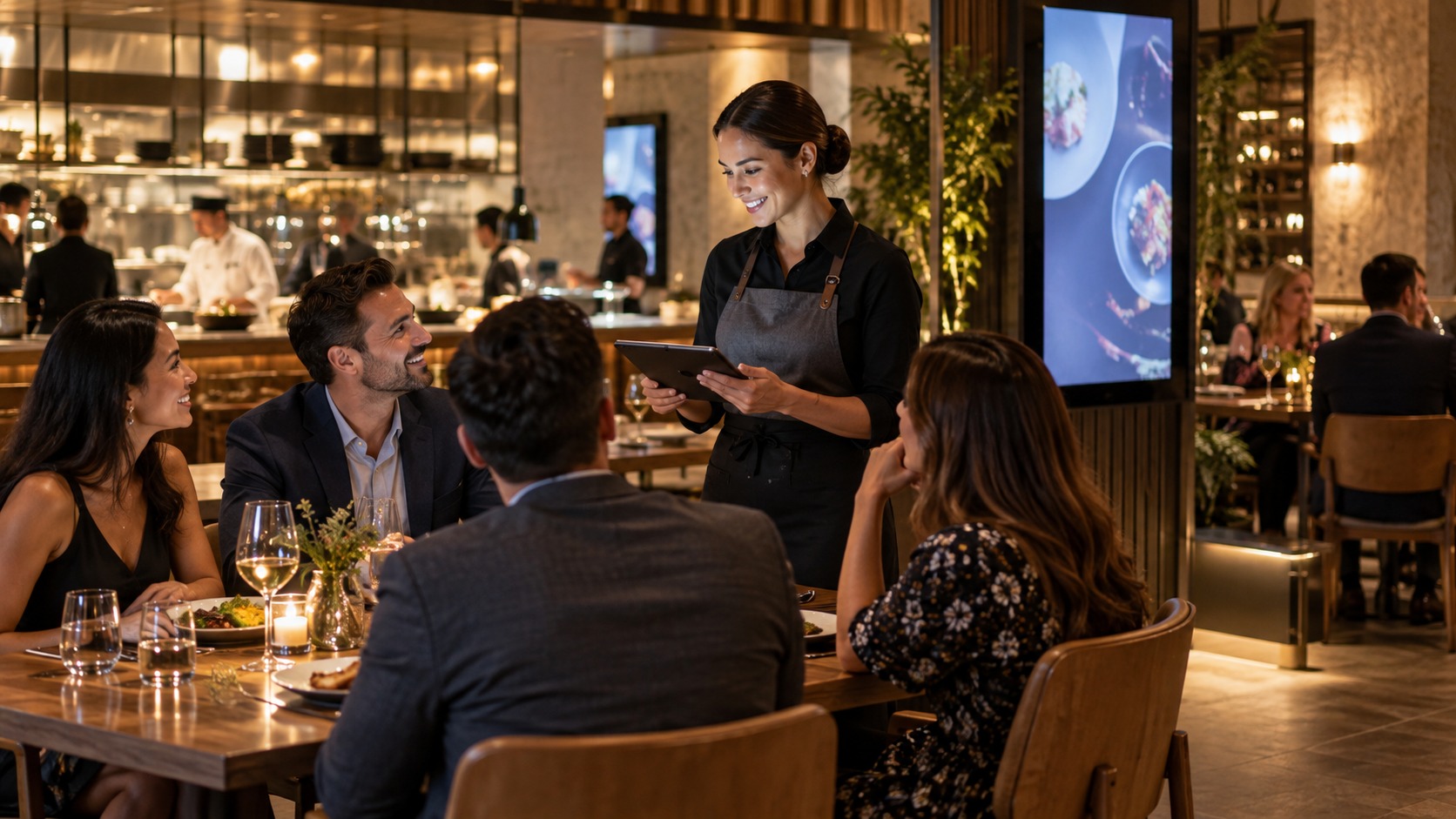
A restaurant is not a spreadsheet with tables. It is a room with energy, smell, sound, lighting, and social rhythm. Screens can damage that atmosphere if they are too bright, too frantic, or too unrelated to the concept. A refined dining room may need slow, quiet visual changes. A lively counter-service restaurant can use brighter menu panels and more frequent motion. A sports bar has a different screen logic altogether.
The visual treatment should feel like part of the interior design. Brightness, mounting depth, frame color, content pace, and sightline all affect whether a display feels integrated or tacked on. Even the best content looks cheap if cables hang below the panel or the screen fights with pendant lights and windows.
Content Discipline Matters More Than Screen Count
Adding more screens does not automatically make a restaurant more modern. In many spaces, one excellent display location beats five mediocre ones. The key is deciding what each screen is responsible for. A menu board should help guests order. A host display should help people understand the wait. A promotional screen should support a specific offer without distracting guests who are trying to dine.
Restaurants should also avoid turning every display into a rotating billboard. Guests learn to ignore screens that never stop selling. Useful information, calm pacing, and restraint make displays feel trustworthy.
Why Standard Adoption Is Accelerating
Interactive displays are becoming standard because they solve practical problems at the same time they improve presentation. Operators want flexibility without constant printing. Guests want clarity without hunting for answers. Staff want fewer repetitive explanations during the busiest moments. Designers want screens that can become part of the room rather than a late-stage gadget.
As hardware becomes thinner, brighter, and easier to manage, the barrier falls further. The remaining challenge is not whether a restaurant can install displays. It is whether the restaurant can use them with enough discipline to make service feel smoother and the room feel more intentional.
Guests Read the Room Before They Read the Menu
A restaurant display succeeds when it respects the way guests actually look around. People entering a dining space rarely stop and study a screen like they are reading a manual. They glance while walking, talking, listening for the host, watching the line, or deciding whether the room feels right. That means the first layer of information must be instantly understandable. A screen can introduce the service model, signal the menu's personality, or calm uncertainty, but it has only a few seconds to earn trust.
This is why restaurant displays should avoid cramming every possible message into the first view. A guest who needs dinner options, pickup direction, or wait guidance should not have to sort through rotating promotions. The best systems treat the room like a sequence. The entrance gives orientation. The queue gives choices. The counter confirms decisions. The table or bar supports atmosphere. When each screen speaks at the right moment, the restaurant feels easier without feeling overdesigned.
Design and Operations Need the Same Content Rules
Interactive displays sit between brand design and daily operations. Marketing teams may want rich visuals, seasonal campaigns, and polished storytelling. Operators need accuracy, speed, and the ability to make urgent changes without breaking the system. If those needs are not reconciled, the restaurant either gets beautiful content that staff cannot maintain or operational messages that look improvised.
Good content rules solve that tension. They define which screens can carry promotions, which screens must remain service-focused, who can change prices, how sold-out items appear, and how long temporary notices may stay live. They also protect visual quality by setting type sizes, motion limits, image standards, and naming conventions. Those rules may sound ordinary, but they are what keep an interactive display network from becoming a patchwork of emergency fixes.
The Technology Should Disappear During the Meal
Restaurants are social places, and the technology should know when to step back. A guest waiting in line may welcome clear digital guidance. A guest deep in conversation at the table may experience the same motion as visual noise. This is why screen behavior should change by zone. Ordering zones can be more direct. Dining zones need softer movement, lower brightness, and content that contributes to the atmosphere rather than demanding attention.
A useful test is whether the screen still feels appropriate after a guest has been seated for twenty minutes. If it continues to flash, sell, or shift aggressively, it may be serving the operator's desire to broadcast more than the guest's desire to enjoy the room. Standard adoption will favor restaurants that understand that restraint is not a lack of technology. It is mature technology behaving with hospitality.
Maintenance Is Part of the Guest Experience
A blank screen, frozen animation, incorrect price, or off-color panel is not a back-end problem once guests can see it. It becomes part of the dining experience. Restaurants that treat displays as infrastructure need maintenance routines just as they have cleaning routines, opening checklists, and food-safety checks. Someone should confirm that screens are on, current, readable, and aligned with the day's service before the rush begins.
This maintenance also includes content freshness. Regular guests quickly notice when a display promotes a season that has passed or an item that is never available. Fresh content does not have to mean constant reinvention. It can mean timely menu accuracy, a weekly feature, a seasonal visual, or a quieter mode during slower periods. The point is that the screen should feel cared for, because a cared-for display supports the impression of a cared-for restaurant.
What Standard Really Means for Restaurants
When a technology becomes standard, it stops being judged only as a novelty. It becomes part of the normal expectation for how a place works. That is what is happening with interactive displays in restaurants. Guests may not consciously demand a screen, but they increasingly expect menus to be current, waits to be understandable, pickup areas to be organized, and spaces to adapt quickly. Displays are one of the most practical ways for restaurants to meet those expectations.
This does not mean every restaurant should look like a technology showroom. A neighborhood bistro, a food hall stall, a boutique hotel restaurant, and a high-volume quick-service counter need different screen strategies. Standard adoption means the tool is common enough to be considered in the planning process. The final answer may be one small host display, a digital menu board, a private dining screen, or a fully integrated content network.
The restaurants that benefit most will be the ones that connect displays to real service goals. They will ask where guests hesitate, where staff repeat themselves, where the menu changes faster than printed material can keep up, and where the room needs more atmosphere or less confusion. Those answers create useful screens. Without them, the technology becomes decoration that eventually fades into visual clutter.
Interactive displays are becoming standard because they sit at the intersection of flexibility, clarity, and experience. Restaurants need all three. The screen is not the hospitality. The hospitality is what becomes possible when the right information reaches the right person at the right time.
Practical Adoption Starts Small
For many restaurants, the smartest path is not a full digital overhaul. It is one focused improvement with a clear before-and-after condition. A restaurant might begin with a menu board that handles daypart changes, a host display that reduces wait-time questions, or a pickup screen that keeps completed orders organized. Starting small gives the team a chance to learn content habits, maintenance needs, and guest reactions before the system expands.
This practical approach also protects the brand. A restaurant can test brightness, placement, pacing, and staff workflow without committing every wall to the same idea. If the first display clearly improves service, the next one can be planned with more confidence. If it does not, the restaurant has learned something valuable before making the mistake larger. Standard tools still require thoughtful adoption.
TV Top 10 Product Reviews
Explore Philo Street’s TV Top 10 Product Reviews! Discover the top-rated TVs, access comprehensive reviews, and find the perfect screen for your space.