Boutique Hotel Atmosphere Begins With Feeling
Boutique hotels compete on memory as much as amenities. Guests may remember the mattress, the shower, or the location, but they often return because the place made them feel something specific: calm, curious, glamorous, restored, hidden away, or connected to the neighborhood. Emotion-driven atmosphere is the deliberate shaping of that feeling through lighting, sound, scent, materials, service pacing, spatial flow, and carefully placed screens that support the story without turning the hotel into a showroom.
Define the Feeling Before Choosing the Finish
Many boutique hotel projects begin with material boards, furniture references, and attractive photographs. Those tools are useful, but they are not the beginning of atmosphere. The first decision is emotional. Should the hotel feel like a quiet retreat, a social salon, a local hideaway, a design gallery, or a restorative base camp? Without that answer, finishes become decoration rather than direction.
A clear emotional target helps every team make better decisions. Lighting designers know whether the lobby should sparkle or settle. The operations team knows whether check-in should feel brisk or conversational. The screen content team knows whether motion should be lively or nearly still. Even housekeeping and scent choices become easier because the hotel is protecting one recognizable feeling.
Arrival Is the First Emotional Contract
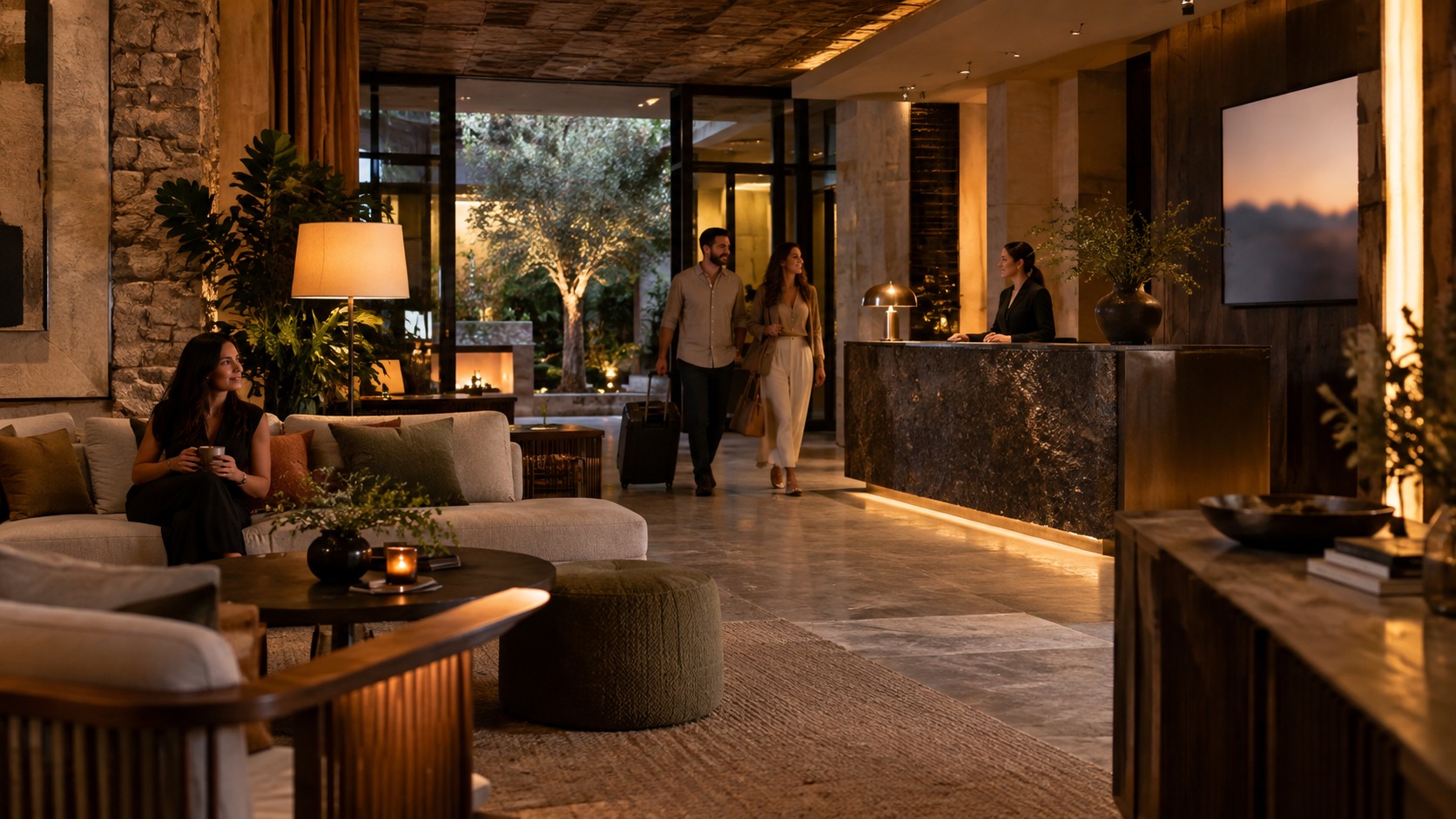
Guests form expectations before they reach the front desk. The exterior glow, door weight, lobby sightline, music level, and first staff greeting all tell the guest what kind of stay is beginning. Boutique hotels have an advantage here because they do not need to please everyone in the same way. They can make a specific promise and then keep it.
Screens can help arrival when they clarify without interrupting. A discreet display might identify events, guide guests toward reception, or show slow local imagery that sets the mood. It should not behave like a shopping-mall directory unless the hotel brand is intentionally high-energy. The screen's brightness should be tested from the doorway at night, when glare and contrast are most obvious.
The check-in pause deserves special attention. Tired travelers do not want to feel abandoned in a beautiful room. Seating, sightlines, and staff movement should make the wait feel hosted.
Layer the Senses Instead of Decorating the Room
Atmosphere becomes convincing when the senses agree. Warm lighting paired with cold sound can feel strange. A visually quiet lounge with loud, upbeat music may push guests through a room designed for lingering. A beautifully textured reception desk can still feel sterile if the screen behind it is too bright and the staff script is rushed.
Layering does not mean adding more of everything. It means giving each sense a role. Materials provide touch and visual weight. Lighting creates emotional zones. Sound sets pace. Scent marks memory. Digital surfaces add movement, orientation, or art. When each element has a purpose, the room can feel rich without feeling crowded.
Use Screens as Mood Surfaces, Not Billboards
Boutique hotels should be cautious with promotional screen behavior. Guests expect hotels to inform them, but they rarely want to feel sold to at every turn. A lobby screen that cycles through offers, restaurant promotions, spa discounts, and event ads can make a carefully designed space feel transactional.
A better approach is to assign different screen modes to different moments. Morning content may be brighter and more practical. Evening content may become slower and more atmospheric. Event signage can appear only when needed. Local recommendations can be presented like concierge notes rather than retail banners.
This restraint is especially important in smaller properties. In a compact lobby, a single screen can dominate the whole emotional field.
Protect the Transition From Public to Private
Boutique hotels often succeed when they make guests feel known without making them feel watched. The path from lobby to elevator, elevator to corridor, and corridor to room should gradually reduce social energy. Lighting can soften. Sound can fade. Screens can disappear or become purely directional. The guest should feel the hotel releasing them into privacy.
Corridors are often treated as leftover space, but guests experience them multiple times a day. A corridor that is too bright can make rooms feel less intimate. A corridor that is too dark can feel unsafe or theatrical in the wrong way. The balance depends on the hotel's emotional promise.
Make Service Part of the Atmosphere
Atmosphere is not only visual. A hotel can have perfect lighting and still feel wrong if service pacing contradicts the room. Staff language, posture, timing, and problem-solving all become part of the sensory field. A calm hotel needs calm handoffs. A lively hotel needs warmth without chaos. A discreet hotel needs staff who appear at the right moment without hovering.
Technology should support that service culture. Room controls, guest messaging, concierge screens, and staff dashboards should reduce uncertainty for both guests and employees. When systems are confusing, staff spend their energy apologizing for the tools instead of delivering hospitality.
Design for Memory, Not Just Photographs
Photogenic moments matter, especially for boutique hotels, but atmosphere cannot be reduced to a corner that looks good online. Guests remember how a lobby felt after a delayed flight, how the lounge sounded after dinner, how the room greeted them when they opened the door, and whether the hotel seemed to understand why they were there.
The most durable boutique atmospheres are specific, consistent, and usable. They give guests an image to remember, but they also make daily movement feel natural. Screens, lighting, materials, and service all serve the same purpose: helping the hotel become a feeling guests want to revisit.
Rooms Need Their Own Emotional Arc
The guest room should continue the emotional promise made by the public spaces, but it does not need to repeat the lobby at a smaller scale. A dramatic lobby may lead to a calmer room. A social hotel may still need bedrooms that feel protective and quiet. The important thing is that the transition feels intentional. Guests should sense that the hotel understands the difference between arrival energy and private recovery.
Screens inside rooms require special restraint. A television or room-control display can easily become the brightest object in the space, even when it is off or in standby mode. Placement, default brightness, startup behavior, and interface tone all affect whether the room feels restful. If the hotel is built around calm, the technology should wake gently and offer simple choices. If the brand is more playful, the screen experience can carry more personality, but it still has to respect fatigue, privacy, and nighttime use.
Local Character Should Be Felt, Not Announced
Boutique hotels often promise a connection to place, but local character becomes weak when it relies only on obvious references. A mural, map, or souvenir display can help, yet guests feel locality more deeply through material choices, food, views, music, staff knowledge, and the rhythm of the neighborhood. Emotion-driven design asks what the place feels like at different times of day and how the hotel can translate that feeling indoors.
Digital surfaces can support this without becoming travel advertising. Slow visual art, neighborhood photography without captions, seasonal color shifts, or discreet concierge recommendations can give the hotel a sense of place. The key is to avoid turning every local element into an explanation. Guests do not need the hotel to lecture them about authenticity. They need enough specificity to feel that they could not be in any other property.
Operational Calm Makes Design Believable
Guests can feel operational stress even when they cannot name it. A crowded check-in desk, confused queue, delayed room handoff, or staff member fighting a tablet can puncture the atmosphere faster than a wrong pillow fabric. Emotion-driven hotels therefore need systems that protect calm behind the scenes. Staff should have the information they need before guests ask. Screens and dashboards should reduce uncertainty rather than add another layer of attention.
This is where technology becomes emotional indirectly. A back-of-house display that helps housekeeping, reception, and valet teams coordinate may never be seen by guests, but guests feel the result. Their room is ready when promised. A request is not repeated three times. The restaurant knows about a celebration. The atmosphere feels generous because operations are not constantly leaking into the guest experience.
Atmosphere Should Change Without Losing Identity
Boutique hotels live across many moods. Morning coffee, afternoon arrivals, evening cocktails, rainy days, holiday weekends, business travel, and romantic escapes all pass through the same rooms. Emotion-driven atmosphere should be flexible enough to respond, but stable enough that the hotel remains recognizable. Lighting scenes, music playlists, scent intensity, fireplace behavior, and screen content can all shift by time and context.
The danger is overcorrection. A quiet hotel should not become a nightclub because the lobby bar is full. A lively hotel should not become sterile at breakfast because the operations team wants efficiency. The better approach is modulation. The core feeling remains, while brightness, tempo, and content adapt. Guests experience the hotel as alive rather than inconsistent.
Measuring Atmosphere Without Flattening It
Hotel atmosphere can feel difficult to measure because the goal is emotional. Still, boutique hotels can observe whether the atmosphere is working. Do guests linger in the lobby when they do not have to? Do they use the lounge at different times of day? Do reviews mention the feeling of the place rather than only the location and room size? Do staff spend less time correcting confusion because the space guides people naturally? These clues reveal whether design choices are becoming lived experience.
Measurement should not turn the hotel into a sterile testing environment. The point is not to optimize every lamp and screen as if guests are moving through a sales funnel. The point is to notice whether the intended feeling survives contact with real operations. A lobby may photograph beautifully but feel awkward at check-in. A room may look calm online but glow too brightly at night. A digital art wall may impress first-time visitors but become tiring for staff who stand near it all day.
Boutique hotels should revisit atmosphere after opening because the building learns. Guests choose unexpected seats. Staff develop informal workarounds. Screens get brighter than intended after software updates. Music drifts louder during busy shifts. Small adjustments can restore the original emotional promise without a redesign.
The best atmosphere feels effortless to guests because so many decisions have been made on their behalf. That effort is not manipulation. It is hospitality expressed through space, technology, and care.
Small Details Carry the Mood
Emotion-driven atmosphere often depends on details that seem minor during design meetings. The brightness of a bedside control, the sound of a lobby playlist at breakfast, the way a screen dims after an event, the chair a guest chooses while waiting, or the view from the elevator doors can all support or weaken the hotel's intended feeling. Guests may not mention these details directly, but they experience the sum of them.
That is why boutique hotels should treat atmosphere as an operating standard, not only a design concept. Opening checklists can include music level, scent strength, screen mode, lamp scenes, and lobby seating condition. Staff can be trained to notice when the room feels off. The emotional promise becomes more durable when the team has everyday language for protecting it.
TV Top 10 Product Reviews
Explore Philo Street’s TV Top 10 Product Reviews! Discover the top-rated TVs, access comprehensive reviews, and find the perfect screen for your space.