A New Kind of Everyday Theater
Home theater design is no longer limited to one dark room with bulky equipment and a row of recliners. The strongest trend is integration: screens, speakers, lighting, seating, and control systems are being planned as part of the home rather than as a separate gadget collection. For families, that shift makes entertainment feel easier to use on ordinary nights and more impressive when guests arrive. It also changes the design conversation. A modern theater can be a living room, loft, basement lounge, media wall, or flexible multipurpose space, as long as the room supports clear picture, controlled sound, comfortable sightlines, and simple operation.
Hidden Technology Is Becoming the Luxury Signal
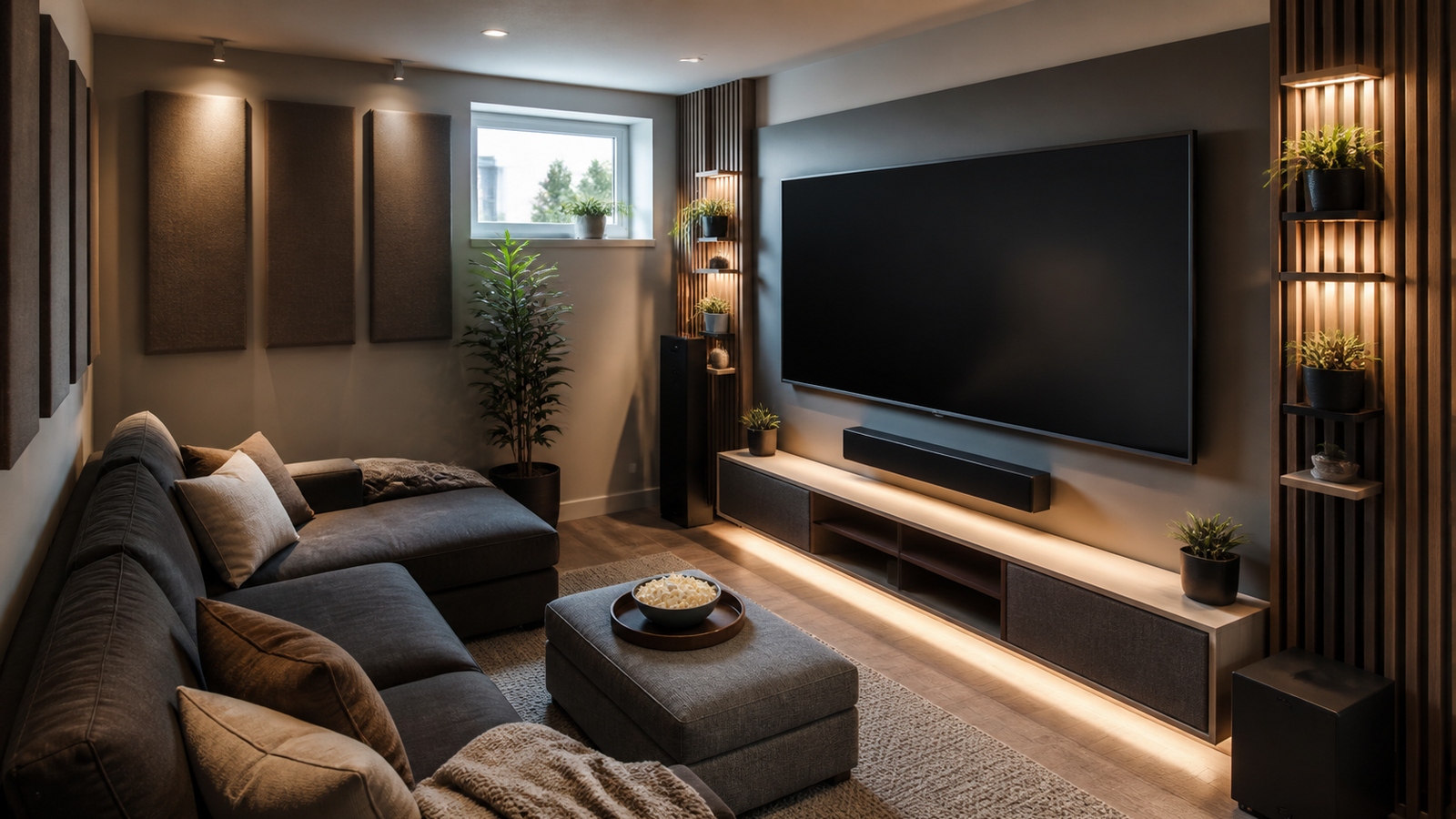
The most expensive-looking home theaters often show the least equipment. Instead of exposed receivers, visible cable bundles, and towers of components, designers are using ventilated cabinetry, in-wall speaker placement, recessed lighting channels, and low-profile mounts. The goal is not to pretend technology is absent. It is to make technology feel deliberate, calm, and built into the architecture of the room.
This approach is changing the way people budget for entertainment spaces. A slightly smaller screen with clean installation can feel more premium than a larger screen surrounded by clutter. Likewise, a modest speaker package can outperform a more dramatic-looking setup if the speakers are placed correctly and the room is not fighting the sound. The trend rewards planning more than excess.
Hidden technology also makes the room easier to live with. A family room can host movie night without looking like a showroom every hour of the day. Doors close, panels align, remotes are reduced, and the room returns to being part of the home. That everyday flexibility is why concealed infrastructure has become one of the most important signals of modern home theater design.
Immersive Audio Is Moving Past the Enthusiast Crowd
Surround sound used to feel like a specialist upgrade for people who loved calibration charts and speaker diagrams. Now, immersive audio is becoming more approachable. Soundbars with wireless surrounds, compact in-ceiling speakers, and object-based formats have made spatial sound easier to install and easier to explain. People may not know every technical term, but they can immediately feel the difference when rain seems to fall above them or a vehicle moves across the room with believable direction.
The best trend is not simply adding more speakers. It is treating audio as part of the room plan from the beginning. Seating position, ceiling height, hard surfaces, rugs, curtains, and furniture all affect how convincing a theater feels. When those pieces work together, the room can feel cinematic at lower volumes, which matters in shared homes, townhomes, and late-night viewing routines.
Lighting Has Become Part of the Viewing System
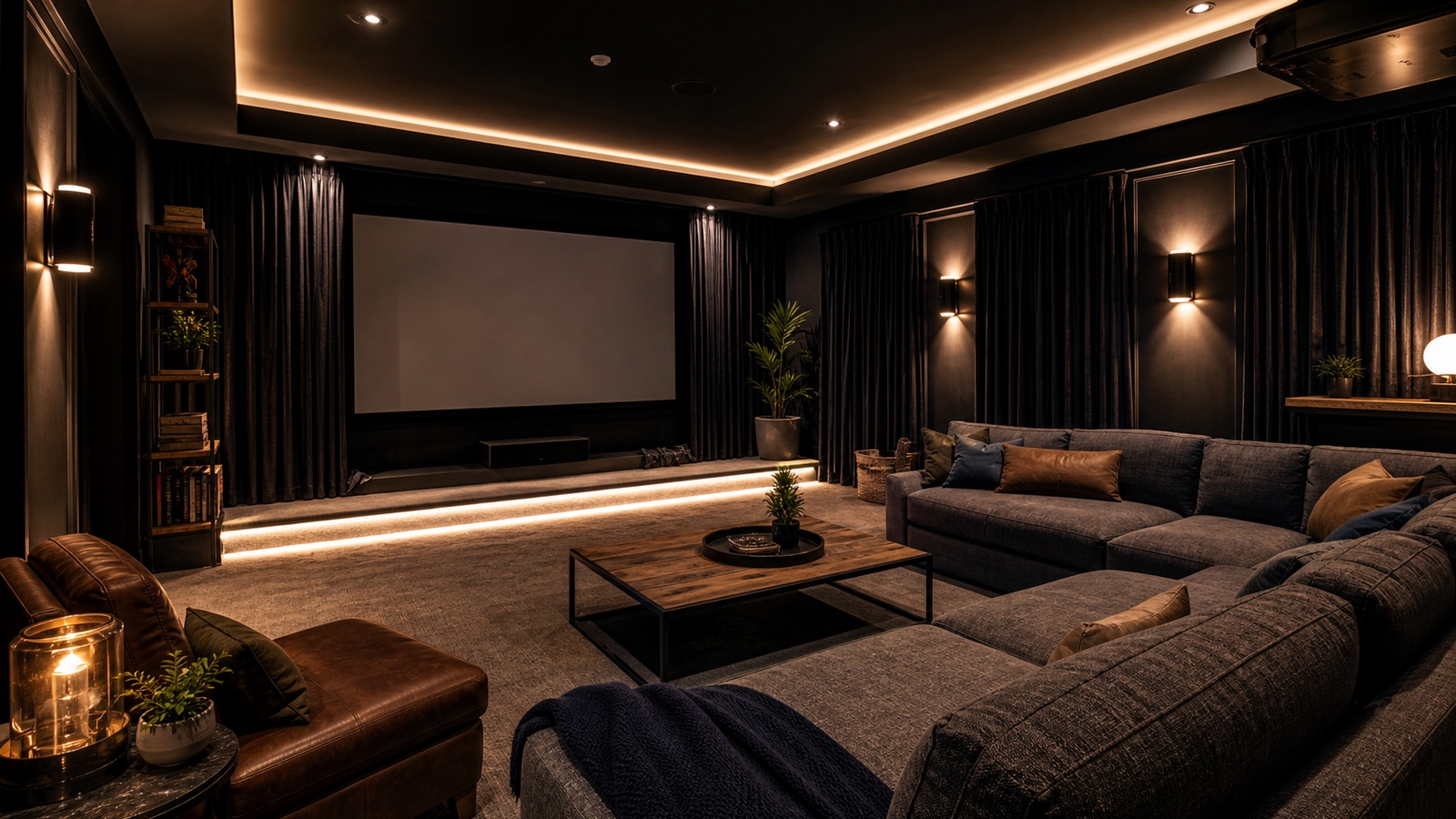
Lighting is doing more than making a room look dramatic in photos. Layered lighting helps people move safely before the movie starts, reduces eye strain during long viewing sessions, and gives the space different moods for sports, gaming, casual streaming, or a serious film night. Recessed cans, wall washers, toe-kick lighting, sconces, and LED bias lighting behind a display can all contribute if they are controlled thoughtfully.
The mistake is using lighting as a novelty. Overly bright color strips or constantly shifting effects can distract from the screen. The more durable trend is quiet control: dimmable scenes, warm color temperature, low glare, and the ability to darken the room without making it feel like a cave. Good lighting makes the screen better, but it also makes the room more welcoming when the screen is off.
Smart lighting is also becoming less intimidating. A single scene button can lower shades, dim fixtures, and prepare the room without forcing everyone to use an app. That simplicity is a major reason theater upgrades are showing up in mainstream remodels.
Flexible Rooms Are Replacing Single-Purpose Rooms
Many homeowners still love a dedicated theater, but the broader trend is toward rooms that can shift roles. A basement can be a theater, gaming zone, sleepover lounge, and sports room. A living room can support family viewing without sacrificing conversation or daylight. A bonus room can hold a projector screen that disappears when the room is used for exercise, work, or guests.
- Modular seating helps a room shift between movie night and casual lounging.
- Motorized shades can make daytime viewing possible without permanent darkness.
- Storage-backed media walls keep controllers, blankets, remotes, and accessories nearby.
- Portable tables and ottomans let snacks, board games, and laptops coexist with the theater layout.
The flexible-room trend is not a compromise when it is designed honestly. It simply asks different questions. Instead of building the room around one perfect seat, the plan considers how people actually gather, move, talk, pause, and return to the screen.
Personalization Is Getting More Practical
Personalized entertainment used to mean profiles inside streaming apps. In modern home theaters, personalization reaches the room itself. A gaming scene can prioritize low-latency input, brighter lighting, and headset charging. A movie scene can lower lights, switch audio modes, and set the display to a more cinematic picture preset. A sports scene can keep the room brighter and make multiple sources easier to manage.
The risk is complexity. A theater that requires a printed instruction sheet is not really modern, no matter how much it cost. The best systems reduce decisions instead of adding them. A few reliable scenes, clear input names, simple voice control, and a physical backup remote can make advanced technology feel calm.
That is where home theater trends are heading overall. The future is not more equipment for its own sake. It is cleaner rooms, better sensory design, and entertainment spaces that fit naturally into the way people already live.
Wellness and Comfort Are Shaping the Room
Another major shift is the way theater rooms are being judged by comfort rather than spectacle alone. Older home theaters often celebrated intensity: huge screens, booming bass, dark walls, and seats arranged like a private cinema. Modern spaces still want impact, but they also need to feel good for a whole evening. That means better ventilation, softer lighting transitions, easier conversation before and after viewing, and seating that supports more than one posture.
This comfort focus changes material choices. Performance fabrics, rounded furniture edges, washable rugs, and quieter HVAC all matter because the room is part of daily life. The best theaters now invite people to settle in without feeling trapped in a specialized space. They can host a movie, a casual episode, a video game session, or a quiet music night without requiring the room to change identity completely.
Wellness also shows up in volume discipline. A room with good acoustics does not need to be painfully loud to feel immersive. Clear dialogue, balanced bass, and controlled reflections let people enjoy the experience longer. That is a subtle luxury, but it is one people notice after the novelty of the equipment fades.
Designers Are Treating the Screen Wall as Architecture
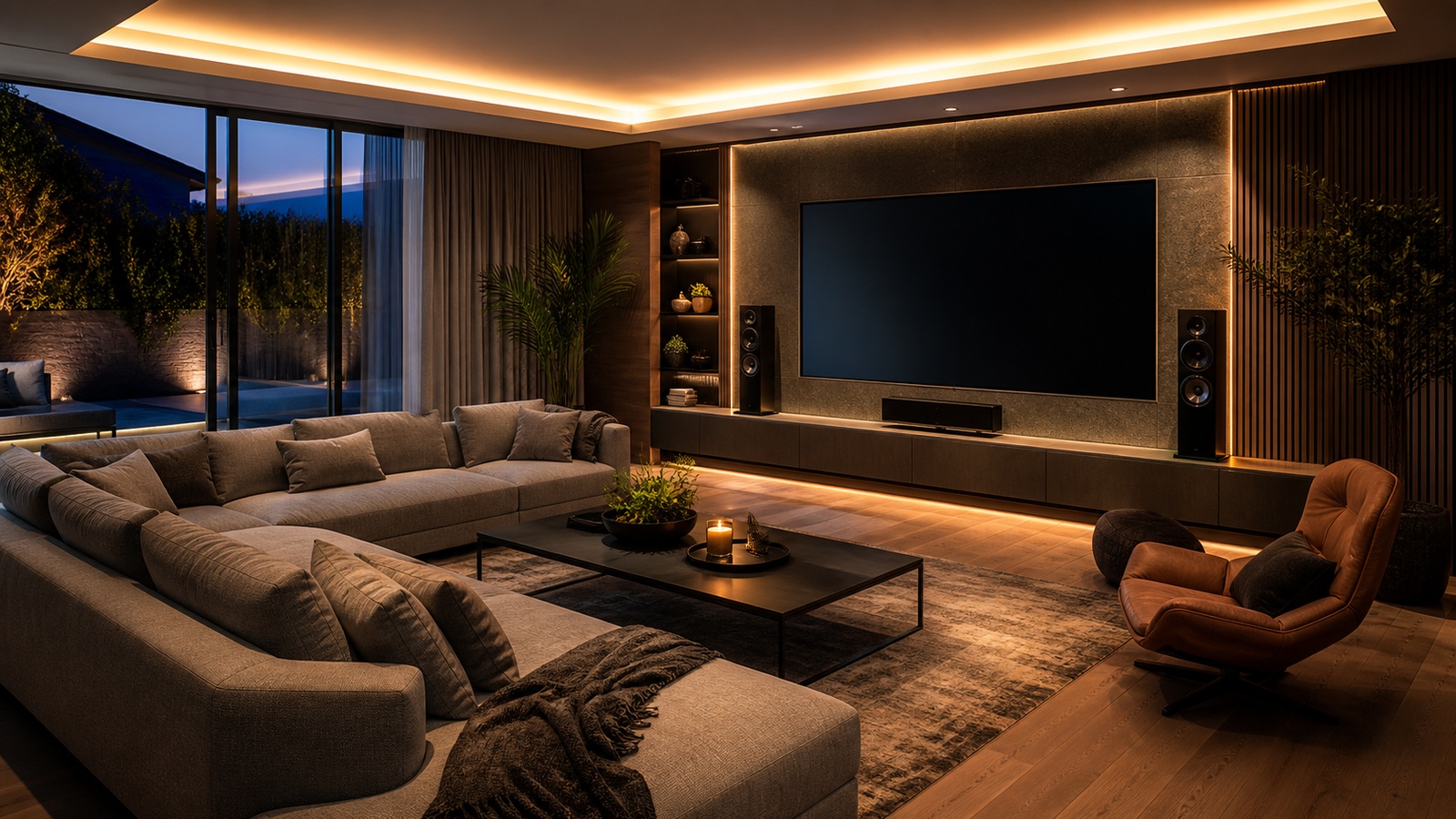
The screen wall is becoming an architectural feature rather than a place to hang a black rectangle. Media walls, panel systems, integrated shelving, art-mode displays, and concealed speakers all help the screen belong to the room. This matters in open-plan homes where the theater area may be visible from the kitchen, dining area, or entry.
A strong screen wall does not have to be elaborate. Sometimes the best move is a simple frame of warm wood, a painted recess, or a low built-in that aligns with the display. The key is proportion. The screen should look centered within a planned composition, with storage and speakers placed in a way that makes sense. When the wall is balanced, the technology feels chosen rather than added.
This trend also helps resale and long-term satisfaction. A well-designed media wall can adapt to new displays and devices more easily than a one-off equipment setup. If power, conduit, ventilation, and access are built in, the room can evolve without losing its clean look.
The Best Trend Is Easier Use
The most important transformation may be the least visible: home theaters are becoming easier for everyone in the household to use. A room that only one person understands is not truly modern. Clear source names, reliable remotes, familiar streaming interfaces, and simple lighting scenes make the system feel welcoming instead of intimidating.
This is where planning beats gadget collecting. A thoughtful installer or homeowner asks how the room will be used on a Tuesday night, not only how it will perform during a demo. Can someone start a show without changing five settings? Can guests adjust volume without breaking the input chain? Can the room recover gracefully if the internet drops or a device updates?
When ease becomes the standard, the theater gets used more often. That is the real measure of success. A modern living space is not transformed by owning impressive technology; it is transformed when the technology disappears into better evenings, clearer sound, richer images, and simpler rituals.
What Homeowners Should Watch Next
The next wave of home theater design will likely be quieter and more adaptive. Displays will continue to improve, but the bigger gains for most homes will come from better integration: smarter light control, cleaner wireless reliability, more convincing compact audio, and media walls that anticipate upgrades. The best rooms will not require homeowners to rebuild every time a new device appears.
That means today’s planning should leave space for tomorrow. Conduit behind the screen, serviceable cabinets, flexible seating, and network stability may not be exciting trends, but they protect the room from feeling outdated. A theater that can accept a new display, streamer, or speaker layout without tearing apart the wall is already more modern than one built only around the current equipment.
Homeowners should also watch how entertainment habits keep blending. Movies, streaming shows, sports, gaming, fitness content, video calls, and music can all happen on the same screen wall. The strongest designs will support that mix without making the room feel confused. A transformed modern living space is one where the technology adapts to the moment and then gracefully steps back.
How to Prioritize the First Upgrade
For homeowners trying to apply these trends, the best first upgrade is the one that removes the biggest daily annoyance. If the room is hard to use, simplify control. If the picture looks flat, address light and reflections. If voices are hard to hear, improve speaker placement or room softness before buying more volume. Trend-aware design starts with the problem people actually feel.
This keeps the project grounded. A home theater can absorb endless spending, but the most satisfying rooms are built through clear priorities. Fix the room, make operation simple, support comfort, and then choose the equipment that benefits from that foundation.
When trends are filtered through real habits, they stop feeling like decoration. They become practical improvements that make modern living smoother, calmer, and more enjoyable.
A Trend Is Only Useful If the Room Gets Used
The clearest test for any home theater trend is whether it makes the room easier to enjoy more often. A hidden speaker, smart lighting scene, or flexible media wall should reduce friction, not create another layer of decisions. If the room looks impressive but everyone avoids using it, the design has missed the point.
TV Top 10 Product Reviews
Explore Philo Street’s TV Top 10 Product Reviews! Discover the top-rated TVs, access comprehensive reviews, and find the perfect screen for your space.