
Home Theater Layouts That Deliver True Cinema Energy
Creating a home theater that truly captures the energy, immersion, and emotional impact of a real cinema is both an art and a science. It goes far beyond installing a large screen and a powerful sound system. The layout of the space determines how sound travels, how visuals are perceived, and how comfortable and engaged viewers feel throughout an entire movie. A thoughtfully designed home theater layout transforms ordinary entertainment into a cinematic experience that feels expansive, dynamic, and unforgettable. From room proportions and seating geometry to speaker placement and lighting flow, every element plays a role in delivering authentic cinema energy within the comfort of your home.
Understanding the Foundations of Cinematic Space
Before exploring specific layouts, it is important to understand what makes commercial theaters feel so immersive. Cinemas are carefully engineered environments designed to focus attention forward, minimize distractions, and amplify both visual and auditory impact. The room shape typically favors longer depths over wide open spaces, allowing sound to travel smoothly toward the audience while maintaining strong visual presence. The seating is slightly elevated in rows, creating clear sightlines while enhancing sound dispersion. Walls often incorporate sound-absorbing materials to control echoes and enhance clarity, while lighting is subtle and directional to guide the eye without washing out the screen.
In a home environment, these same principles can be adapted to create a cinematic atmosphere regardless of room size. Even smaller spaces can achieve incredible immersion when layout decisions prioritize acoustics, viewing angles, and audience focus.
The Classic Dedicated Theater Room Layout
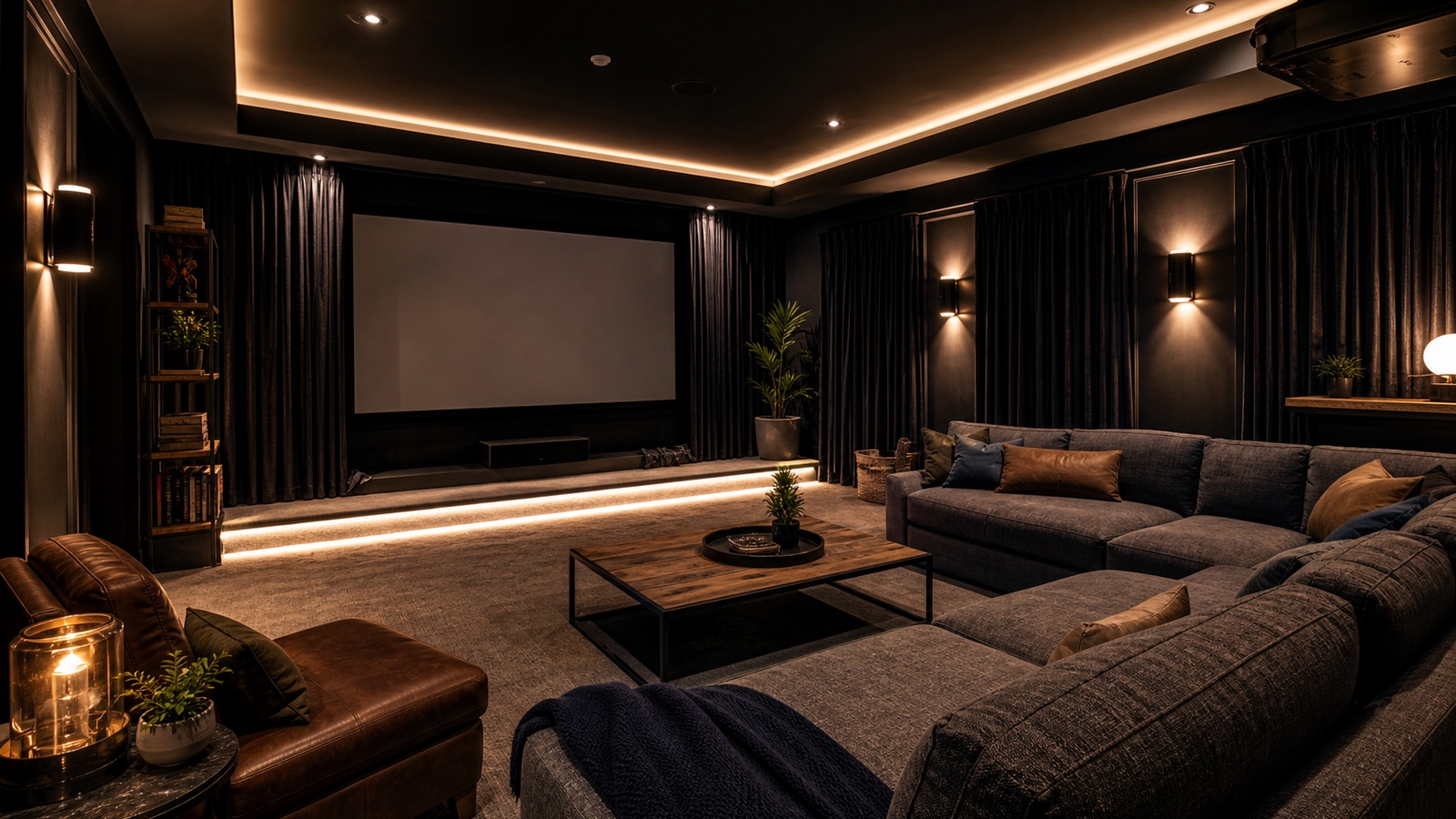
The dedicated theater room layout remains the gold standard for delivering true cinema energy. This setup typically uses a rectangular room where the screen is placed on the shorter wall, allowing for deeper seating rows and optimal sound travel. The front of the room becomes the visual and acoustic focal point, with speakers arranged symmetrically around the screen and along the side and rear walls.
Seating in this layout often follows a tiered or gently elevated arrangement, much like a traditional movie theater, ensuring unobstructed views while enhancing surround sound performance. The primary seating row is positioned at a distance that aligns with the screen’s optimal viewing angle, often around one to one and a half times the screen’s diagonal size. Additional rows are placed slightly higher to maintain sightlines and balanced audio.
This layout excels at creating immersive soundscapes and powerful visual presence. The elongated room shape supports deeper bass response while reducing sound reflections that could muddy audio clarity. When paired with acoustic treatments along the walls and ceiling, the result feels strikingly close to a professional cinema environment.
The Wide-Screen Living Room Theater Layout
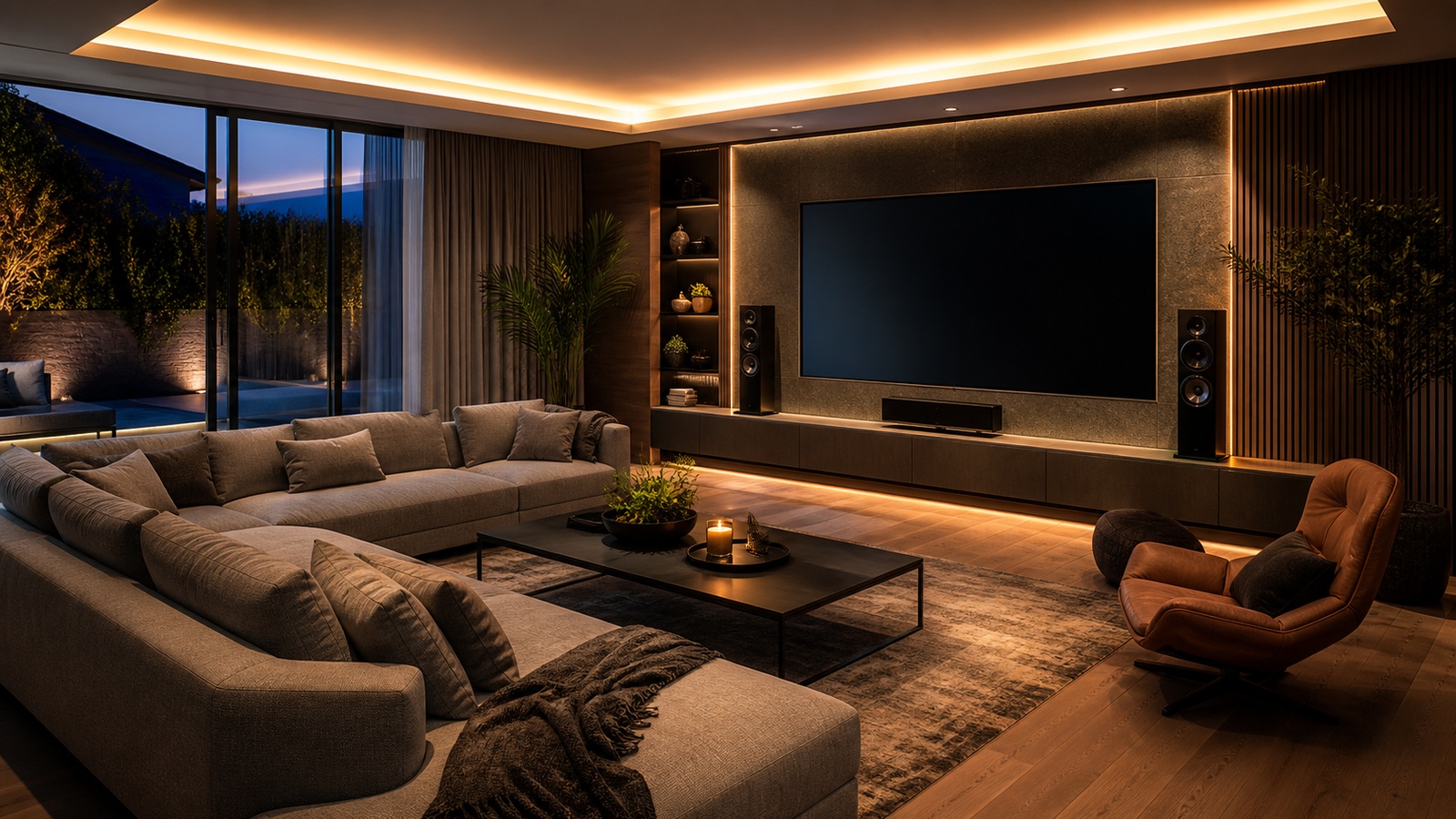
Not every home has the luxury of a dedicated room, which is where the living room theater layout shines. This approach transforms an open or multi-purpose space into a cinematic hub while maintaining everyday functionality. The screen is typically mounted along the longest uninterrupted wall, allowing for a wide viewing area and flexible seating arrangements.
Sofas, recliners, or modular seating are arranged in a gentle arc facing the screen, mimicking the curve of commercial theater seating to improve viewing angles and sound distribution. Speakers are integrated into furniture, mounted discreetly on walls, or placed on stands to maintain balance without disrupting the room’s design.
This layout benefits from strategic lighting placement, often using recessed ceiling lights, wall sconces, or ambient LED accents to create a theater-like atmosphere when movies are playing while still offering brightness for everyday use. Sound-absorbing rugs, curtains, and wall panels can subtly improve acoustics while enhancing décor. When executed thoughtfully, the living room theater layout delivers impressive cinema energy while blending seamlessly into daily life.
The Immersive Wraparound Layout
For those seeking maximum immersion, the wraparound layout places the audience at the center of the sound field. The screen remains the focal point at the front, but seating is positioned closer and slightly encircled by speakers arranged at multiple heights and angles.
This approach works exceptionally well with modern surround sound formats like Dolby Atmos or DTS:X, where audio moves fluidly around the room. Ceiling-mounted speakers or upward-firing units add vertical dimension, making sounds feel as though they come from above, behind, and all around the viewer.
The seating arrangement often consists of a central couch or cluster of recliners, ensuring every seat remains within the optimal audio zone. This layout emphasizes sensory immersion rather than traditional theater rows, making it ideal for families or smaller groups who want to feel enveloped by sound and visuals.
Proper acoustic treatment becomes especially important here, as reflections can disrupt the three-dimensional sound experience. Soft wall coverings, acoustic panels, and strategically placed furnishings help maintain clarity while amplifying cinematic depth.
The Loft and Open-Concept Theater Layout
Open-concept homes and loft-style spaces can still achieve powerful cinema energy with the right layout approach. Rather than enclosing the theater area, the design defines a dedicated entertainment zone within the larger space using furniture placement, lighting design, and acoustic elements.
The screen is typically mounted on a prominent wall or retractable projection surface, with seating arranged in a focused cluster directly in front. Area rugs help anchor the seating area visually while absorbing sound reflections. Bookshelves, decorative panels, and fabric wall hangings serve both aesthetic and acoustic purposes.
To enhance immersion in an open environment, directional speakers are aimed precisely toward the seating zone, while subwoofers are positioned to deliver even bass distribution without overpowering the space. Lighting is layered, combining ambient glow with task lighting and subtle accent features to replicate theater ambiance.
This layout proves that even without physical walls, a home theater can feel intimate, immersive, and energetic.
The Compact Cinema Layout for Smaller Spaces
Smaller rooms or apartments can still achieve cinematic impact through efficient layout design. In compact setups, every inch matters, making screen size, seating distance, and speaker placement critical.
The screen is often mounted flush against the wall or projected onto a retractable surface to save space. Seating is placed at a carefully calculated distance that maximizes immersion without overwhelming the viewer. Slim-profile speakers or soundbars paired with wireless surround units help maintain audio depth without clutter.
Vertical space is frequently used in compact layouts, with wall-mounted speakers, floating shelves, and ceiling lighting to keep floors clear. Acoustic panels can double as decorative art pieces, enhancing sound quality while adding visual interest.
Despite the limited footprint, these layouts can deliver surprisingly powerful cinema energy when designed with precision.
Seating Geometry That Enhances the Cinematic Experience
Seating plays a pivotal role in how a home theater feels and performs. The best layouts prioritize both comfort and sightlines, ensuring that every seat offers a clear, immersive view of the screen.
Curved seating arrangements are particularly effective, as they mirror commercial theaters and reduce viewing angle distortion. Recliners with adjustable headrests allow viewers to relax while maintaining optimal eye alignment with the screen.
Spacing between rows and seats should allow for easy movement while preserving sound balance. Elevating rear rows slightly enhances visibility and audio distribution, especially in longer rooms.
High-quality seating materials also influence acoustics, with plush fabrics absorbing sound and reducing echoes, contributing to a cleaner and more immersive audio environment.
Screen Placement for Maximum Visual Impact
The position of the screen determines how cinematic the experience feels. Ideally, the center of the screen should align with the viewer’s eye level when seated, reducing neck strain and maintaining natural viewing angles.
Large screens or projection setups benefit from slightly lower placement, allowing the image to fill the viewer’s field of vision without feeling overwhelming. Wall-mounted televisions should be angled subtly downward if positioned higher to preserve visual comfort.
Distance from the screen should correspond to its size and resolution, ensuring sharp detail while maintaining immersive scale. Proper placement transforms visuals from simple viewing into an enveloping cinematic spectacle.
Sound Flow and Acoustic Harmony
True cinema energy relies heavily on sound movement and clarity. The layout should guide audio naturally from the front of the room through the seating area and around the audience.
Front speakers anchor dialogue and primary effects, while side and rear speakers create spatial depth. Subwoofers are often positioned near walls or corners to amplify bass response evenly throughout the room.
Acoustic treatments such as wall panels, ceiling clouds, and bass traps help manage reflections and resonance, ensuring sound remains crisp and immersive rather than echoing or muddy.
When sound flows smoothly within the layout, movies feel more dynamic, realistic, and emotionally engaging.
Lighting Design That Builds Atmosphere
Lighting shapes the emotional tone of a home theater. Effective layouts incorporate layered lighting systems that transition easily from bright functional settings to dim cinematic ambiance.
Recessed ceiling lights provide general illumination, while wall sconces add soft directional glow. LED strips behind screens or along steps create subtle highlights that enhance immersion without distracting from the visuals.
Smart lighting systems allow users to adjust brightness and color temperature with a single command, instantly transforming the room into a cinema environment.
Thoughtfully placed lighting ensures comfort, safety, and atmosphere all work together seamlessly.
Integrating Technology for Seamless Performance
Modern home theaters benefit from integrated technology that enhances both layout efficiency and user experience. Wireless speakers reduce clutter, while smart hubs control lighting, audio, and visuals through a single interface.
Hidden cable management preserves clean aesthetics, keeping attention focused on the screen. Motorized screens, retractable projectors, and automated curtains can convert multi-use spaces into cinematic environments in seconds.
Technology integration ensures that the layout remains functional, adaptable, and visually refined.
Personalizing the Cinema Experience
While professional theaters follow standardized designs, home theaters offer the freedom to personalize the cinematic environment. Some homeowners incorporate themed décor inspired by classic theaters, futuristic cinemas, or favorite film genres.
Color palettes often lean toward darker tones that reduce light reflection and enhance visual contrast. Custom wall art, framed movie posters, or illuminated signage add personality without overwhelming the space.
Personal touches transform a home theater from a simple entertainment room into a cinematic sanctuary.
Future-Proofing Your Home Theater Layout
As audio and visual technologies continue to evolve, flexible layouts ensure long-term enjoyment. Leaving space for additional speakers, upgrading screen sizes, or accommodating new sound formats helps keep the theater current.
Modular seating allows for rearrangement, while adjustable lighting systems adapt to changing preferences. Conduit pathways and hidden access panels make future cable upgrades simple and clean.
A forward-thinking layout protects the investment while maintaining cinematic excellence for years to come.
Bringing True Cinema Energy Home
Designing a home theater layout that delivers true cinema energy is about more than copying a commercial theater. It requires understanding how space, sound, light, and comfort interact to create immersion. Whether through a dedicated theater room, a transformed living space, or a compact setup, the right layout can evoke the magic of the big screen within any home.
By focusing on thoughtful screen placement, strategic seating geometry, immersive sound flow, atmospheric lighting, and seamless technology integration, homeowners can craft cinematic environments that feel powerful, engaging, and unforgettable. The result is not just a place to watch movies, but a space where stories come alive, emotions resonate deeply, and every viewing becomes an event. With the right layout choices, true cinema energy is no longer confined to theaters, it becomes a daily experience at home.
TV Top 10 Product Reviews
Explore Philo Street’s TV Top 10 Product Reviews! Discover the top-rated TVs, accessories, streaming devices, and home theater gear with our clear, exciting comparisons. We’ve done the research so you can find the perfect screen and setup for your entertainment experience!