
How to Turn Any Room Into a Premium Home Theater Space
Creating a premium home theater space is no longer reserved for sprawling mansions or custom-built basements. With the right strategy, thoughtful design choices, and a clear understanding of audiovisual fundamentals, you can transform virtually any room into a cinematic sanctuary. Whether you’re working with a spare bedroom, a finished basement, a loft, or even a large living room, the key lies in controlling light, optimizing acoustics, selecting the right equipment, and designing an environment that feels immersive and intentional. A true home theater is not just about a large screen and loud speakers; it is about crafting an experience that rivals — and often surpasses — the commercial cinema.
Start With the Right Room: Evaluating Space and Layout
The foundation of a premium home theater space begins with room selection. While almost any room can be converted, certain characteristics make the transformation more seamless. Rectangular rooms generally perform better acoustically than square spaces, as they reduce standing wave issues and uneven bass distribution. Ceiling height also matters. Higher ceilings provide better sound dispersion and allow for elevated speaker placement, but even standard 8-foot ceilings can deliver exceptional results with proper acoustic treatment.
Light control is equally critical. Rooms with minimal windows are ideal because ambient light can wash out projected images and reduce screen contrast. If your chosen room includes windows, blackout curtains or motorized shades are essential for achieving true cinema-level darkness. The goal is to eliminate stray light reflections that degrade image quality.
Room dimensions should also influence seating placement and screen size decisions. A premium experience requires proper viewing distance. For example, with a 120-inch screen, seating should typically be positioned around 10 to 12 feet away to maintain immersive field of view without visible pixel structure. Thoughtful layout planning ensures that every seat in the room offers a clear sightline and balanced audio experience.
Mastering Acoustics: The Hidden Secret of Cinematic Sound
Audio performance is what separates an average media room from a premium home theater. Even the most advanced speakers will underperform in a poorly treated room. Sound waves reflect off hard surfaces like drywall, tile, and glass, creating echo, distortion, and muddy dialogue. Addressing these issues through acoustic treatment dramatically elevates the listening experience.
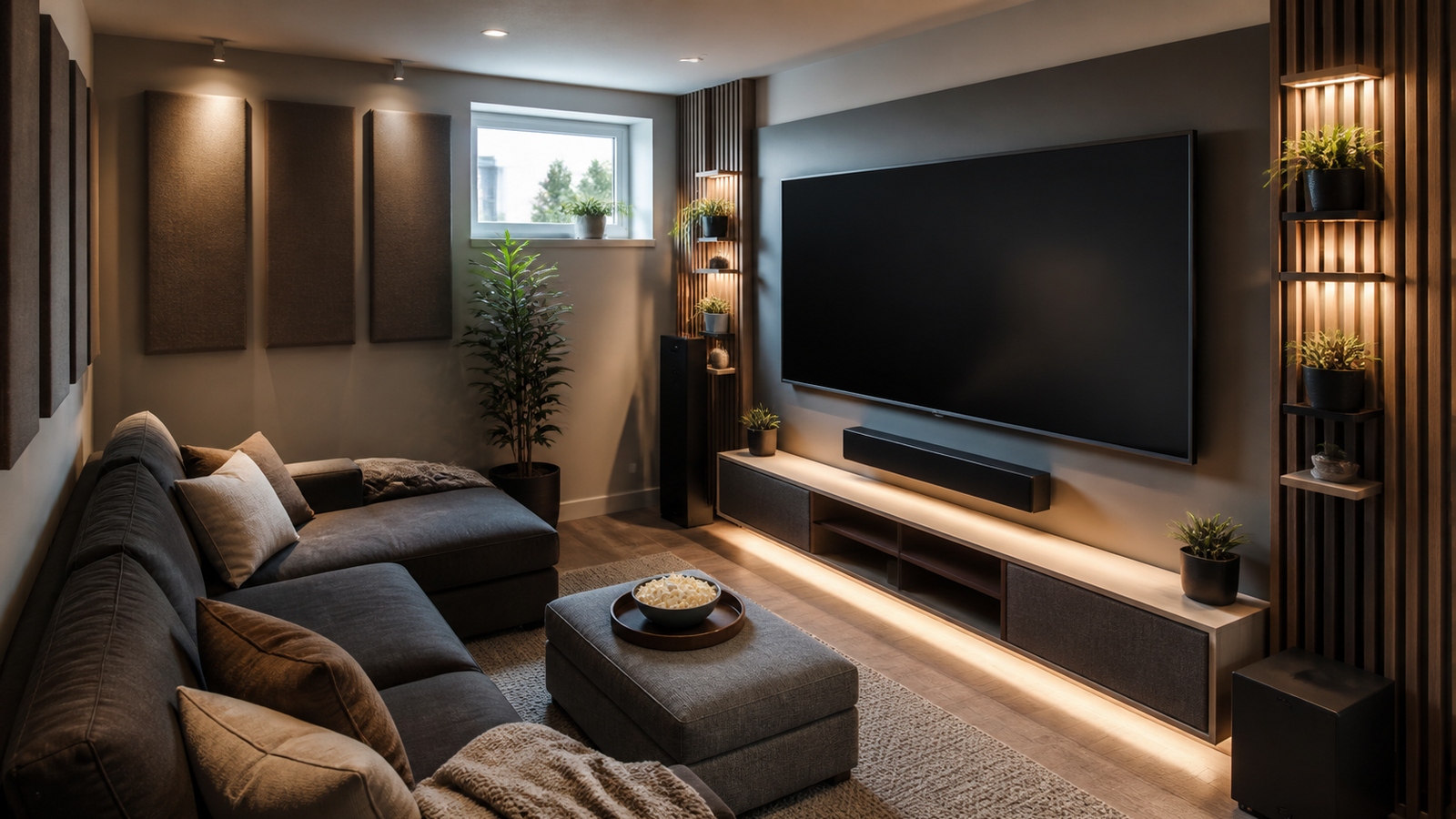
Acoustic panels placed at first reflection points reduce unwanted echoes and sharpen clarity. Bass traps in corners manage low-frequency buildup, preventing the booming or uneven bass that often plagues untreated spaces. Carpeting, upholstered seating, and fabric wall treatments further absorb excess reflections while adding visual warmth.
Sound isolation should also be considered, particularly if your theater shares walls with bedrooms or neighboring homes. Adding insulation within walls, installing solid-core doors, and using acoustic seals help contain sound and minimize disruption. A truly premium home theater balances internal acoustic refinement with external sound control.
Choosing Between a Projector and a Large Format TV
One of the most significant decisions in designing a home theater space is selecting the display. Both projectors and large format televisions have advantages, and the right choice depends on room conditions, budget, and viewing preferences.
A high-quality 4K projector paired with an acoustically transparent screen creates a genuine cinema aesthetic. Projectors excel in dark rooms and offer massive screen sizes that enhance immersion. Laser projectors provide exceptional brightness, color accuracy, and longevity, making them ideal for premium installations.
On the other hand, large OLED or Mini-LED televisions deliver superior brightness, deep contrast, and ease of installation. They perform better in rooms with moderate ambient light and require less calibration than projection systems. If your space cannot achieve near-total darkness, a high-end television may offer more consistent performance.
Regardless of display type, proper calibration is essential. Color temperature, brightness levels, and contrast settings should be adjusted to industry standards to ensure accurate and lifelike visuals.
Surround Sound Systems: Creating True Immersion
A premium home theater space demands a carefully designed surround sound system. Modern formats such as Dolby Atmos and DTS:X introduce object-based audio, allowing sound to move dynamically in three-dimensional space. Instead of simply hearing a helicopter pass from left to right, you experience it traveling overhead.
A 5.1 system includes five speakers and one subwoofer, while 7.1 and 9.1 configurations add rear and side channels for greater depth. Dolby Atmos setups often incorporate ceiling or upward-firing speakers to create vertical dimension. Speaker placement must follow precise angles relative to seating to maintain balanced imaging.
The subwoofer deserves special attention. Low frequencies shape emotional impact, whether in explosive action scenes or subtle musical scores. In larger rooms, dual subwoofers help smooth bass response and eliminate dead zones.
An AV receiver acts as the command center of your home theater, decoding audio formats and distributing signals to each speaker. Investing in a receiver with adequate power and room correction technology ensures consistent performance tailored to your room’s acoustics.
Lighting Design: Controlling Mood and Focus
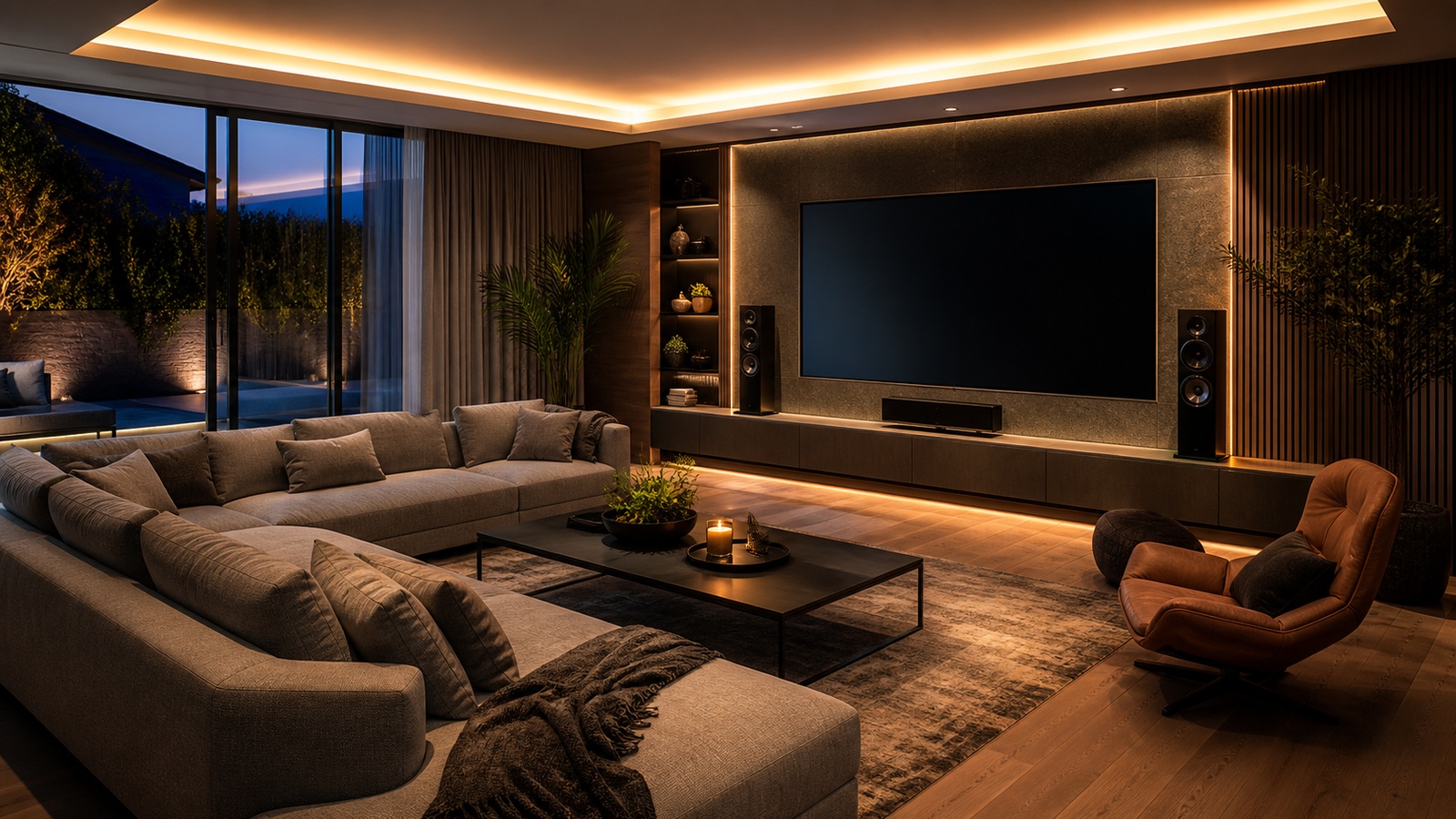
Lighting is often overlooked in home theater design, yet it significantly influences the atmosphere. Premium theaters incorporate layered lighting systems that combine functionality with ambiance. Recessed ceiling lights on dimmers provide general illumination before and after viewing. Wall sconces or LED strip lighting add subtle accent lighting without causing screen glare.
Bias lighting placed behind the screen or television reduces eye strain during extended viewing sessions. Soft, warm-toned lighting enhances comfort without interfering with image contrast. Smart lighting systems allow you to program “movie mode” scenes that automatically dim lights when playback begins.
Avoid overhead lighting directly above the screen, as it creates reflections and reduces image clarity. Every lighting decision should support visual immersion rather than distract from it.
Seating and Comfort: Elevating the Experience
Premium home theater seating combines ergonomic support with luxury. Reclining theater chairs with built-in cup holders and adjustable headrests replicate commercial cinema comfort while offering superior personalization. For multi-row layouts, raised platforms ensure unobstructed viewing angles.
Spacing between seats should allow for easy movement without crowding. Acoustic considerations also play a role; upholstered seating absorbs sound reflections, improving overall clarity. The tactile experience matters as much as visual and auditory components. Plush carpeting, textured wall finishes, and high-quality upholstery contribute to a cohesive, high-end environment.
Comfort extends beyond chairs. Climate control, proper ventilation, and quiet HVAC systems prevent temperature fluctuations and background noise from disrupting immersion.
Smart Integration and Cable Management
A premium home theater space should feel seamless and uncluttered. Exposed wires and bulky components undermine visual appeal. Professional cable management systems route wires through walls or conduits, maintaining a clean aesthetic.
Smart home integration further enhances convenience. Voice-controlled systems allow you to adjust volume, lighting, and playback without leaving your seat. Universal remotes or mobile apps consolidate multiple devices into a single control interface.
Streaming devices, gaming consoles, Blu-ray players, and media servers should be organized within a dedicated equipment rack with proper ventilation. Overheating can reduce equipment lifespan and compromise performance.
Screen Size and Viewing Angles: Calculating the Perfect Fit
The ideal screen size depends on viewing distance and resolution. A general guideline suggests that the screen should occupy approximately 30 to 40 degrees of your field of vision for immersive cinema viewing. Larger screens amplify impact but must be balanced against pixel density and seating proximity.
For 4K content, viewers can sit closer without perceiving individual pixels. This allows for larger screens in smaller rooms without sacrificing image sharpness. Projection screens also vary in gain, influencing brightness and viewing angles. Selecting the correct screen material ensures optimal contrast and color accuracy.
Ceiling-mounted projectors require precise alignment to prevent keystone distortion. Proper mounting height and lens shift capabilities contribute to a clean, symmetrical image.
Aesthetic Design: Turning Technology Into Art
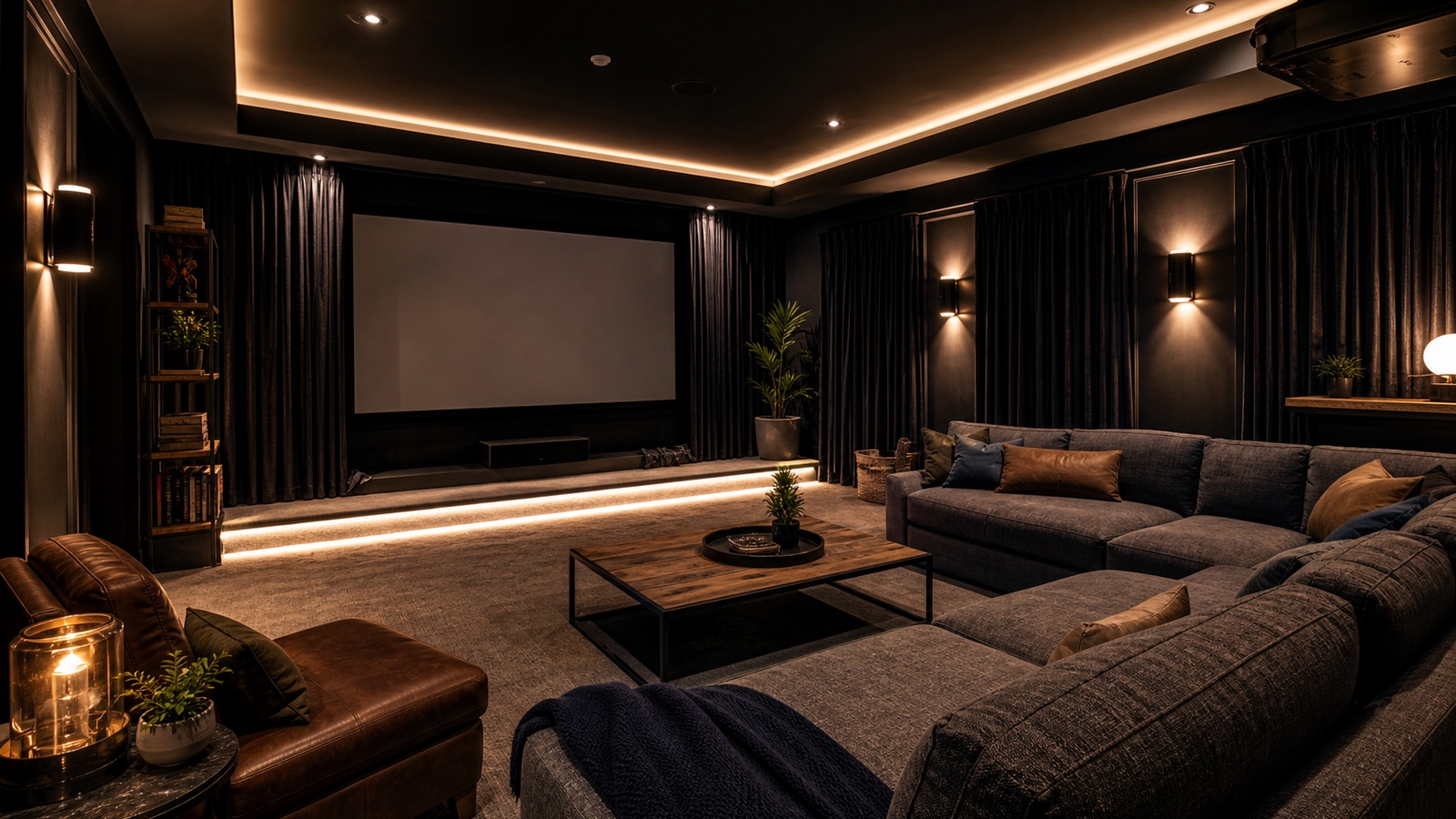
A premium home theater is not merely functional; it is an extension of your personal style. Wall colors significantly affect perceived contrast. Dark matte finishes reduce reflections and enhance visual depth. Deep navy, charcoal gray, or rich burgundy tones are popular choices for theater walls.
Acoustic panels can double as decorative elements, available in customizable fabrics and designs. LED accent lighting integrated into tray ceilings or risers adds architectural sophistication. Themed décor, framed movie posters, or minimalist modern finishes can define the space’s personality.
Attention to detail distinguishes an ordinary setup from a luxury home cinema. Seamless integration of technology within an intentional design aesthetic elevates the room from a media area to a destination.
Optimizing Content Sources for Maximum Quality
A premium home theater space deserves premium content. Streaming platforms offer convenience, but physical media such as 4K Ultra HD Blu-rays often deliver superior bitrate and audio fidelity. High-bandwidth internet connections are necessary for uninterrupted 4K streaming.
Calibration discs and professional tuning services ensure that both audio and video systems operate at peak performance. Regular firmware updates maintain compatibility with evolving content standards.
Content diversity also enhances the theater’s value. Sports broadcasts, gaming sessions, concert films, and classic cinema all benefit from immersive audio and expansive visuals.
Budget Planning: Balancing Cost and Performance
Transforming any room into a premium home theater space can range from moderate investment to high-end custom build. Strategic budgeting ensures optimal allocation of resources. Often, investing more in acoustics and audio yields greater impact than overspending on screen size alone.
Phased upgrades allow homeowners to start with foundational components and expand over time. For example, beginning with a 5.1 system and later adding Atmos speakers spreads cost without compromising long-term vision.
Professional consultation may add upfront expense but can prevent costly mistakes. Poor speaker placement or incorrect projector selection often leads to dissatisfaction and expensive revisions.
Maintenance and Long-Term Optimization
Maintaining a premium home theater requires ongoing care. Projector lamps or laser modules must be monitored for brightness consistency. Speaker calibration may need periodic adjustments as room furnishings change.
Dust control preserves both equipment longevity and image clarity. Regular cleaning of projector lenses, screens, and ventilation ports ensures sustained performance.
Software updates, content calibration, and occasional acoustic reassessment keep the theater operating at peak capability. A well-maintained system can provide years of cinematic enjoyment without degradation.
The Psychological Power of a Dedicated Theater Space
Beyond technical specifications, a premium home theater space offers psychological benefits. It creates a boundary between everyday distractions and immersive entertainment. Entering a darkened room with controlled lighting and enveloping sound signals a transition into focused engagement.
Family movie nights become events rather than passive viewing experiences. Hosting friends for major sporting events transforms gatherings into memorable occasions. A thoughtfully designed theater fosters connection, storytelling, and shared emotion.
In an era of constant multitasking and fragmented attention, a dedicated cinema environment encourages presence. It invites viewers to disconnect from notifications and immerse themselves fully in narrative and sound.
Bringing It All Together: Designing Your Cinematic Escape
Turning any room into a premium home theater space requires deliberate planning, technical precision, and aesthetic vision. By mastering acoustics, selecting the right display technology, optimizing speaker placement, controlling lighting, and prioritizing comfort, you create an environment that rivals professional cinemas.
The transformation does not hinge on size or extravagance but on thoughtful execution. Even a modest spare room can deliver breathtaking immersion when sound, light, and design work in harmony. A premium home theater is an investment in experience — a private cinema tailored to your tastes, calibrated to your space, and designed for unforgettable moments.
With strategic decisions and attention to detail, you can convert ordinary square footage into a cinematic masterpiece. The lights dim, the sound envelops, and your home becomes the ultimate destination for entertainment.
TV Top 10 Product Reviews
Explore Philo Street’s TV Top 10 Product Reviews! Discover the top-rated TVs, accessories, streaming devices, and home theater gear with our clear, exciting comparisons. We’ve done the research so you can find the perfect screen and setup for your entertainment experience!