Luxury Is More About Control Than Cost
A home theater feels luxurious when the room seems intentional, comfortable, and effortless to use. That does not require the most expensive projector, the largest speakers, or custom seating imported from a showroom. It requires disciplined choices. The room needs controlled light, clean cable paths, balanced sound, comfortable seating, and a design palette that makes the equipment look planned. A budget theater becomes impressive when the money goes into the parts people feel every time they sit down, rather than into features that only sound good on a specification sheet.
Spend First on the Room Itself
The room is the theater’s largest component. If it has harsh reflections, uncontrolled daylight, rattling doors, and exposed cable clutter, premium equipment will still feel ordinary. Paint, curtains, rugs, seating placement, and lighting may not be as exciting as a new receiver, but they create the conditions that let affordable equipment perform well.
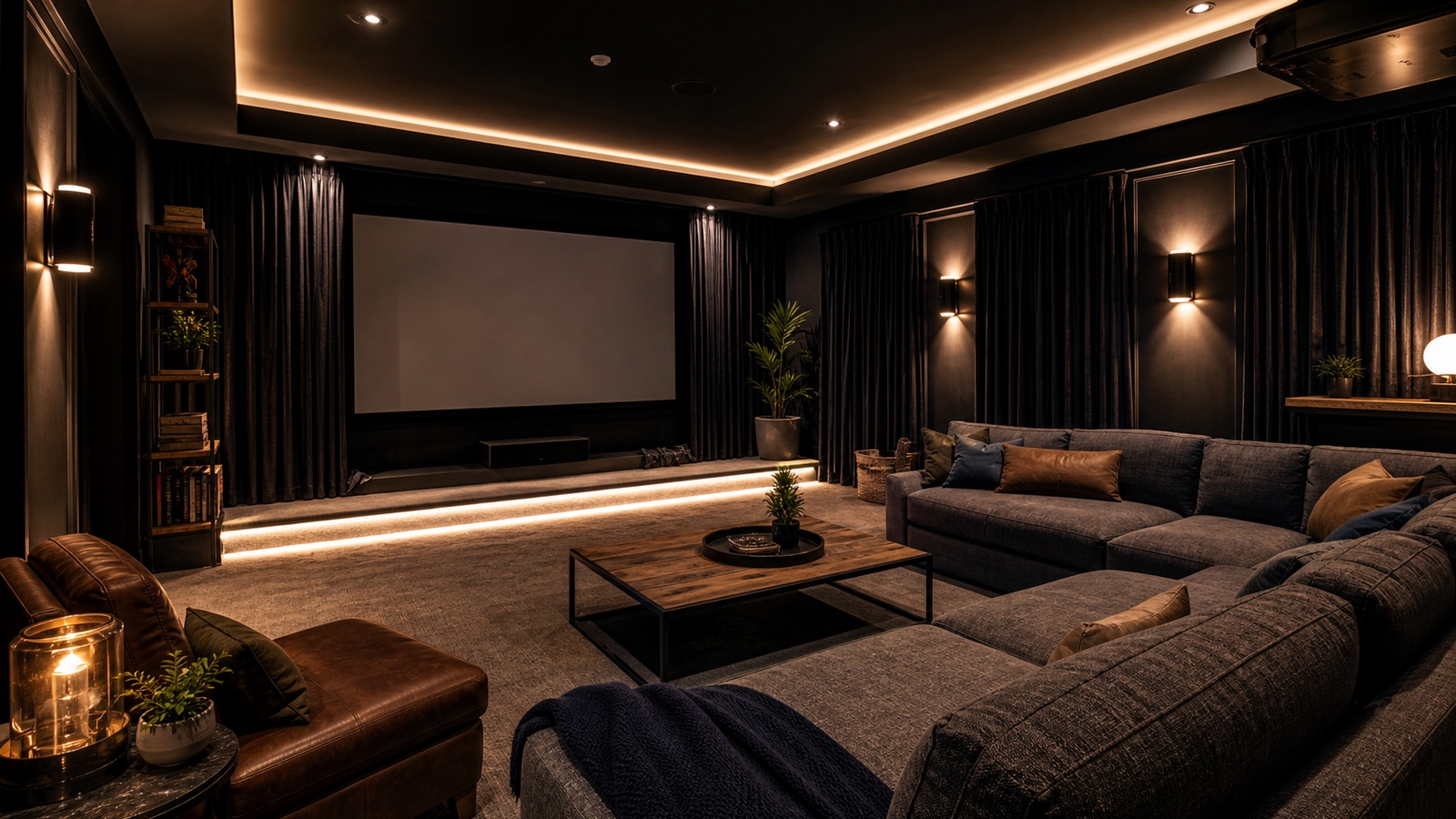
Budget-friendly luxury often begins with surface control. A darker matte wall near the screen can improve perceived contrast. Heavy curtains can reduce glare and soften sound. A thick rug can make dialogue easier to understand in a room with hard flooring. These upgrades are visible, practical, and usually less expensive than replacing electronics.
The room should also feel finished. Matching wall plates, tidy cable channels, consistent furniture finishes, and a clear equipment plan make the space look designed rather than assembled over time. That sense of order is a major part of perceived luxury.
Buy Equipment for the Actual Space
A budget goes further when the gear matches the room. A midrange TV may outperform a bargain projector in a bright multipurpose room. A compact soundbar with surrounds may be better than separate speakers that cannot be placed correctly. A smaller subwoofer may sound cleaner than a large one that overwhelms the space.
Avoid paying for capabilities you will not use. If the room is mainly for streaming, sports, and family movies, reliability and ease of use may matter more than exotic formats. If gaming is central, low input lag and HDMI features deserve more attention. Luxury comes from the setup feeling right for its purpose.
Use Lighting to Create the Premium Mood
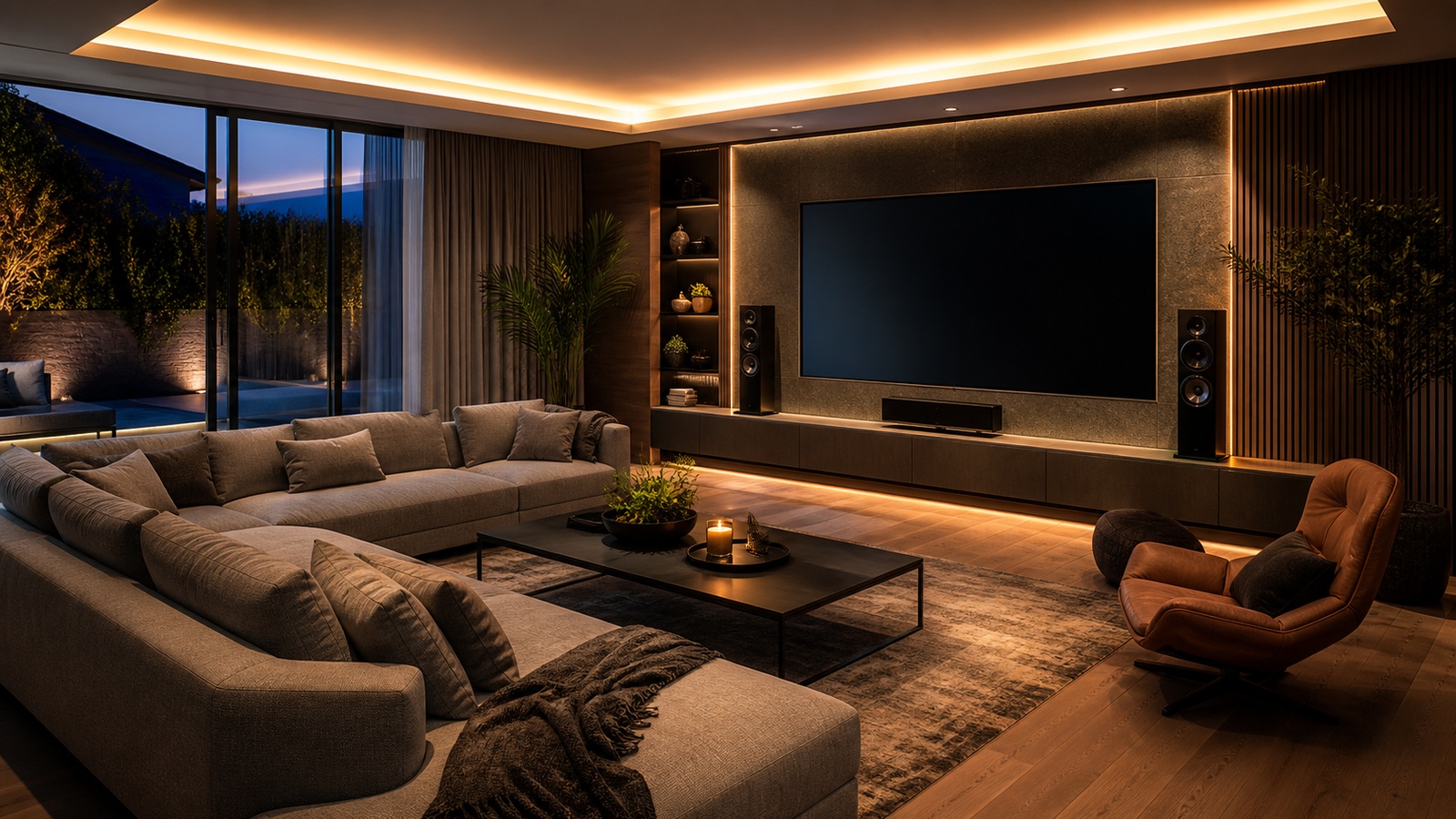
Lighting is one of the most affordable ways to make a theater feel custom. A few dimmable lamps, wall sconces, LED bias lighting, or hidden strips under shelving can shift a normal room into a cinematic environment. The key is restraint. The lighting should guide the eye and support the screen, not compete with the movie.
Warm color temperature usually feels more upscale than harsh cool light. Fixtures should be placed so they do not reflect directly on the screen. If the budget allows, simple scene control can make the room feel far more expensive because one button changes the mood instantly.
Even without automation, the room can have a ritual. Lower the lamps, close the curtains, switch on the subtle backlight, and the space begins to feel separate from the rest of the house. That emotional transition is what many luxury theaters are really selling.
Upgrade the Details People Touch
Comfort is where budget theaters often win. Good blankets, supportive cushions, smooth recline clearance, stable side tables, and quiet storage can make an affordable room feel generous. People remember whether they had a place for a drink, whether the seat felt right, and whether the remote made sense.
- Replace flimsy power strips with a safe, hidden power plan.
- Use matching baskets or drawers for remotes and controllers.
- Add blackout curtain liners before replacing the screen.
- Choose one strong coffee table or ottoman instead of several cluttered pieces.
These details are not glamorous on their own, but together they create ease. A theater that anticipates small needs feels more luxurious than one that only looks impressive when unused.
Phase the Project Without Making It Look Temporary
A budget theater does not have to be finished in one purchase. In fact, phasing can lead to better decisions. Start with the layout, light control, display, and basic sound. Add acoustic treatment, upgraded seating, automation, or a better subwoofer later when the room has revealed what it actually needs.
The trick is to make each phase feel complete. Use a finished console even if a receiver upgrade is planned. Hide cable paths even if speakers will change. Choose paint and fabric that can support future upgrades. When each step is tidy, the room never feels like a half-built project.
Luxury on a budget is not about fooling anyone. It is about refusing waste. Spend where the room gains comfort, clarity, and calm. Skip upgrades that add complexity without improving the experience. The result can feel custom, polished, and deeply enjoyable at a fraction of the price of a showpiece theater.
Use Secondhand and Previous-Generation Gear Wisely
A budget theater can benefit from carefully chosen used or previous-generation equipment. Speakers, stands, racks, and some receivers can remain useful for years if they are in good condition. Displays and projectors require more caution because brightness, panel wear, HDMI standards, and warranty coverage may matter more. The point is not to buy old gear for its own sake. It is to spend where depreciation works in your favor.
Speakers are often the safest value purchase because good ones do not become obsolete as quickly as source devices. A well-kept pair of bookshelf speakers can outperform new budget speakers if matched to the room. Used seating can also be worthwhile when frames are solid and upholstery is clean or replaceable.
Always leave money for the boring parts. Mounts, cables of the right length, surge protection, ventilation, and storage can decide whether bargain equipment feels polished or chaotic. A room full of discounted gear still needs a professional-feeling plan.
Create a Signature Look With Repetition
Luxury rooms often feel cohesive because materials repeat. A budget theater can use the same principle without expensive custom work. Repeat one wood tone, one metal finish, one fabric color, or one wall color across the room. This makes ordinary pieces feel selected and related.
Repetition is especially useful when the room contains equipment from different brands. If the console, shelves, curtain rods, side tables, and storage baskets all speak the same design language, the electronics become less visually noisy. The room starts to feel curated rather than collected.
The trick is restraint. Too many matching sets can look flat, while too many unrelated finishes can look accidental. Choose a small palette and let texture provide interest. That approach gives budget materials a calmer, more expensive presence.
Make the Upgrade Path Part of the Design
A budget theater should not be designed as if nothing will ever change. It should anticipate better speakers, a larger display, added surrounds, or improved automation later. Conduit behind the display, extra speaker wire routes, a slightly larger cabinet bay, and accessible power can make future upgrades painless.
This matters because many people overspend early trying to finish everything at once. A phased design lets the room become useful now while leaving room for smarter improvements. After several months of use, it becomes clear whether the next dollar should go toward bass, lighting, seating, or convenience.
A luxury feeling comes from confidence. When the room is organized, serviceable, and ready to evolve, even modest equipment feels part of a larger plan.
Polish the Experience Before Chasing the Next Upgrade
A budget theater often improves most when the owner stops shopping for a moment and studies the experience. Are the lights easy to dim? Does the room get too warm? Is the remote confusing? Do people know where to sit? Can dialogue be understood without raising the volume too high? These questions reveal inexpensive fixes that may matter more than another component purchase.
Polish also comes from reducing friction. Put the most-used apps on the home screen. Name inputs clearly. Keep batteries, cleaning cloths, and spare cables in one drawer. Store blankets where people can reach them. Check that the Wi-Fi or Ethernet connection is stable before assuming the display is the problem. These ordinary details make the theater feel cared for.
Budget luxury depends on consistency. A room that works the same way every time feels more premium than one with better specifications but constant surprises. If one button starts the right source, the lights are predictable, and the sound does not need constant adjustment, the room earns trust.
Once the experience is polished, upgrades become easier to prioritize. If the picture is strong but dialogue remains weak, improve the center channel or room acoustics. If the room feels flat, add lighting or texture. If guests struggle to use the system, simplify control. The budget goes further because each purchase solves a known problem.
That discipline is what separates a smart budget theater from a cheap one. The room may not contain the most expensive equipment, but it can still feel generous, intentional, and refined every time the lights go down.
Use a Budget Scorecard Before Buying
Before any purchase, score it against the room’s real needs: comfort, clarity, reliability, appearance, and future flexibility. A product that improves only one category may still be worth it, but the scorecard prevents impulse spending. For example, a better mount can improve appearance, safety, and future service. A decorative light that reflects on the screen may lower the experience even if it looks attractive online.
This method also helps compare unlike upgrades. It is hard to compare curtains to speakers until the goal is clear. If glare is the biggest weakness, curtains may be the luxury upgrade. If dialogue is the frustration, audio placement may win. If the room looks unfinished, paint, storage, and cable cleanup may provide the most visible change.
Keep a small reserve in the budget for installation surprises. Extra hardware, longer cables, ventilation parts, outlet work, or storage organizers often appear late. Without a reserve, the room may be forced into awkward shortcuts.
A luxury home theater on a budget is built by saying no often. Say no to features that do not serve the room, no to oversized equipment, no to clutter, and no to upgrades that make operation harder. The yes decisions become stronger because they are connected to a clear purpose.
Let the Budget Create Discipline
A limited budget can be useful because it forces decisions to compete. Every purchase should earn its place by improving comfort, clarity, reliability, or the finished look of the room. When a product does not support one of those goals, it can wait.
That discipline protects the theater from becoming a collection of bargains. The room should feel edited, not deprived. A modest display with excellent light control, tidy wiring, and inviting seating can feel more luxurious than expensive equipment in a chaotic space.
The best budget theaters are honest about tradeoffs. They choose the details that people notice every night and postpone the features that only sound impressive in a shopping cart. That honesty keeps the room from feeling like a compromise and turns the budget into a design tool for better nights at home, starting now and lasting well.
TV Top 10 Product Reviews
Explore Philo Street’s TV Top 10 Product Reviews! Discover the top-rated TVs, access comprehensive reviews, and find the perfect screen for your space.