The Rise of Cinematic Screenspaces
The modern digital environment is no longer confined to flat displays or passive viewing experiences. Today’s screenspaces are immersive, adaptive, and emotionally resonant, designed to pull viewers into a world rather than simply present content. At the center of this transformation lies dynamic lighting, a powerful design element that bridges the gap between physical space and digital imagery. Whether in high-end home theaters, gaming setups, media walls, or commercial installations, lighting has evolved into a storytelling medium in its own right. Cinematic screenspaces are defined by their ability to simulate depth, mood, and realism. Dynamic lighting amplifies these qualities by responding to on-screen content, architectural elements, and user interaction. It transforms a static room into a living environment where light behaves like a character—subtle, reactive, and deeply expressive. As display technologies like OLED and microLED achieve near-perfect contrast and color accuracy, lighting design must rise to meet them, creating an ecosystem where visuals extend beyond the screen and into the surrounding space.
Understanding Dynamic Lighting in Screenspaces
Dynamic lighting refers to lighting systems that change in intensity, color, direction, and pattern in real time or through programmed sequences. Unlike traditional lighting, which is fixed and functional, dynamic lighting is fluid and contextual. It adapts to content, time of day, and even user preferences, creating a layered visual experience.
In cinematic screenspaces, dynamic lighting operates on multiple levels. Ambient lighting sets the overall tone, bias lighting reduces eye strain and enhances perceived contrast, and accent lighting highlights architectural features or decor elements. When these layers are synchronized with the content on screen, the result is a cohesive visual environment where boundaries dissolve. A sunset scene doesn’t just appear on the display—it radiates into the room. A suspenseful moment doesn’t just rely on sound and visuals—it is reinforced by subtle shifts in surrounding light.
This synchronization is often achieved through advanced lighting systems that integrate with media sources, using HDMI sync boxes, smart lighting ecosystems, or custom control systems. These technologies analyze on-screen content in real time and translate it into corresponding lighting effects, ensuring seamless interaction between digital and physical elements.
The Psychology of Light and Perception
Lighting is deeply tied to human perception and emotion. In cinematic screenspaces, understanding the psychological impact of light is essential for creating immersive environments. Bright, cool-toned lighting can evoke clarity and alertness, while warm, dim lighting fosters intimacy and relaxation. Dynamic lighting leverages these associations to guide emotional responses and enhance storytelling.
Contrast plays a critical role in visual perception. High contrast between light and dark areas increases clarity and drama, making scenes appear more vivid and engaging. Dynamic lighting can extend this contrast beyond the screen, using darkness strategically to frame the display while introducing subtle highlights that complement the content. This technique not only enhances visual immersion but also reduces eye fatigue by maintaining a balanced luminance level in the room.
Color psychology further enriches the experience. Blues and greens often evoke calmness and stability, while reds and oranges can signal tension or excitement. By aligning lighting color with on-screen content, designers can create a multisensory narrative that resonates on a deeper level. The result is an environment where viewers don’t just watch a story—they feel it.
Designing the Perfect Lighting Ecosystem
Creating a cinematic screenspace requires a holistic approach to lighting design. It begins with understanding the architecture of the room and the placement of the display. Walls, ceilings, and surfaces all interact with light, influencing how it is perceived. Materials such as matte paint, wood, and fabric absorb light differently than glossy or reflective surfaces, affecting the overall ambiance.
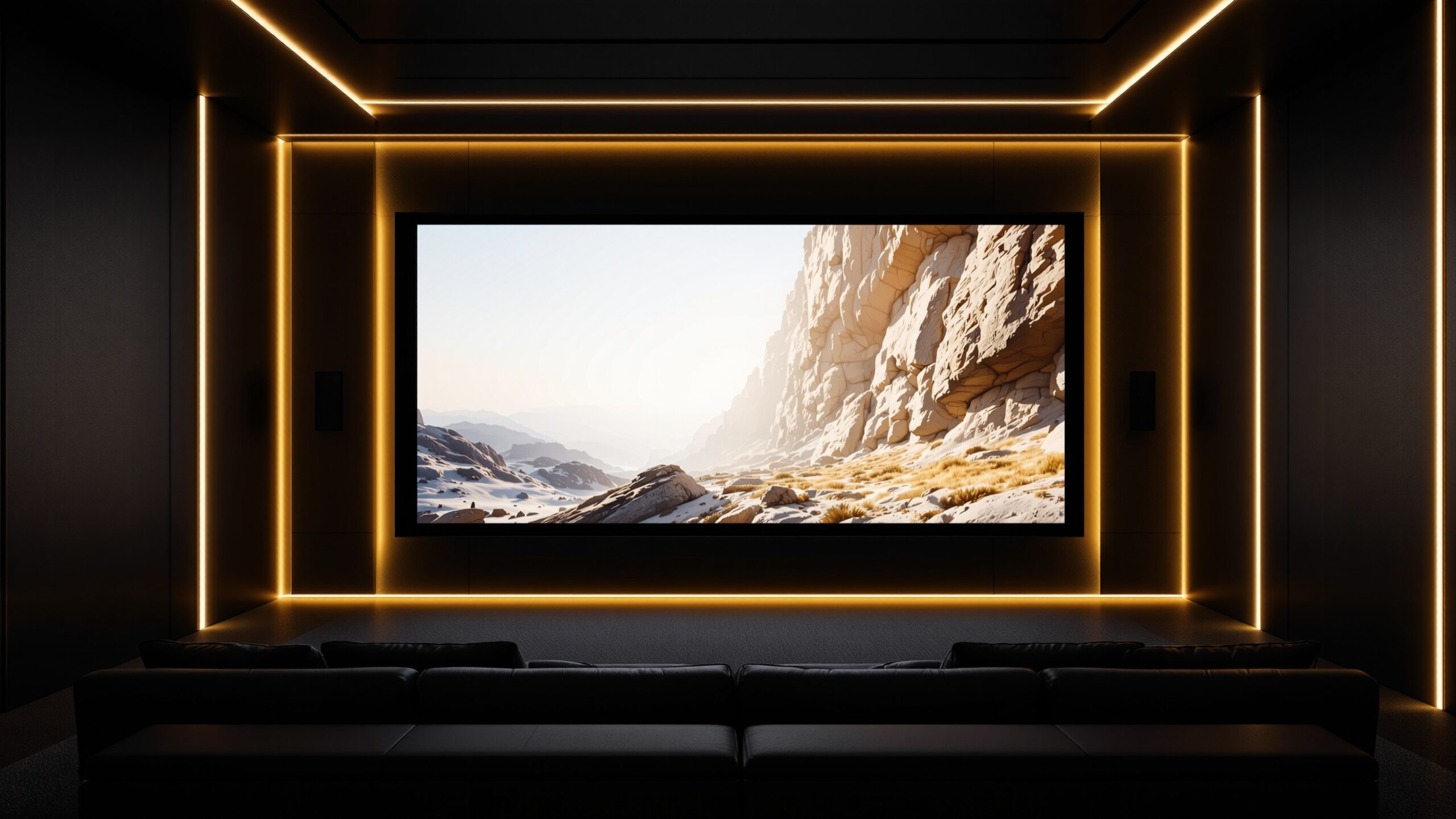
A well-designed lighting ecosystem typically includes multiple zones. Backlighting behind the display is one of the most critical elements, often implemented using LED strips or panels. This bias lighting should be calibrated to a neutral white or adjusted dynamically to match on-screen content. It reduces eye strain and enhances perceived contrast, making blacks appear deeper and colors more vibrant.
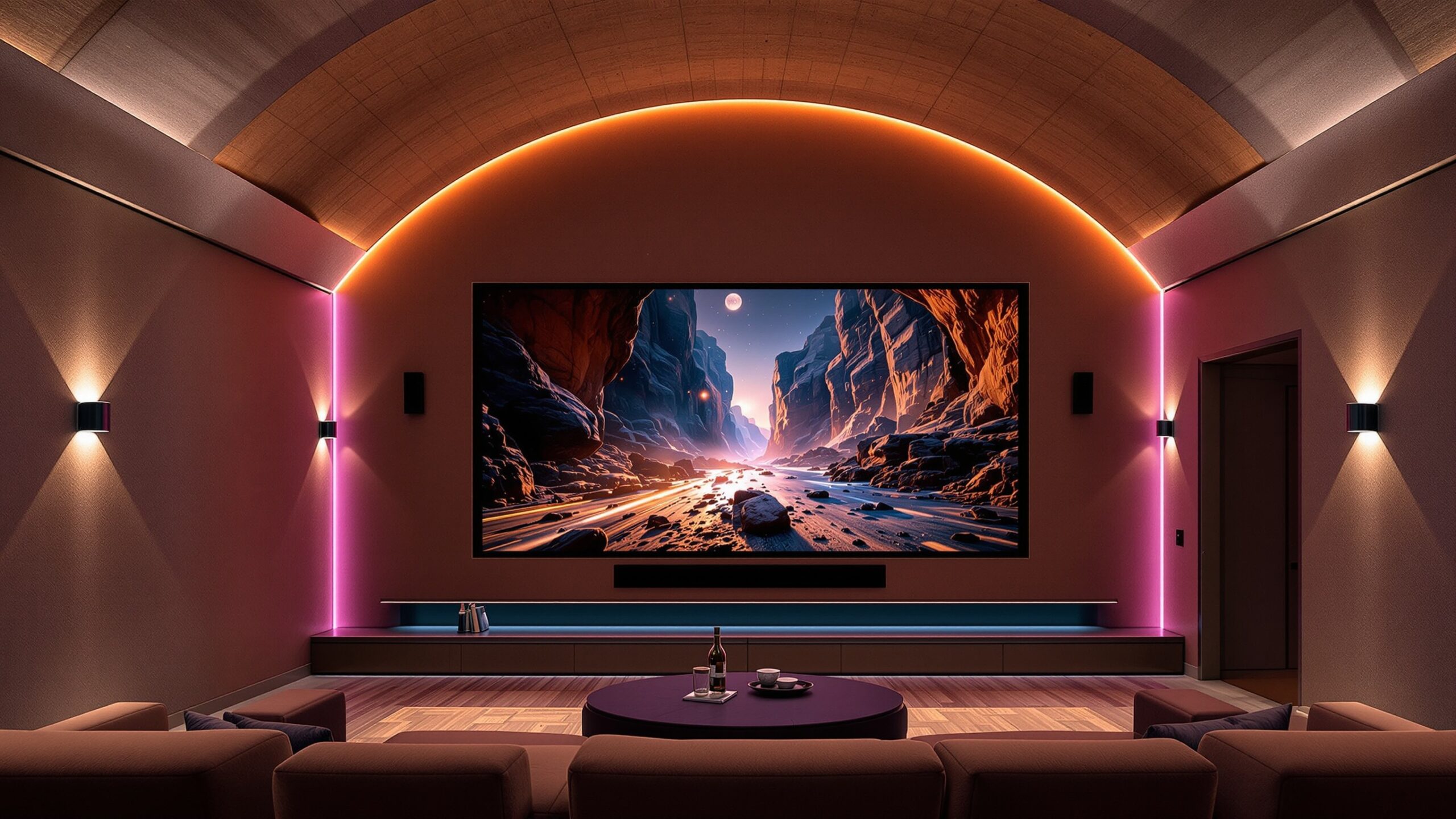
Perimeter lighting along ceilings or floors can create a sense of depth and spatial expansion. This indirect lighting technique avoids harsh glare while adding a subtle glow that defines the room’s boundaries. Accent lighting, such as spotlights or wall washers, can be used to highlight textures, artwork, or architectural features, adding layers of visual interest.
Control systems play a pivotal role in managing these elements. Smart lighting platforms allow users to create scenes, automate transitions, and synchronize lighting with media playback. Advanced setups may include integration with home automation systems, enabling seamless control through voice commands, mobile apps, or centralized interfaces.
Synchronization With Visual Content
One of the most compelling aspects of dynamic lighting is its ability to synchronize with visual content. This process, often referred to as ambient light syncing or reactive lighting, involves analyzing the colors and brightness of on-screen content and translating them into corresponding lighting effects.
The effectiveness of this synchronization depends on several factors, including latency, color accuracy, and spatial mapping. Low latency ensures that lighting changes occur in real time, maintaining the illusion of continuity. Accurate color reproduction is essential for preserving the integrity of the visual experience, while spatial mapping determines how lighting zones correspond to different areas of the screen.
For example, a scene featuring a blue ocean on the left side of the screen and a golden sunset on the right can be mirrored by lighting zones that reflect these colors in the corresponding areas of the room. This creates a panoramic effect, extending the visual experience beyond the display and into the viewer’s peripheral vision.
However, subtlety is key. Overly aggressive lighting changes can become distracting, breaking immersion rather than enhancing it. The goal is to complement the content, not compete with it. Fine-tuning brightness levels, transition speeds, and color intensity is essential for achieving a balanced and cohesive effect.
Hardware and Technology Foundations
Building a cinematic screenspace with dynamic lighting requires careful selection of hardware and technology. LED lighting is the foundation of most modern setups, offering flexibility, efficiency, and a wide color gamut. Addressable LED strips and panels provide granular control, allowing individual segments to display different colors and intensities.
Control hubs and sync devices act as the brain of the system, processing input from media sources and translating it into lighting commands. These devices often support multiple input types, including HDMI, USB, and wireless connections, enabling compatibility with a wide range of displays and content sources.
Smart lighting ecosystems, such as those based on Zigbee, Wi-Fi, or proprietary protocols, offer scalability and integration with other smart home devices. These systems can be expanded over time, adding new lighting zones or features as needed. Compatibility with voice assistants and automation platforms further enhances usability, making it easy to control complex lighting setups with minimal effort.
Calibration tools are also essential for achieving optimal performance. Color calibration ensures that lighting matches the display’s color profile, while brightness calibration prevents overexposure or underlighting. Professional setups may include spectrometers or calibration software to fine-tune these parameters, ensuring a precise and consistent experience.
Crafting Atmosphere Through Layered Lighting
Atmosphere is the defining characteristic of a cinematic screenspace, and layered lighting is the technique that brings it to life. By combining different types of lighting—ambient, task, and accent—designers can create a rich and dynamic environment that evolves with the content.
Ambient lighting provides the foundation, establishing the overall mood of the space. It should be soft and diffused, avoiding direct glare or harsh shadows. Task lighting, while less prominent in entertainment-focused spaces, can be integrated subtly to support activities such as reading or navigating the room without disrupting the viewing experience.
Accent lighting adds depth and dimension, drawing attention to specific elements and creating visual contrast. When synchronized with dynamic lighting systems, these layers can shift seamlessly, adapting to different scenes and moods. A quiet dialogue scene might be accompanied by warm, low-intensity lighting, while an action sequence could trigger brighter, more vibrant effects.
The interplay between these layers creates a sense of realism and immersion that static lighting cannot achieve. It transforms the room into an extension of the content, blurring the line between the digital and physical worlds.
Optimizing for Different Use Cases
Cinematic screenspaces are not limited to a single type of content or environment. They can be tailored to suit a variety of use cases, each with its own lighting requirements. Home theaters, for example, prioritize low ambient light and high contrast, with subtle bias lighting to enhance visual clarity. Gaming setups, on the other hand, often benefit from more dynamic and responsive lighting, creating an interactive and immersive experience.
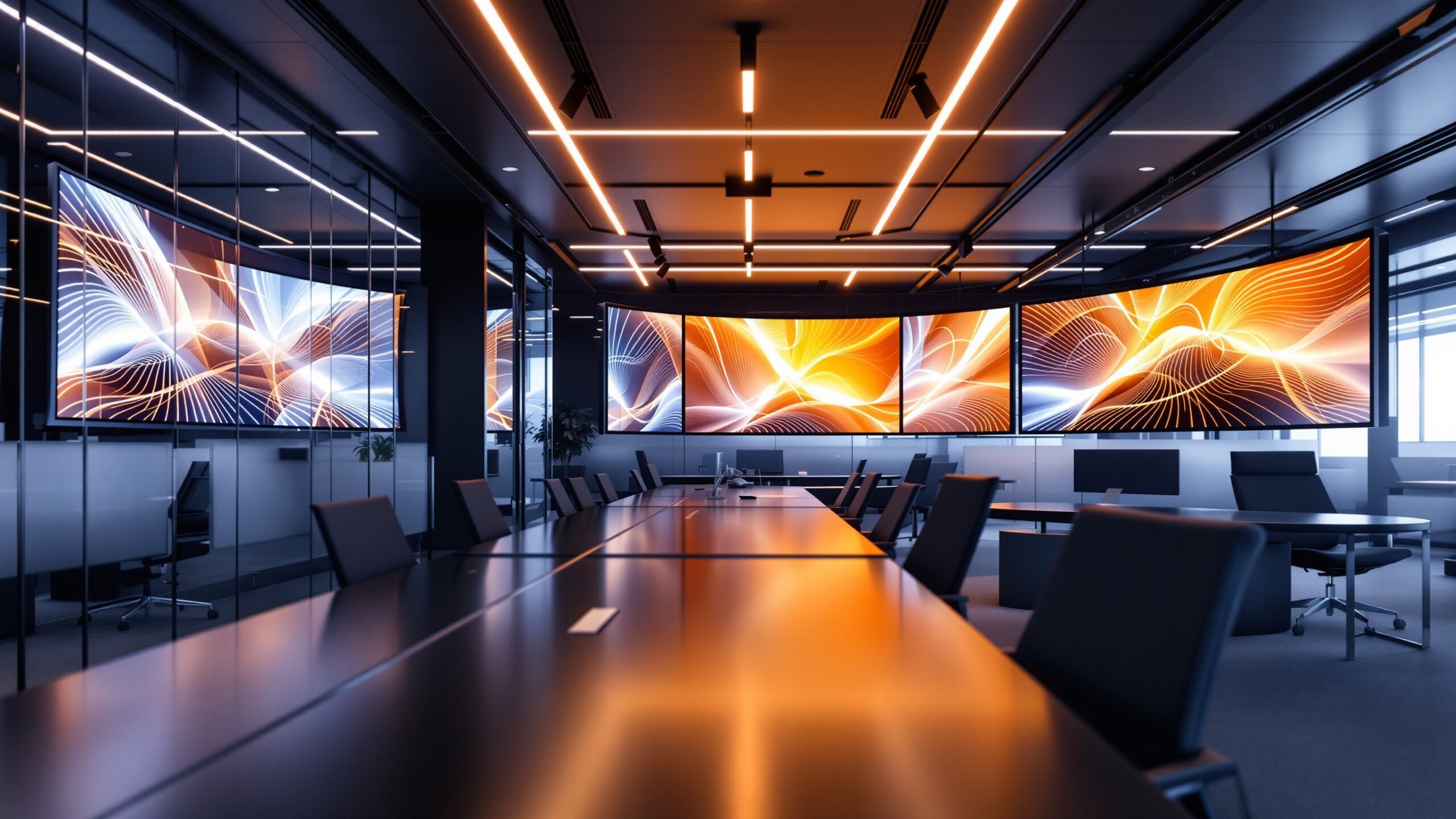
Media walls and multi-display setups present unique challenges and opportunities. Coordinating lighting across multiple screens requires precise synchronization and spatial mapping, ensuring that lighting effects align with the overall visual composition. In commercial environments, such as retail spaces or event venues, dynamic lighting can be used to create engaging and memorable experiences that capture attention and drive engagement.
Flexibility is key. A well-designed system should allow users to switch between different modes or scenes, adapting lighting to suit the content and context. This might include presets for movies, gaming, sports, or ambient relaxation, each with its own lighting profile.
Avoiding Common Design Pitfalls
While dynamic lighting offers immense potential, it also presents challenges that must be addressed to achieve a successful implementation. One of the most common pitfalls is overuse. Excessive brightness, rapid color changes, or overly complex effects can overwhelm the viewer and detract from the content. Restraint and balance are essential for maintaining a cohesive and enjoyable experience.
Another challenge is inconsistency. Poor calibration or mismatched lighting components can result in uneven color reproduction or distracting visual artifacts. Ensuring compatibility between devices and maintaining consistent color profiles across all lighting elements is crucial.
Placement is equally important. Improperly positioned lights can create glare, reflections, or uneven illumination, disrupting the viewing experience. Careful planning and testing are required to optimize placement and achieve the desired effect.
Finally, user control should not be overlooked. Even the most advanced system must be intuitive and easy to use. Complex interfaces or cumbersome controls can diminish the overall experience, making it difficult for users to fully enjoy the benefits of dynamic lighting.
The Future of Dynamic Lighting in Screenspaces
As technology continues to evolve, the potential for dynamic lighting in cinematic screenspaces is expanding rapidly. Advances in artificial intelligence and machine learning are enabling more sophisticated content analysis, allowing lighting systems to respond not just to colors and brightness but to context, mood, and narrative elements.
Integration with augmented reality and virtual reality is also opening new possibilities, creating fully immersive environments where lighting adapts to virtual content in real time. MicroLED and next-generation display technologies are pushing the boundaries of brightness and color accuracy, demanding equally advanced lighting solutions to complement them.
Sustainability is another emerging focus. Energy-efficient lighting technologies and smart control systems are reducing power consumption while maintaining high performance. This aligns with broader trends in eco-friendly design, ensuring that cinematic screenspaces are not only visually impressive but also environmentally responsible.
Light as a Narrative Force
Building cinematic screenspaces with dynamic lighting is both an art and a science. It requires a deep understanding of technology, design principles, and human perception. When executed effectively, it transforms a simple viewing area into an immersive environment where light becomes a narrative force, shaping mood, enhancing realism, and extending the boundaries of the screen.
Dynamic lighting is not just an accessory—it is an integral component of the modern screenspace. It bridges the gap between digital content and physical space, creating experiences that are more engaging, more emotional, and more memorable. As the line between reality and digital media continues to blur, the role of lighting will only become more significant, illuminating the path toward the next generation of immersive design.
TV Top 10 Product Reviews
Explore Philo Street’s TV Top 10 Product Reviews! Discover the top-rated TVs, accessories, streaming devices, and home theater gear with our clear, exciting comparisons. We’ve done the research so you can find the perfect screen and setup for your entertainment experience!