Where Light Becomes Experience
Lighting design has evolved far beyond illumination. In the era of immersive screenspaces—where digital displays, projection systems, and architectural environments merge—light is no longer just functional. It is narrative, atmosphere, and emotional architecture. Whether in high-end home theaters, interactive installations, gaming environments, or media walls, lighting design plays a decisive role in shaping how content is perceived, felt, and remembered. An immersive screenspace is defined by its ability to dissolve the boundary between viewer and visual content. Achieving this requires precision across multiple disciplines: display calibration, acoustics, spatial layout, and critically, lighting design. Poor lighting can flatten contrast, introduce glare, and break immersion. Exceptional lighting, on the other hand, enhances depth, reinforces mood, and extends the visual story beyond the screen. This article explores the art and science behind lighting design for immersive screenspaces—where technical precision meets creative intent.
Understanding Immersive Screenspaces
Immersive screenspaces encompass environments designed to fully engage the viewer through visual dominance and environmental control. These include home theaters, media rooms, gaming setups, digital art installations, retail experiences, and professional presentation spaces.
Unlike traditional rooms where lighting supports general activity, immersive spaces demand a controlled lighting ecosystem. Every photon matters. The interplay between ambient light, display brightness, wall reflectivity, and viewer positioning determines the final visual experience.
Modern displays—OLED, QLED, MicroLED, and projection systems—are engineered for high dynamic range (HDR), deep blacks, and precise color reproduction. However, these capabilities can be compromised by uncontrolled lighting. Even subtle ambient light can wash out blacks, reduce perceived contrast, and introduce visual fatigue.
Lighting design, therefore, must be approached as an integrated system rather than an afterthought.
The Psychology of Light in Visual Environments
Lighting directly influences human perception and emotional response. In immersive screenspaces, this psychological dimension becomes a design tool.
Low ambient lighting enhances focus by reducing distractions and increasing perceived contrast on the screen. This is why cinemas operate in near darkness. However, complete darkness can cause eye strain, especially during prolonged viewing. The solution lies in balanced, indirect lighting that maintains visual comfort without competing with on-screen content.
Color temperature also plays a critical role. Cooler light (5000K–6500K) promotes alertness and clarity, making it suitable for gaming or productivity-focused screenspaces. Warmer tones (2700K–3000K) create a relaxed, cinematic atmosphere ideal for film viewing.
Dynamic lighting—where brightness and color shift in response to content—adds another layer of immersion. When executed correctly, it extends the visual field beyond the screen, subtly reinforcing the emotional tone of what is being displayed.
Layered Lighting: The Foundation of Immersion
Professional lighting design relies on layering. In immersive screenspaces, three primary layers must be carefully orchestrated: ambient, task, and accent lighting.
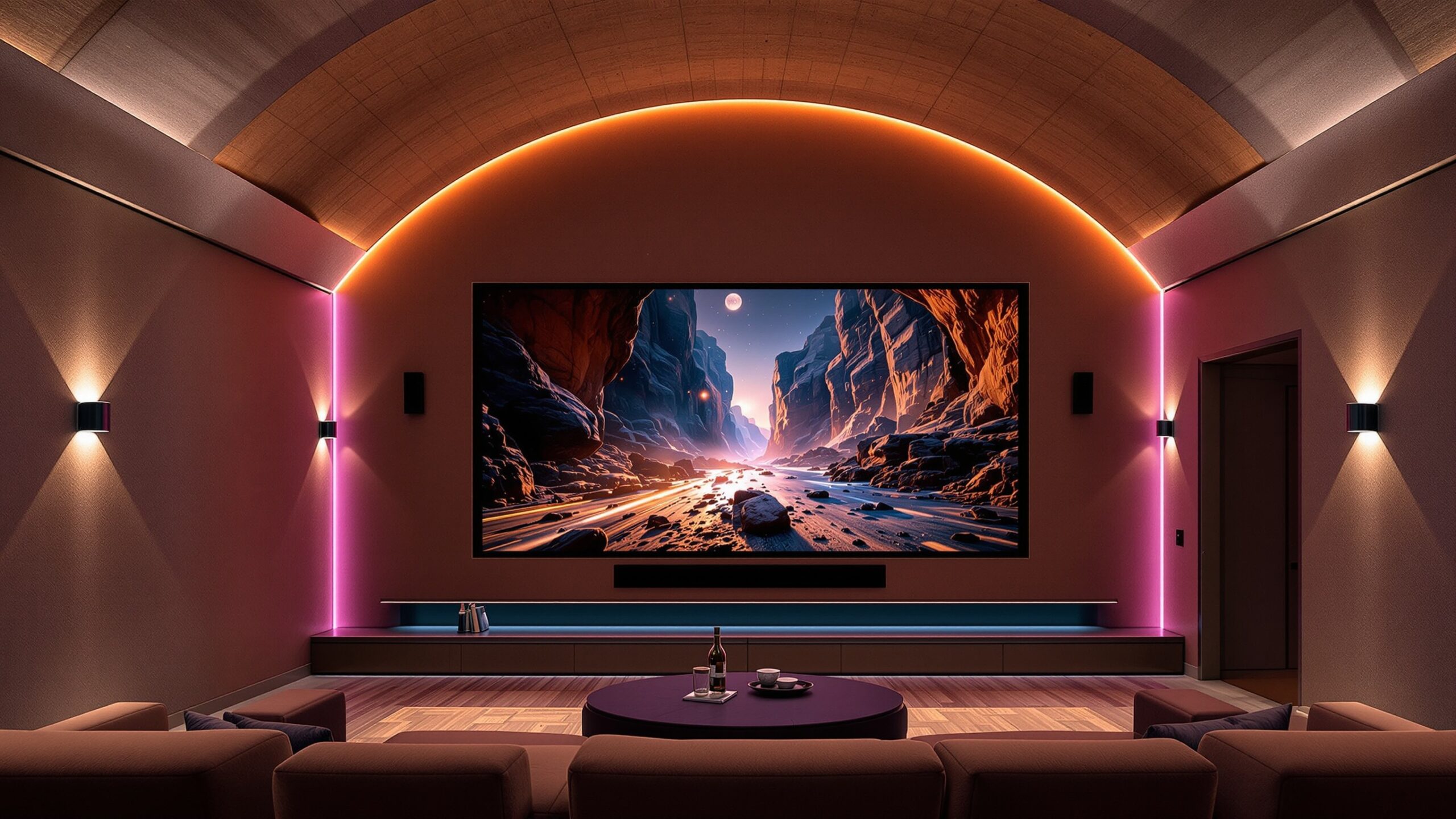
Ambient lighting provides the base level of illumination. In immersive environments, this is typically soft, indirect, and dimmable. Cove lighting, recessed LEDs, and wall washes are common solutions. The goal is to create a gentle glow that prevents eye fatigue without diminishing screen contrast.
Task lighting is more situational. It may include pathway lighting, seating illumination, or control panel visibility. In a home theater, for example, low-level floor lighting ensures safe movement without disrupting the viewing experience.
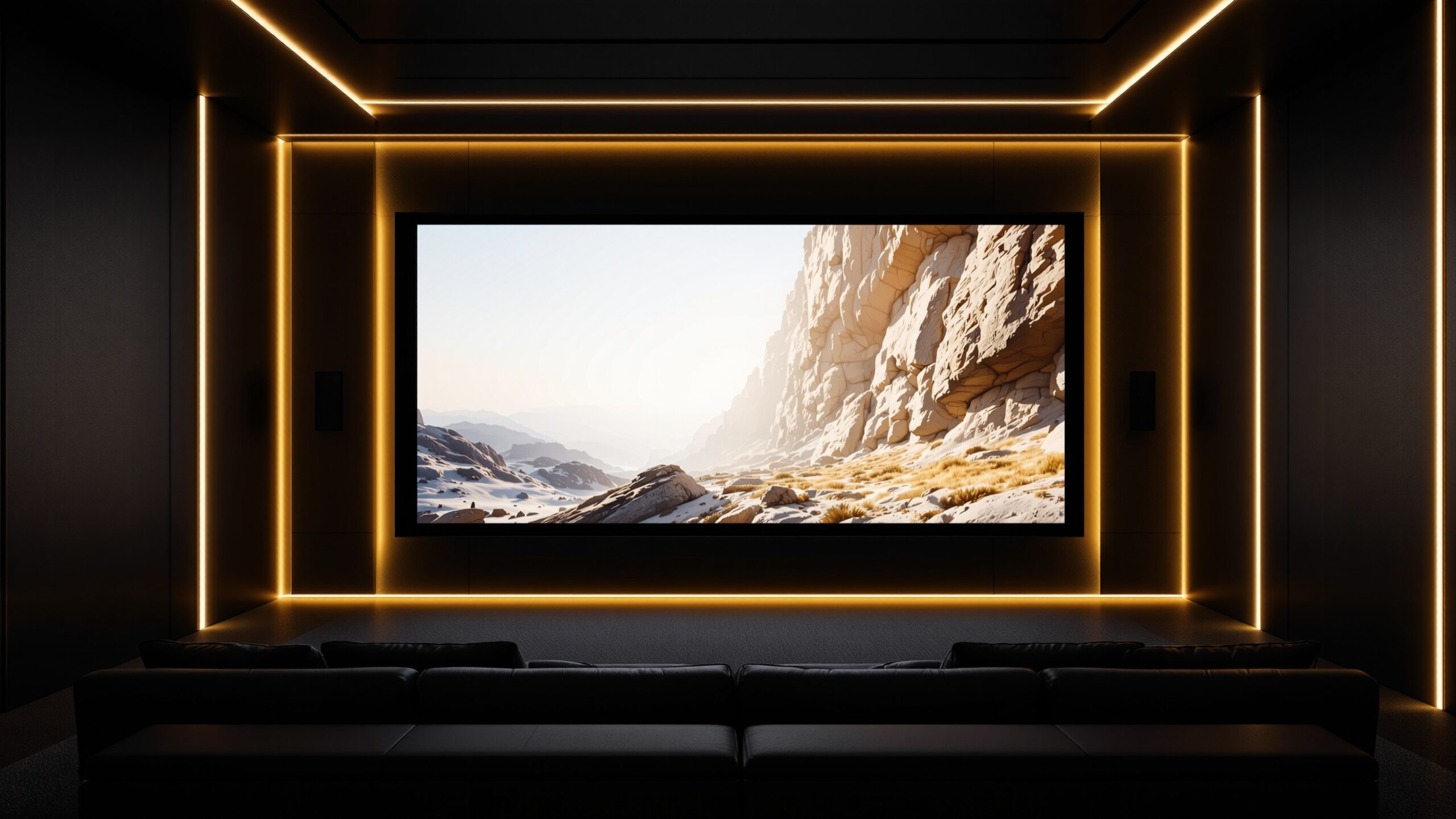
Accent lighting introduces depth and visual interest. This includes backlighting behind screens, LED strips along architectural features, or spotlighting for décor elements. In immersive screenspaces, accent lighting often doubles as bias lighting—a technique where light is placed behind the display to improve perceived contrast and reduce eye strain.
The key is balance. Each layer must complement the others while maintaining the primacy of the screen.
Bias Lighting: Precision for Visual Comfort
Bias lighting is one of the most critical yet often misunderstood elements of immersive lighting design. It involves placing a controlled light source behind the display, typically emitting a neutral white light around 6500K.
This technique stabilizes the viewer’s visual adaptation by reducing the contrast between the bright screen and the dark surroundings. The result is improved perceived black levels, reduced eye fatigue, and a more comfortable long-term viewing experience.
For optimal results, bias lighting must meet specific criteria. It should be dimmable, color-accurate, and evenly distributed. Poor-quality LED strips with inconsistent color rendering can distort the visual experience rather than enhance it.
When properly implemented, bias lighting becomes invisible in the best way possible—it enhances everything without drawing attention to itself.
Controlling Light Spill and Reflection
One of the primary challenges in immersive screenspaces is managing light spill and surface reflection. Any uncontrolled light that reaches the screen can degrade image quality.
Wall finishes, flooring materials, and furniture surfaces all contribute to light behavior within a space. Matte finishes are preferred because they absorb light rather than reflect it. Glossy surfaces, while visually striking, can introduce unwanted reflections that break immersion.
Ceiling design also plays a role. Darker ceilings reduce light bounce, helping maintain contrast integrity. In high-performance setups, acoustic panels with light-absorbing properties are often used to serve dual purposes.
Window management is equally important. Blackout curtains or motorized shades are essential for spaces exposed to natural light. Even small amounts of daylight can overpower a carefully calibrated lighting environment.
Effective lighting design is as much about controlling light as it is about creating it.
Dynamic and Reactive Lighting Systems
Advancements in smart lighting have introduced new possibilities for immersive screenspaces. Dynamic lighting systems can synchronize with on-screen content, audio cues, or user preferences.
Technologies such as ambient reactive lighting use sensors or software integration to extend screen colors onto surrounding walls. This creates a halo effect that enhances immersion, particularly in gaming and cinematic experiences.
However, restraint is crucial. Overly aggressive reactive lighting can become distracting or gimmicky. The goal is subtle enhancement, not visual competition.
Smart lighting ecosystems also allow for scene presets. A single tap can transition a room from “Cinema Mode” with dim, warm lighting to “Gaming Mode” with cooler, brighter tones. This flexibility adds both convenience and experiential depth.
Lighting for Different Screenspace Applications
Not all immersive screenspaces are created equal. Lighting design must be tailored to the specific use case.
In home theaters, the emphasis is on minimal light interference and cinematic authenticity. Soft ambient lighting, carefully calibrated bias lighting, and blackout control are essential.
Gaming environments benefit from more dynamic lighting. RGB systems, reactive effects, and adjustable brightness levels can enhance engagement without compromising performance.
Media rooms, which serve multiple purposes, require adaptable lighting. Layered systems with programmable controls allow users to shift between viewing modes seamlessly.
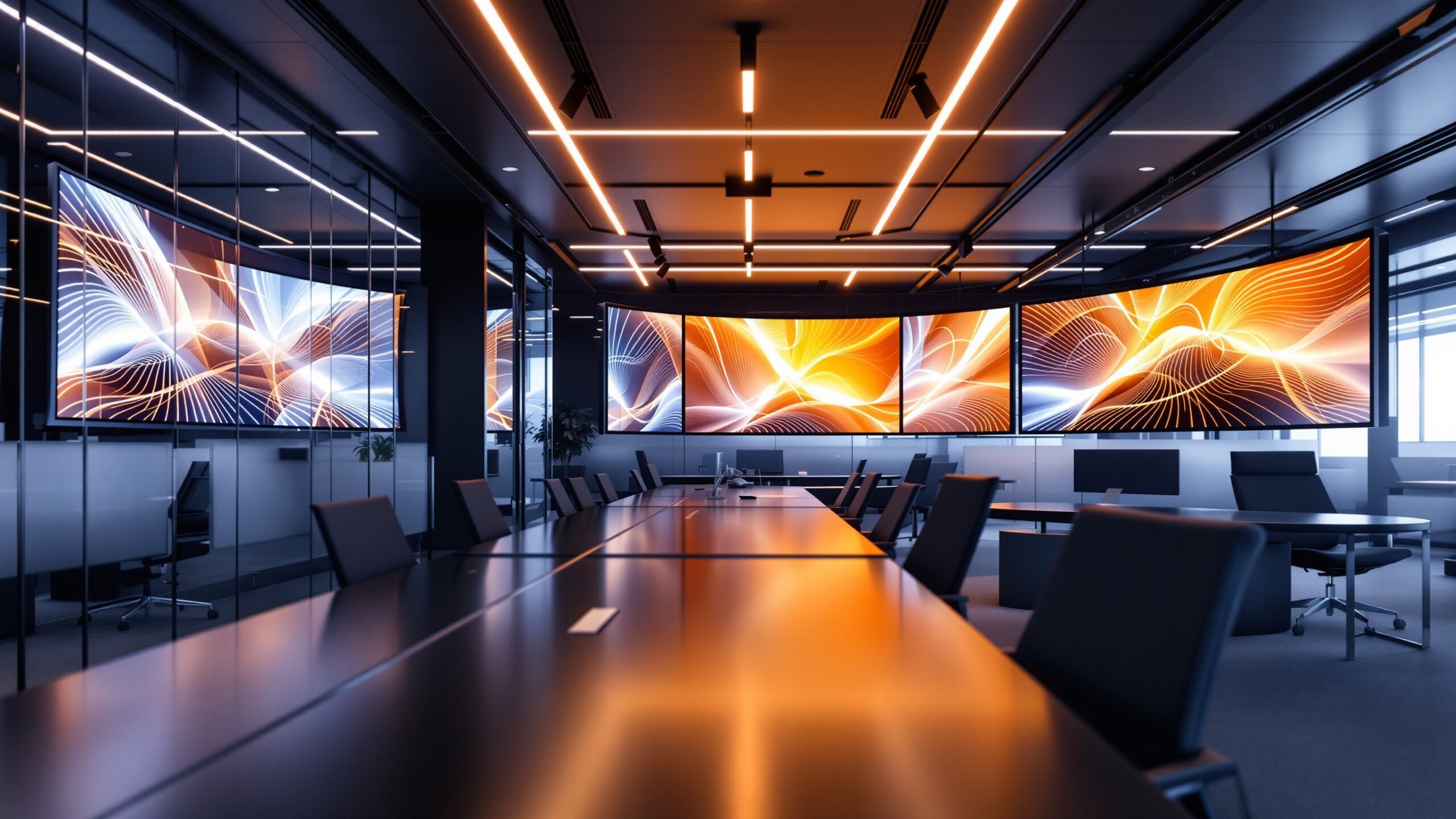
Retail and commercial screenspaces often prioritize visual impact. Here, lighting is used to draw attention, highlight content, and create memorable brand experiences. The balance between brightness and contrast becomes a strategic decision.
Each environment demands a unique approach, but the underlying principles remain consistent.
Integration with Architecture and Interior Design
Lighting design for immersive screenspaces must be integrated from the earliest stages of architectural planning. Retrofitting lighting into a completed space often leads to compromises.
Architectural elements such as recessed channels, floating panels, and integrated fixtures allow for seamless lighting solutions. Hidden light sources create a clean, modern aesthetic while maintaining functional performance.
Material selection also influences lighting outcomes. Textured walls can diffuse light in interesting ways, while darker palettes enhance contrast and focus.
Furniture placement should support the lighting strategy. For example, seating should be positioned to avoid direct exposure to light sources while maintaining optimal viewing angles.
When lighting, architecture, and interior design are aligned, the result is a cohesive and immersive environment.
Technical Considerations and Calibration
Precision is non-negotiable in immersive lighting design. Technical factors such as lumen output, color rendering index (CRI), and dimming capability must be carefully specified.
High CRI lighting ensures accurate color reproduction, which is especially important in environments where visual fidelity matters. Poor color rendering can subtly distort the perceived quality of on-screen content.
Dimming systems should offer smooth, flicker-free control. Abrupt changes in brightness can disrupt the viewing experience.
Calibration extends beyond the display itself. Lighting levels must be measured and adjusted to complement the screen’s brightness and contrast settings. This often involves iterative testing and fine-tuning.
Professional-grade setups may use light meters and calibration tools to achieve optimal results. While this level of precision may not be necessary for every installation, the principles remain relevant.
The Future of Lighting in Immersive Environments
The future of lighting design for immersive screenspaces is increasingly intelligent and integrated. Advances in AI-driven systems, adaptive lighting algorithms, and sensor-based environments are pushing the boundaries of what is possible.
Future systems may automatically adjust lighting based on content type, time of day, and user behavior. Integration with augmented reality (AR) and virtual reality (VR) environments will further blur the line between physical and digital spaces.
Sustainability is also becoming a priority. Energy-efficient LED technologies, smart controls, and eco-conscious materials are shaping the next generation of lighting solutions.
As screenspaces continue to evolve, lighting will remain a central component—not just as a supporting element, but as a defining feature of the experience.
Conclusion: Designing Light as a Medium
Lighting design for immersive screenspaces is both an art and a science. It requires a deep understanding of technology, human perception, and spatial design. When executed with precision and creativity, lighting transforms a simple viewing area into a fully realized experience.
The most successful designs are those where lighting feels invisible yet indispensable. It guides attention, enhances emotion, and supports the narrative without ever overshadowing it.
In a world increasingly defined by digital content and visual storytelling, the role of lighting will only grow in importance. Designers, creators, and enthusiasts who master this discipline will be able to craft environments that are not only visually stunning but truly immersive.
Light, in this context, is no longer just illumination. It is the medium through which immersive experiences come to life.
TV Top 10 Product Reviews
Explore Philo Street’s TV Top 10 Product Reviews! Discover the top-rated TVs, accessories, streaming devices, and home theater gear with our clear, exciting comparisons. We’ve done the research so you can find the perfect screen and setup for your entertainment experience!