
In the fast-moving world of television innovation, QLED has emerged as a buzzword synonymous with brightness, vivid color, and cutting-edge display engineering. While OLED continues to dominate conversations around contrast and black levels, QLED technology offers a compelling alternative that excels in luminance, color volume, and long-term reliability. QLED, short for Quantum Dot Light-Emitting Diode, is not just marketing jargon—it’s a real advancement in materials science and photonic engineering that transforms how light and color are displayed on your TV screen.
This article takes a deep dive into the underlying physics, chemistry, and engineering principles of QLED. It breaks down how quantum dots work, how they’re integrated into modern LCD panel architectures, and why QLED televisions are especially bright and color-accurate. By the end, you’ll understand the science powering these stunning screens in terms that are both technically sound and easy to grasp.
What Is QLED? The Basics Behind the Buzz
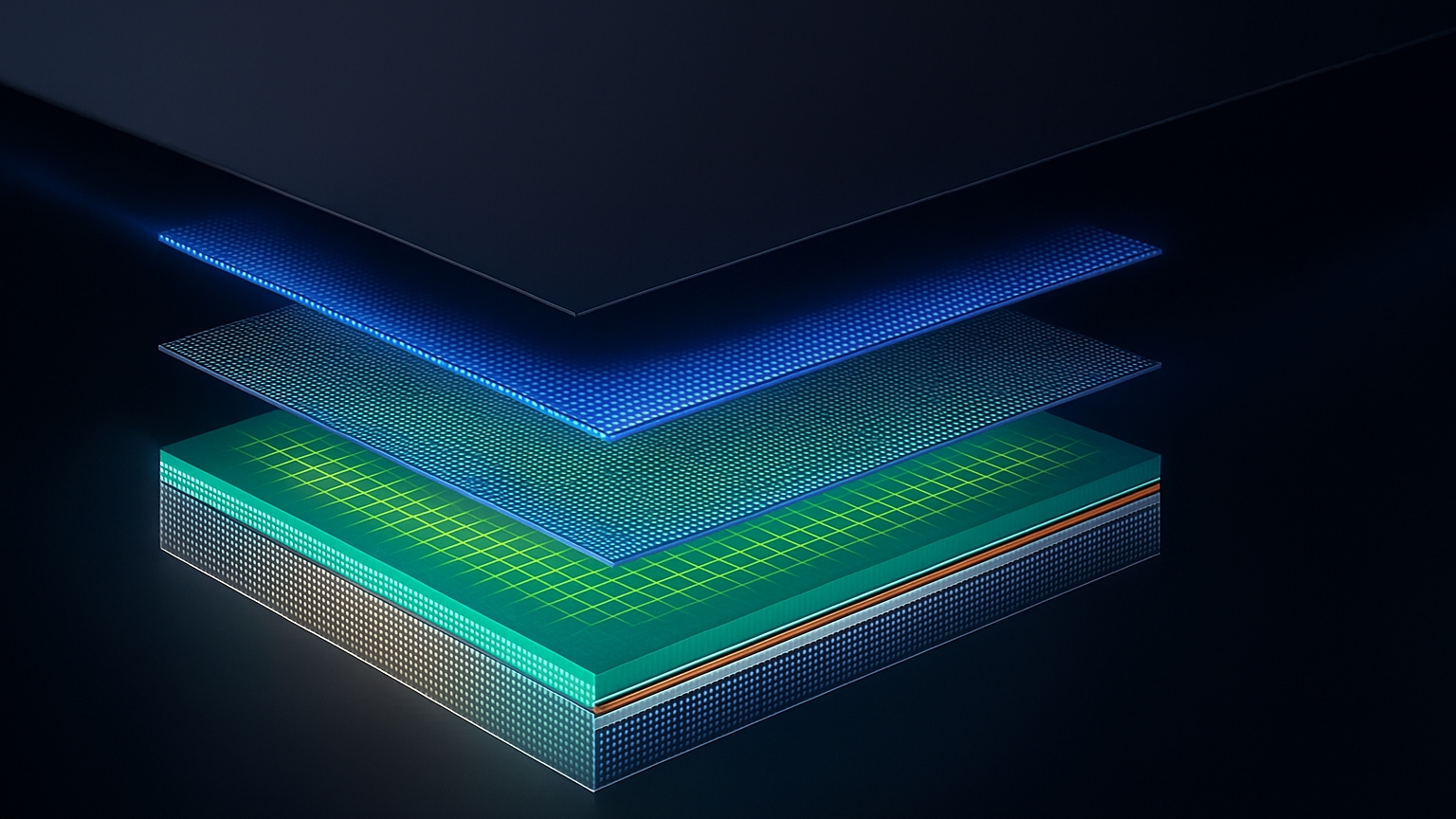
At its core, QLED is an evolution of traditional LCD technology. Unlike OLED, which is self-emissive (each pixel emits its own light), QLED TVs are still backlit displays, meaning they use an LED light source to illuminate the pixels on screen. What sets QLED apart is the addition of a quantum dot enhancement layer placed between the LED backlight and the liquid crystal display (LCD) panel.
Quantum dots are nanoscale semiconductor particles that emit specific wavelengths of light when exposed to energy—in this case, blue light from LEDs. These particles are capable of producing highly saturated red and green light, which—combined with the blue from the LED source—produces a broader and more accurate color spectrum than traditional LCDs.
So while QLEDs rely on the same core architecture as LED-LCDs, it’s the integration of quantum dot nanocrystals that makes the visual experience far brighter and more vivid.
Quantum Dots: The Chemistry of Color
Quantum dots are the real stars of QLED technology. These are man-made semiconductor nanocrystals, typically made from materials like cadmium selenide (CdSe) or indium phosphide (InP). Their optical properties are determined by their size, which can be tuned down to the nanometer scale. A quantum dot 2 nanometers in diameter emits blue light, while a larger dot of around 6–8 nanometers emits red light.
The reason behind this size-dependent emission lies in quantum mechanics, specifically the quantum confinement effect. As electrons are confined within these minuscule structures, their energy levels become quantized. When a quantum dot absorbs a photon (or is stimulated by another energy source), it promotes an electron to a higher energy state. As the electron returns to its ground state, it releases a photon—a packet of light—with energy (and therefore color) determined by the size of the quantum dot.
In QLED panels, quantum dots are excited by blue LED light. These dots absorb the blue light and re-emit it as green or red, depending on their composition and size. The blue light that passes through unaltered serves as the third primary color. Together, this triad creates the full visible spectrum with unmatched precision.
Engineering the Quantum Dot Film
The integration of quantum dots into TV displays happens via a specialized layer known as the quantum dot enhancement film (QDEF). This film is sandwiched between the blue LED backlight unit and the LCD matrix. It contains billions of uniformly dispersed quantum dots embedded in a polymer matrix.
Engineering this film requires overcoming significant challenges. The quantum dots must be encapsulated to prevent oxidation and degradation over time, as exposure to air and moisture can ruin their performance. Advanced barrier films and encapsulation techniques are used to extend the durability and thermal stability of these dots. In most commercial QLED TVs, quantum dots are inorganic, making them more resilient compared to organic compounds used in OLEDs.
The placement and uniformity of the quantum dot layer are critical. Any variation in dot density or size can lead to uneven color rendering or brightness artifacts. Precision coating techniques like slot-die coating or inkjet printing are used to ensure consistent thickness and dot dispersion across the entire panel.
Light Management: From Backlight to Your Eyes
A QLED display is a masterclass in light manipulation, channeling photons from their origin in the backlight to your eyes in a controlled, efficient manner. The journey starts with the LED backlight, which in modern QLED TVs often uses blue LEDs combined with a QDEF layer. These blue LEDs excite the quantum dots, which then emit green and red light.
Next, this RGB light enters a diffuser sheet, which homogenizes the light and ensures even distribution across the screen. From there, the light passes through polarizing films and the liquid crystal layer, which controls whether light is blocked or allowed through each subpixel based on applied voltages. This selective control creates images by allowing the desired light wavelength (color) to pass through individual subpixels.
Finally, the light reaches color filters and a glass substrate, projecting the resulting image outward. Because of the high purity and directional efficiency of quantum dot emissions, the colors remain rich and bright even at wide viewing angles and under ambient lighting conditions.
Why QLED Is So Bright: The Science of Luminance
Brightness is one of QLED’s most celebrated strengths, and it stems from several interrelated scientific and engineering factors. First, quantum dots are highly efficient in converting light. Their quantum yield—the ratio of photons emitted to photons absorbed—can approach nearly 100% under ideal conditions. This means very little energy is lost as heat, unlike in OLEDs or traditional phosphors.
Secondly, QLEDs use inorganic nanomaterials, which can withstand much higher luminous intensities without degrading. This allows QLED panels to push peak brightness levels beyond 1,500 to 2,000 nits, which is ideal for HDR (High Dynamic Range) content. OLEDs, by contrast, are limited in brightness because their organic compounds degrade faster under high luminance.
Additionally, QLED TVs often use Full-Array Local Dimming (FALD) with Mini-LED backlights. These systems contain hundreds or even thousands of tiny LEDs behind the screen that can be individually dimmed or brightened. This allows the TV to enhance contrast and brightness dynamically without over-illuminating the entire screen, enabling localized peaks that make highlights pop while preserving black levels.
Contrast and Black Levels: Bridging the Gap
While QLED excels in brightness, its handling of black levels is more complex due to its backlit nature. Unlike OLED, where each pixel can turn off completely, QLED still requires a light source behind the pixels. This can lead to blooming, where light from bright areas leaks into dark areas, especially in high-contrast scenes.
To address this, high-end QLED models use advanced local dimming algorithms. By analyzing frame-by-frame data, the processor can dim certain LED zones to minimize blooming while boosting brightness where needed. Additionally, the latest QLED TVs incorporate VA (Vertical Alignment) LCD panels, which offer higher native contrast compared to older IPS panels, further improving perceived black levels.
Although QLED cannot achieve the absolute blacks of OLED, its superior peak brightness often leads to a higher perceived contrast ratio in bright environments. This makes QLED especially well-suited for rooms with lots of ambient light, where OLEDs may appear dim.
Color Volume: A Three-Dimensional Advantage
Color volume is a term that describes a display’s ability to maintain color accuracy at varying brightness levels. Many displays can show accurate colors in low light but lose saturation at high brightness. QLED, thanks to its quantum dot layer, excels here.
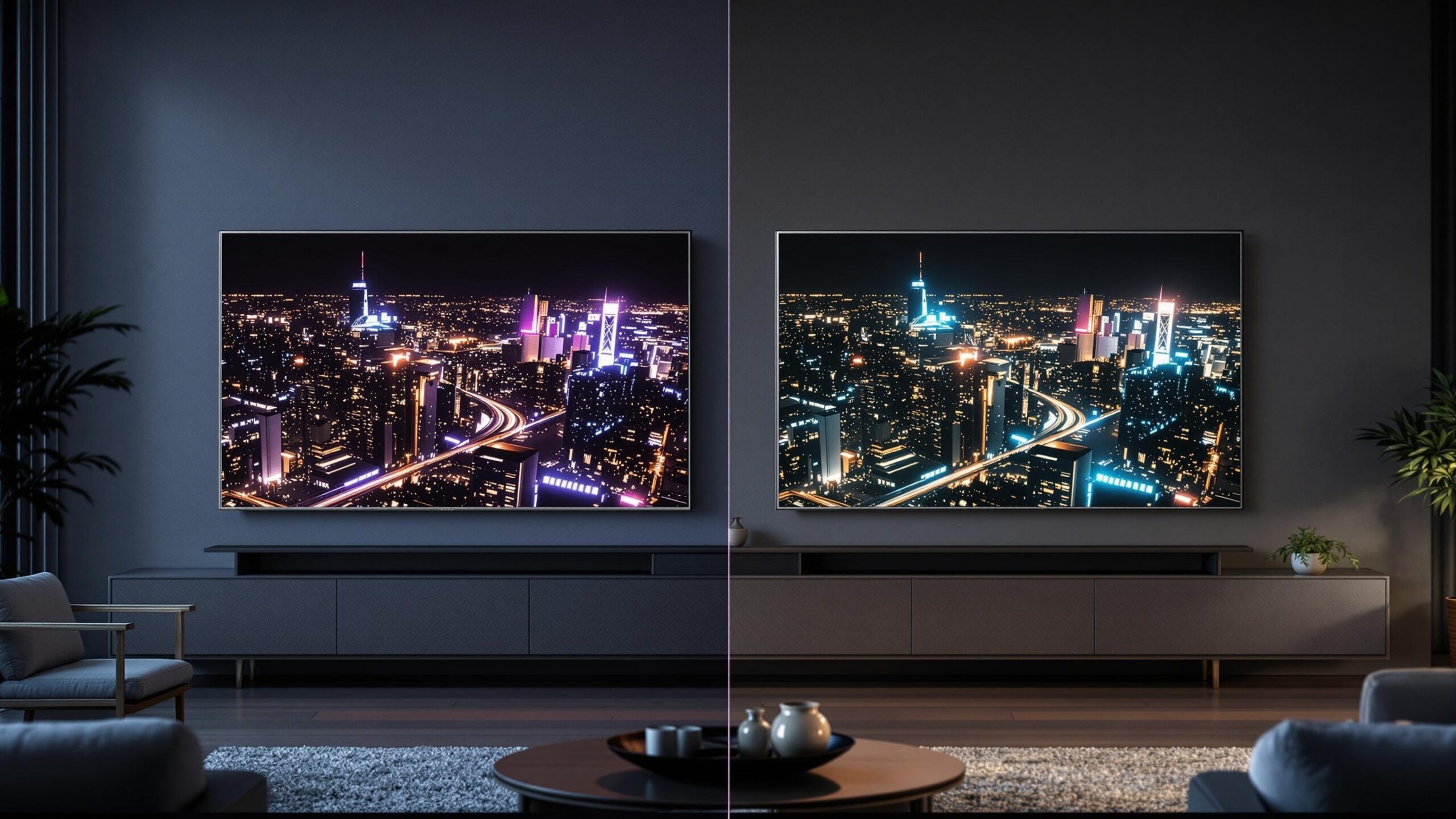
Quantum dots emit narrow-band, highly saturated colors, and their brightness is not tied to color distortion. As a result, QLED TVs can reproduce over 100% of the DCI-P3 color gamut even at high luminance levels—something OLEDs struggle to match due to their lower peak brightness and broader emission spectra.
This full color volume is one reason QLED TVs receive high marks in professional display benchmarking and why they are ideal for HDR content, which demands both wide color gamut and high luminance.
Longevity and Stability: Built to Last
One of QLED’s unsung strengths is its durability and longevity. Since it relies on inorganic materials, QLED is not susceptible to burn-in—a problem that can affect OLED screens when static images linger for too long. The quantum dots themselves are stable over tens of thousands of hours, maintaining brightness and color accuracy for years of daily use.
The LEDs used in QLED backlights are also built for longevity. Paired with efficient heat dissipation systems, QLED panels can operate at higher brightness levels without significantly reducing their lifespan. This makes QLED a preferred choice for commercial displays, public venues, and gamers, who may keep screens active for extended periods.
The Future of QLED: Hybrid and Next-Gen Innovations
QLED continues to evolve. One exciting frontier is QD-OLED, a hybrid technology combining OLED’s self-emissive properties with QLED’s color accuracy. In QD-OLED, a blue OLED layer serves as the light source, while red and green quantum dots convert that blue light into full-spectrum color. This eliminates the need for traditional color filters and offers higher efficiency and brightness.
Another path forward is electroluminescent quantum dots, where quantum dots themselves become the light source, bypassing both LEDs and LCD layers entirely. This would create fully self-emissive displays with the precision of OLED and the brightness of QLED—a best-of-both-worlds scenario.
Companies are also working on cadmium-free quantum dots to address environmental concerns. Materials like indium phosphide offer similar performance without the toxicity of cadmium-based compounds, aligning with global sustainability goals.
Conclusion: Why QLED Shines—Literally and Figuratively
QLED technology represents a sophisticated fusion of nanoscience, optical physics, and display engineering. Its ability to harness quantum dots for high-efficiency, high-brightness color conversion is a testament to the power of nanoscale materials. From its intense luminance and vibrant color volume to its long-term stability and HDR performance, QLED remains a dominant force in the display world.
While OLED may hold the crown for absolute contrast, QLED continues to advance with its own set of technical strengths. It is a display technology that thrives in well-lit spaces, supports long usage cycles, and delivers jaw-dropping visuals with clarity and color precision.
As future innovations like QD-OLED and quantum dot electroluminescence mature, QLED’s core principles will remain at the heart of the next generation of premium displays. Whether you’re watching a Hollywood blockbuster, gaming at 120Hz, or showcasing digital art, QLED ensures your screen is not just bright—it’s brilliant, in every sense of the word.
QLED TV Reviews
Explore Philo Street’s Top 10 Best QLED TV Reviews! Dive into our comprehensive analysis of the leading QLED TV products, complete with a side-by-side comparison chart to help you choose the perfect protection for your devices.